
Expression lines are not all the same: the ones that appear on the forehead, around the eyes as crow’s feet, between the brows, or around the mouth respond differently to treatment, depending on the strength of the muscle involved, the thickness of the skin in that area, and whether the line is still dynamic (only visible when making an expression) or has already become static (visible at rest). This guide explains what expression lines are, why they appear, and what really determines the result in each area of the face, along with the practical aspects of botulinum toxin treatment: mechanism, approximate doses, duration, contraindications, and prices in Bogotá.
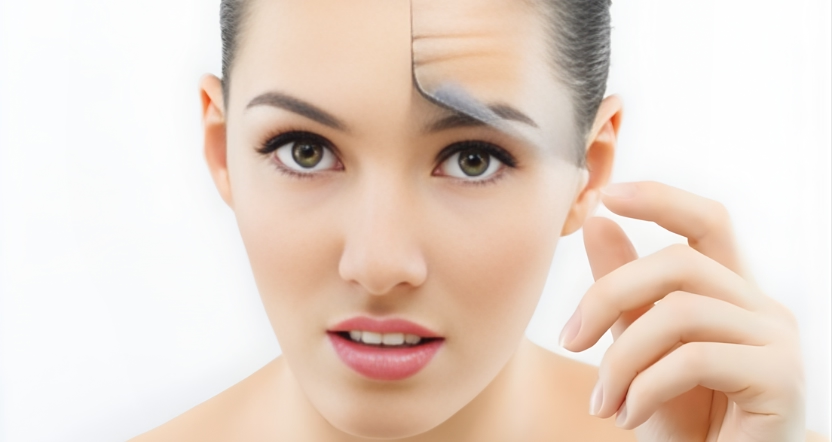
If you’re tired of seeing miracle cream promises on social media, here you’ll find clear information based on how the treatment actually works, without inflated numbers.
What determines the result depending on the area treated
Not every area of the face responds the same way to botulinum toxin. These are the factors that most influence the result in each one:
Forehead (horizontal lines)
The frontalis muscle is what raises the eyebrows and creates horizontal lines when you make expressions. Its size and strength vary quite a bit between people: those who gesture a lot with their eyebrows usually need doses at the higher end of the typical range for this area (10-20 units). Skin thickness also matters — thicker skin tends to show lines less prominently even before treatment. The most determining factor is whether the lines are still dynamic (they soften when the face relaxes) or have already become static due to collagen loss; in the second case, the toxin helps soften the line but won’t erase it completely, and it often benefits from being combined with other treatments.
Crow’s feet
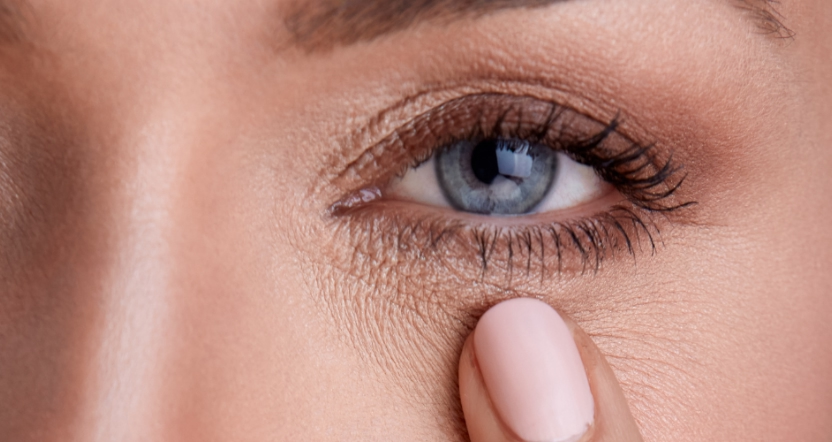
The orbicularis oculi muscle is thinner and more superficial than the frontalis, so it usually requires lower doses (8-16 units). This area has the thinnest skin on the face and accumulates more sun exposure from constant blinking and the typical lack of sun protection around the eyes, which can leave visible lines even in younger people. When lines only appear when smiling, the response tends to be fast and noticeable; when there’s already accumulated sun damage and fine lines visible at rest, the result is a meaningful improvement, not necessarily total elimination.
Glabella (frown lines)
The corrugator and procerus muscles, responsible for furrowing the brow, vary more in strength than the muscles in other areas, which means the necessary dose varies more from person to person. Habits like frowning due to stress, concentration, or uncorrected vision problems can train these muscles to contract more forcefully, which also affects how long the treatment’s effect lasts.
Perioral lines (“lipstick lines”)
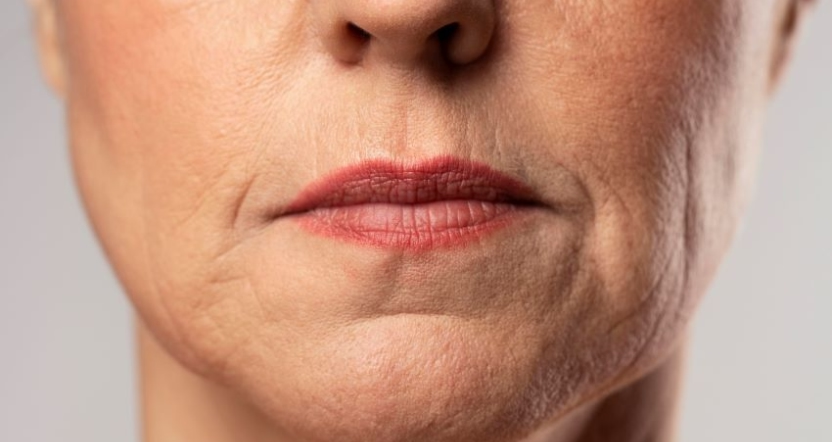
This is the technically most delicate area because the orbicularis oris muscle serves essential functions — speaking, eating, smiling — so treatment uses low doses (4-8 units) and greater precision to avoid affecting lip function. These lines are heavily influenced by habits like smoking or drinking through a straw, which involve repeatedly pursing the lips, and by the loss of lip volume that comes with age, which is why they often benefit from being combined with hyaluronic acid rather than treated with toxin alone.
Combined treatment
When several areas are treated in the same session, the dose is distributed individually according to the muscle strength of each area in that person — it’s not a single dose multiplied by the number of areas. The result depends on how the different expressions of the face interact with each other, which is why the prior assessment aims for a balance that keeps the overall expression natural, not just eliminating each line separately.
Detailed timeline of results with botulinum toxin
Day 0-3: Process start
Sensation: Slight muscle tension in treated area.
Visible change: Minimal initially, but muscle relaxation begins.
Recommendation: Avoid touching area, keep head elevated.
Week 1: First noticeable changes
Relaxation: 70-90% of muscle effect.
Expressions: Softer when gesturing.
Motivation: Patients excited about progress.
Week 2-4: Optimal result
Elimination: Marked reduction of dynamic lines, in many cases practically imperceptible when the face relaxes.
Skin: Noticeably smoother and more natural-looking.
Duration: Stabilized effect.
Month 4-6: Maintenance
Reapplication: If necessary for touch-up.
Result: Stable with constant weight.

Why patients choose botulinum toxin over other options
Compared to anti-wrinkle creams: creams hydrate and can improve the skin’s surface texture, but they don’t act on the muscle contraction that causes dynamic lines. So when the main cause is repeated muscle activity, botulinum toxin offers a result that no topical cream can match on its own.
Compared to professional image concerns: a constantly furrowed brow or very marked expression lines can convey an impression of tiredness or seriousness that doesn’t always reflect how the person actually feels. Softening those lines — without losing the ability to make expressions — is one of the most common reasons patients seek consultation.
Compared to late correction: treating fine lines while they’re still dynamic usually requires lower doses and gives more predictable results than waiting until the line becomes static and is associated with collagen loss. That’s why low-dose preventive toxin is an increasingly common strategy starting at 25-28 years old in people with highly expressive faces.
Decision guide: is botulinum toxin right for you?

Do you have visible dynamic lines?
YES → Toxin is your best option.
NO (permanent static wrinkles) → Consider hyaluronic acid fillers.
Do you want natural results?
YES → Personalized doses aim for natural expressions.
NO (want “frozen”) → We adjust according to preference.
Do you have medical contraindications?
YES → We evaluate safe alternatives.
NO → Proceed with confidence.
Commitment to maintenance?
YES → Every 4-6 months for constant results.
NO → Consider more durable treatments.
Available budget?
$500K-$1M: Treatment for specific area.
$1M-$2M: Complete facial combined.
Comparative table: toxin vs creams vs fillers
| Aspect | Botulinum toxin | Anti-wrinkle creams | Hyaluronic acid fillers |
|---|---|---|---|
| Mechanism | Muscle paralysis | Topical hydration | Volume + hydration |
| Effect on dynamics | Marked reduction | 0% | 0% |
| Effect on statics | 0% | 0% | 80-100% |
| Duration | 4-6 months | Days | 6-12 months |
| Application | Single injection | Daily | Injection |
| Approximate cost | $800K | $200K/month | $1.2M |
| Session time | 15-30 min | N/A | 30-45 min |
Conclusion: Toxin superior for dynamic lines, combine with fillers for complete.

Expression Lines in the Eyes: Crows Feet and Effective Treatment
Complete guide to eliminate expression lines in the eyes and crows feet with effective treatments.
Read moreWhat to expect from treatment: realistic timeline
Session 1: Process start
Typical elimination: 70-90%
Visible change: Immediate in dynamics
Sensation: Muscle relaxation
Week 1-2: Optimal results
Elimination: Marked reduction in dynamics
Effect: Smoother skin
Month 4-6: Maintenance
Duration: Stable results
Factors affecting results
Initial severity: Deeper = more units.
Age: Better under 50.
Habits: Avoid sun and tobacco.
Genetics: Individual response.
Scientific mechanism of botulinum toxin
Botulinum toxin type A works by blocking acetylcholine release in neuromuscular junctions. When injecting toxin, it binds to receptors in nerve endings, preventing the signal that makes the muscle contract. The result is temporary muscle paralysis, eliminating dynamic lines.
Technical data
| Aspect | Detail |
|---|---|
| Mechanism | Inhibition of acetylcholine release |
| Duration | 4-6 months |
| Effect | Reversible muscle paralysis |
| Safety | FDA certified since 1989 |
Detailed benefits of botulinum toxin
Marked reduction of dynamic lines
Toxin relaxes the muscles responsible for dynamic wrinkles, softening them noticeably.
Natural results
With adequate doses, you maintain natural facial expressions.
Prevention of new lines
Relaxes muscles, preventing formation of deep wrinkles.
Quick treatment
15-30 minute sessions, results in 3-7 days.
No recovery time
Return to normal activities immediately.
Contraindications: who should NOT use botulinum toxin
Absolute contraindications
- Allergy to botulinum toxin
- Infection in application area
- Pregnancy or breastfeeding
- Neuromuscular diseases (myasthenia gravis)
Relative contraindications
- Taking certain medications (aminoglycosides)
- Keloid scars
- Unrealistic expectations

Do Creams for Expression Lines Really Work? The Truth
Discover if creams really eliminate expression lines or if you need professional treatments like botulinum toxin.
Read moreIdeal candidates for botulinum toxin
You are an ideal candidate if:
- Visible dynamic lines when gesturing
- Age 25-65 years
- Healthy skin without infections
- Realistic expectations
- Commitment to maintenance
How many sessions and approximate prices
Number of sessions
Generally 1 session per area, maintenance every 4-6 months.
Prices in Bogotá
| Area | Approximate units | Price COP |
|---|---|---|
| Forehead | 10-20 | $800.000 - $1.200.000 |
| Eyes | 8-16 | $600.000 - $1.000.000 |
| Mouth | 4-8 | $500.000 - $800.000 |
| Combined | Variable | $1.500.000 - $2.500.000 |
Common myths about expression lines
Myth: Creams eliminate lines
Reality: They only hydrate, don’t paralyze muscles.
Myth: It’s invasive surgery
Reality: Minimally invasive injections.
Myth: Permanent results
Reality: Duration 4-6 months, requires maintenance.
Myth: Only for women
Reality: Effective in men too.
Post-treatment tips
First 24 hours
- Avoid touching treated area
- No intense exercise
- Keep head elevated when sleeping
First week
- Avoid direct sun
- Use sunscreen
- Don’t massage the area
Maintenance
- Schedule touch-ups every 4-6 months
- Combine with creams to prolong
FAQ: Frequently asked questions about expression lines
Is botulinum toxin safe?
Yes, with over 30 years of medical use, FDA certified.
Does it hurt?
Slight prick sensation, tolerable without anesthesia.
How long is a session?
15-30 minutes per area.
When will I see results?
3-7 days for optimal effect.
Are results permanent?
No, 4-6 months, requires maintenance.
Can I combine with other treatments?
Yes, with fillers or laser.
Are there side effects?
Rare: mild bruising, temporary headache.
Does it work in men?
Yes, adjusted doses.
At what age to start?
From 25 for prevention.
How much does maintenance cost?
50-70% of initial treatment.
Conclusion: real results with botulinum toxin
Expression line treatments work when done correctly. They’re not miracles, but they markedly reduce dynamic lines.
If you’re looking to eliminate your expression lines, schedule a consultation.
Want to learn more about this treatment?
Schedule your consultation with our doctors and discover the ideal treatment for you
Schedule your treatment Office in Bogotá, Colombia · Reply on WhatsAppUpdated: December 2025
Disclaimer: Results may vary.

Expression Lines on the Forehead: Effective Treatment to Eliminate Them
Guide to eliminate expression lines on the forehead with botulinum toxin and other effective treatments.
Read more
Frequently asked questions
At what age do expression lines typically become permanent?
Expression lines usually transition from purely dynamic to static — visible even at rest — sometime in the mid-to-late 30s for most people, though this varies widely depending on genetics, sun exposure, and skin type. Once collagen and elastin reserves decline sufficiently and the muscle repeatedly folds the skin in the same place, the line no longer fully smooths when the face relaxes.
What is the difference between dynamic and static wrinkles in terms of treatment approach?
Dynamic wrinkles are caused by repetitive muscle contractions and respond very well to botulinum toxin, which temporarily reduces muscle activity and allows the skin to smooth. Static wrinkles are present at rest and require additional approaches such as biostimulators, dermal fillers, or resurfacing procedures, because the skin's structural support has already been compromised and muscle relaxation alone is insufficient.
Which expression lines respond best to treatment?
Forehead lines and crow's feet are among the most treatment-responsive because the muscles involved are isolated and well-mapped, allowing precise botulinum toxin placement for consistently excellent results. Perioral lines around the mouth are more technically demanding and typically respond more slowly because the muscles there are involved in essential functions like speech and eating.
Can expression lines be prevented without medical intervention?
Some degree of prevention is achievable through rigorous daily sun protection, consistent use of retinoids, and conscious reduction of repetitive facial movements, particularly squinting. However, the muscles responsible for expression are fundamental to nonverbal communication, making complete behavioral prevention impractical, which is why early medical consultation is recommended for those with a family history of early-onset lines.
What lifestyle habits most accelerate expression line formation?
Chronic sun exposure without protection is the single most accelerating factor, as UV radiation degrades collagen and elastin while simultaneously increasing oxidative stress. Smoking, poor sleep quality, and chronic dehydration also compound the process significantly by reducing skin's cellular repair capacity and increasing inflammation, which degrades the extracellular matrix faster than normal aging alone.
How many treatment sessions are needed to eliminate expression lines?
For dynamic lines treated with botulinum toxin, a single session is enough to achieve complete muscle relaxation, with visible results starting on day five. To maintain results long-term, maintenance sessions are recommended every 4-6 months, since over time the muscles can be trained to contract with less force.