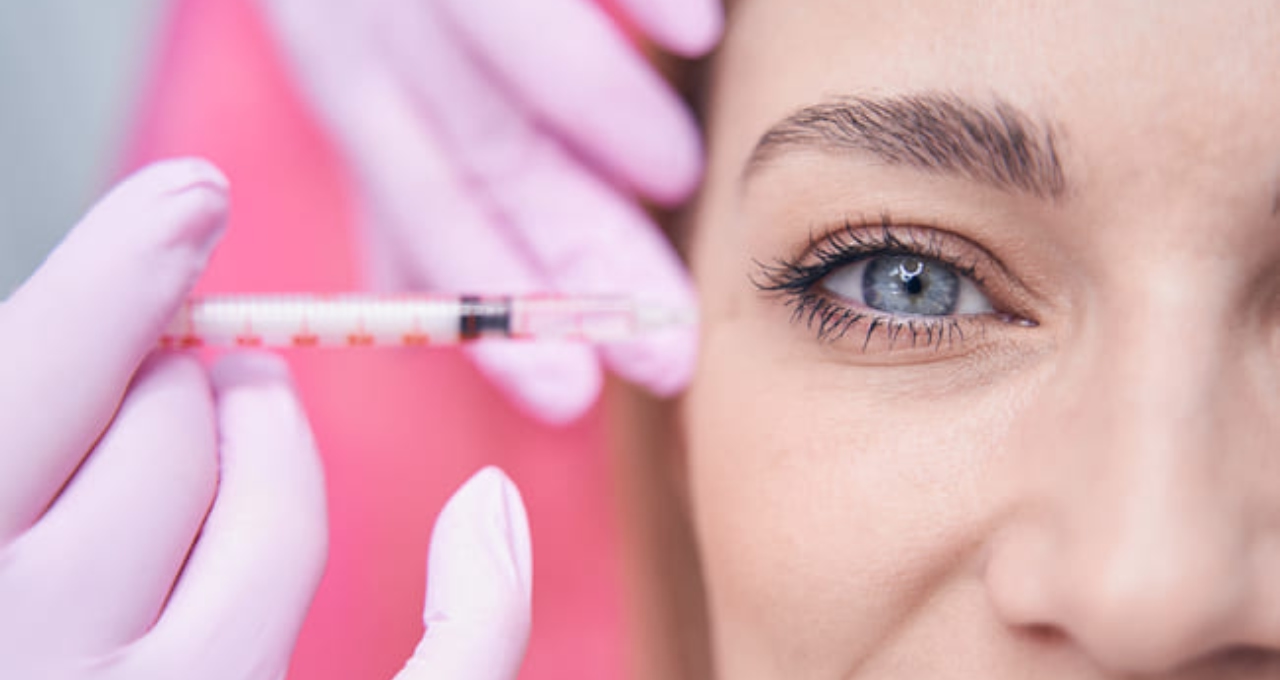
As a physician specializing in the treatment of periorbital expression lines, in this guide I explain how crow’s feet form, what accelerates their appearance, and what you can realistically expect from a well-indicated botulinum toxin treatment.

What determines the result in your case?
Not all crow’s feet respond the same way to treatment, which is why an individual assessment is the most important step before defining dose and technique.
Dynamic versus static lines: if the wrinkles only appear when smiling or squinting and disappear at rest, the response to botulinum toxin tends to be more complete. If they’re already visible with the face at rest (static lines), toxin still helps soften them and slow their progression, but the result is more gradual and sometimes benefits from combining with hyaluronic acid or biostimulation techniques.
Skin thickness and quality: thinner skin or skin with more sun damage tends to show lines more prominently and may require a more careful dose adjustment to achieve a natural result without affecting eyelid closure.
Strength of the orbicularis oculi muscle: people with a very expressive smile or greater muscle tone in the area usually need slightly higher doses within the usual range (6 to 12 units per side) to achieve the same degree of relaxation.
Combining with other treatments: when there’s also volume loss under the eye in addition to dynamic lines, combining botulinum toxin with hyaluronic acid usually gives a more complete result than either treatment alone.
General results timeline
Week 1: Effect begins
You start noticing progressive muscle relaxation; dynamic lines visibly soften when smiling.
Week 2: Optimal effect
The effect reaches its peak: the reduction in lines when gesturing is more noticeable and stable.
Month 3-4: Gradual decline
The effect begins to progressively decrease as the muscle regains activity, signaling it’s time to schedule your next session.
Factors affecting
Age: Better in 30-50.
Severity: More units for deep.
Habits: Sun accelerates recurrence.

Do Creams for Expression Lines Really Work? The Truth
Discover if creams really eliminate expression lines or if you need professional treatments like botulinum toxin.
Read moreAnatomy of ocular area
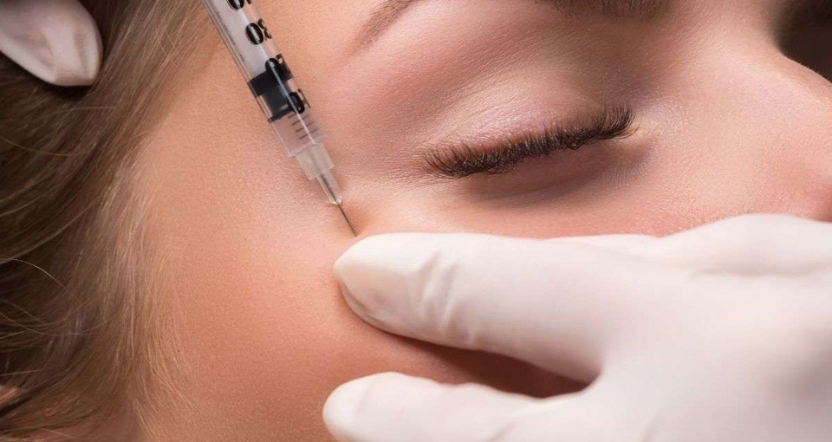
The skin around the eyes is 10 times thinner, with active orbicular muscle constantly. Crows feet form by repeated muscle contraction, creating folds that mark.
Technical data
| Aspect | Detail |
|---|---|
| Skin thickness | 0.5 mm (vs 2 mm in cheeks) |
| Muscle | Eye orbicular |
| Exposure | High to facial movements |
Specific benefits for eyes
Elimination of crows feet
Natural results without affecting eyebrow elevation.
Improve tired appearance
Fresher, younger eyes.
Prevent deep lines
Stop progression to grooves.
Contraindications for ocular area
Palpebral ptosis
Eyelid droop (rare but possible).
Asymmetry
Requires correction.
Active infections
Red eyes or conjunctivitis.
Candidates for ocular treatment
- Dynamic crows feet
- Healthy skin without allergies
- No pregnancy/breastfeeding
- Realistic expectations

Expression Lines: What They Are, Why They Appear, and How to Eliminate Them Forever
Complete guide on expression lines: what they are, causes, effective treatments like botulinum toxin and how to prevent them.
Read moreMyths about crows feet
Myth: Only by age
Reality: Repeated movements main cause.
Myth: Creams work
Reality: Don’t penetrate enough.
Myth: Surgery necessary
Reality: Toxin is sufficient.
Post-treatment tips for eyes
Avoid massages
Don’t touch area 24 hours.
Sunscreen
Mandatory for eyes.
Follow-up
Check asymmetry in 2 weeks.
FAQ eyes
Does it hurt?
Slight tolerable discomfort.
How long does it last?
3 to 4 months in the periocular area.
Side effects?
Mild bruising, rare ptosis.
Combine with fillers?
Yes for static grooves.
Conclusion
Crow’s feet respond very well to botulinum toxin when dose and technique are tailored to your specific anatomy. If you’re looking for a natural result that softens the lines without losing expressiveness, schedule your assessment and let’s design the right plan for you.
Want to learn more about this treatment?
Schedule your consultation with our doctors and discover the ideal treatment for you
Book your appointment * Limited spots this weekUpdated: January 2026

Expression Lines on the Forehead: Effective Treatment to Eliminate Them
Guide to eliminate expression lines on the forehead with botulinum toxin and other effective treatments.
Read more
Frequently asked questions
What makes crow's feet harder to treat than forehead lines?
Crow's feet arise from the orbicularis oculi, a circular muscle that activates during every blink and every smile — making it one of the most continuously active muscles on the face. This high contraction frequency means lines form earlier, often requiring slightly more treatment nuance to achieve natural-looking results without flattening the normal animation around the eye.
Can consistent sunglasses use meaningfully prevent crow's feet?
Yes, wearing UV-protective sunglasses consistently does reduce crow's feet formation by two distinct mechanisms: blocking UV radiation that degrades periorbital collagen, and eliminating the habitual squinting reflex triggered by brightness, which is one of the main repetitive movements driving crow's feet. It is one of the few genuinely preventive lifestyle measures with a strong physiological rationale.
Why do crow's feet appear earlier in some people than others?
Genetics determine the skin's intrinsic thickness and elasticity, but lifestyle factors noticeably speed up or delay their appearance. People who smile frequently, work outdoors without sun protection, smoke, or sleep face-down tend to develop crow's feet 5 to 10 years earlier than the average for their age group.
Does treating crow's feet affect how emotions show on the face?
When performed correctly and conservatively, botulinum toxin for crow's feet preserves the full range of emotional expression including genuine smiling — only the skin folding is reduced, not the muscle movement itself. Over-treatment is the common cause of an expressionless appearance, which is why the dose should be calibrated to soften lines while maintaining the natural contraction that makes a smile look authentic.
What happens to crow's feet if left untreated for years?
Untreated crow's feet gradually transition from dynamic lines that appear only with expression into static lines permanently etched into the skin at rest, a process that typically advances significantly through the 40s. Once lines become deep and static, treatment requires combining botulinum toxin with additional modalities such as resurfacing or biostimulators to address both the muscular cause and the structural skin deficit.
How many units of toxin are needed to treat crow's feet, and how long does the effect last?
The typical range is 6 to 12 units of Botox (or the equivalent in Dysport/Neuronox) per side, depending on the intensity of the contraction and the depth of the lines. The effect in the periocular area usually lasts 3 to 4 months, slightly less than in the forehead, due to the higher activity of the orbicularis oculi muscle throughout the day.