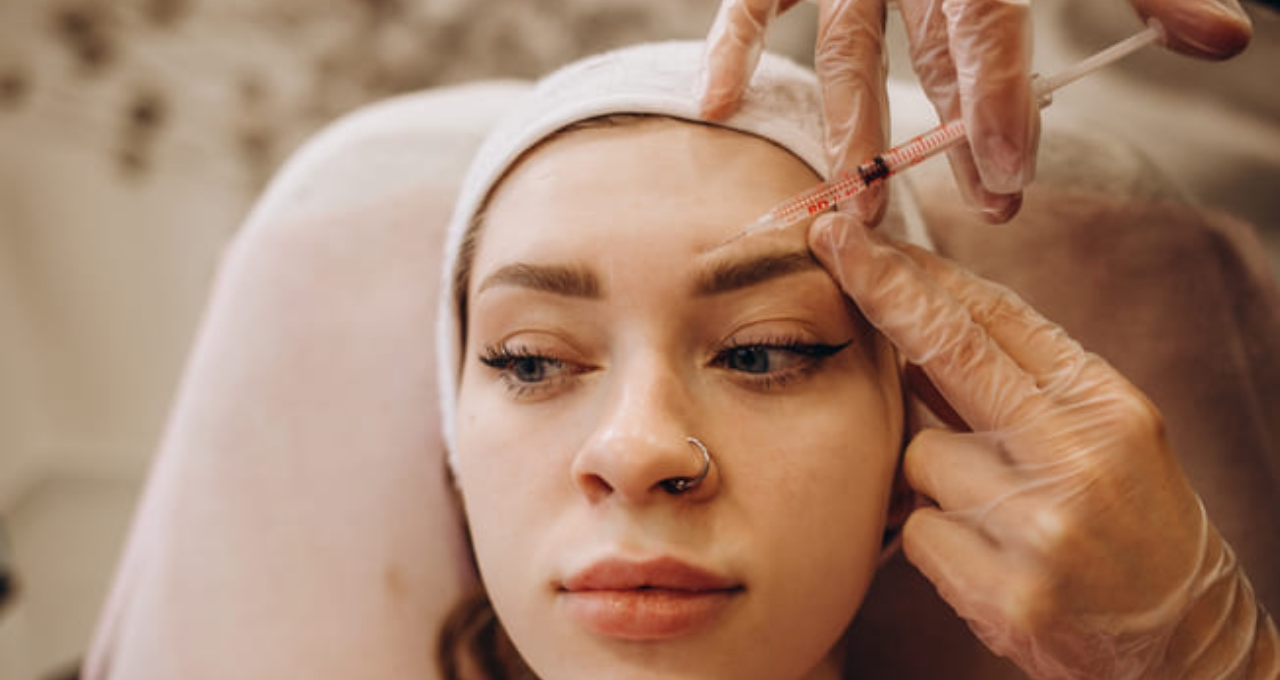
As a physician specializing in the treatment of frontal expression lines, in this guide I explain how horizontal forehead lines form, what accelerates their appearance, and what you can realistically expect from a well-indicated botulinum toxin treatment.
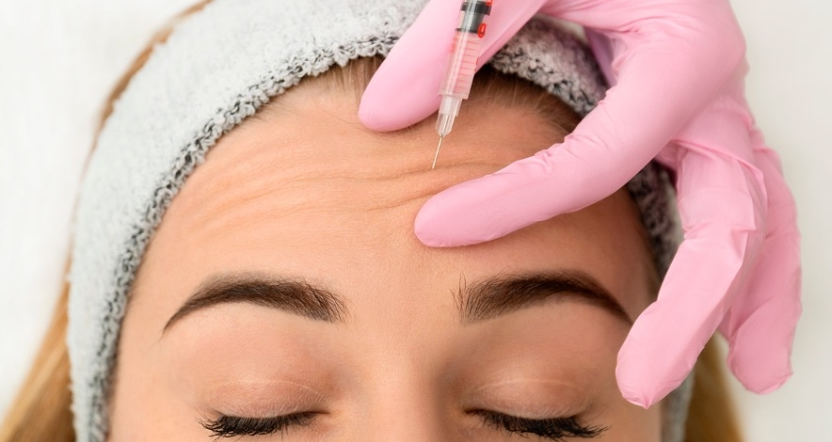
What determines the result in your case?
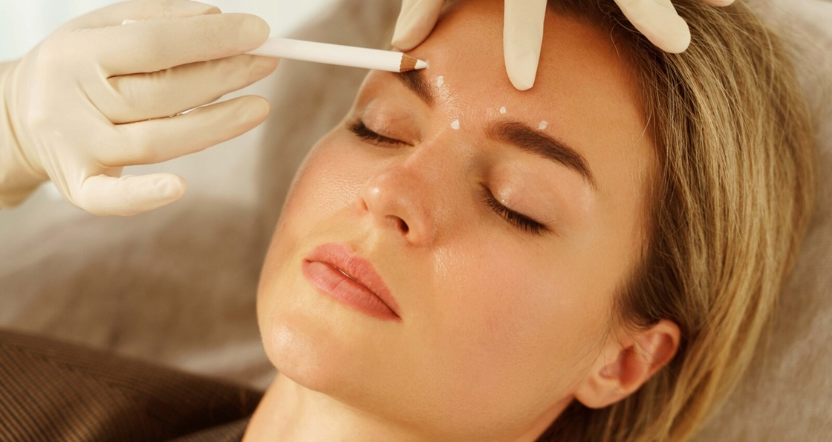
Not all forehead lines respond the same way to treatment, which is why an individual assessment is the most important step before defining dose and technique.
Dynamic versus static lines: if the horizontal lines only appear when raising the eyebrows and disappear at rest, the response to botulinum toxin tends to be more complete. If they’re already visible with the face at rest (static lines), toxin still helps soften them and slow their progression, but the result is more gradual and sometimes benefits from combining with biostimulators or resurfacing.
Strength of the frontalis muscle: people with very marked facial expressiveness or who raise their eyebrows frequently usually need slightly higher doses within the usual range to achieve the same degree of relaxation, always taking care not to compromise the natural elevation of the brow.
Skin thickness and quality: thinner skin or skin with more sun damage tends to show lines more prominently and may require a more careful adjustment of dose and technique to achieve a natural result.
Combining with the glabella: when there’s also a marked furrowed brow in addition to the horizontal lines, treating the forehead together with the glabella usually gives a more harmonious and natural result than treating each area separately.
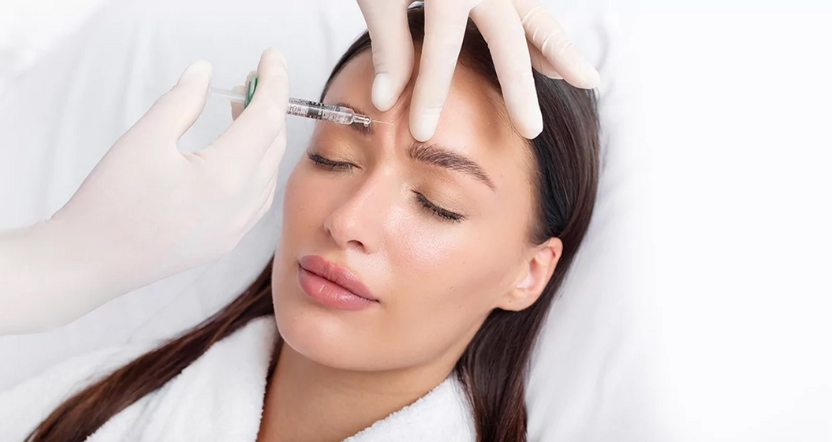
General results timeline
Day 3 to 5: Effect begins
You start noticing progressive muscle relaxation; horizontal lines visibly soften when gesturing.
Day 10 to 14: Optimal effect
The effect reaches its peak: the reduction in lines when raising the eyebrows is more noticeable and stable.
Month 4 to 6: Gradual decline
The effect begins to progressively decrease as the muscle regains activity, signaling it’s time to schedule your next session.
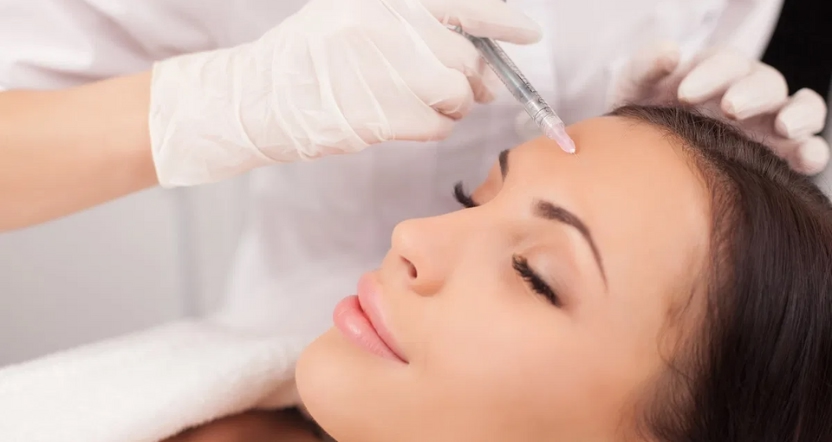
Factors
Severity: More units for deep.
Age: Better results in 30-50.
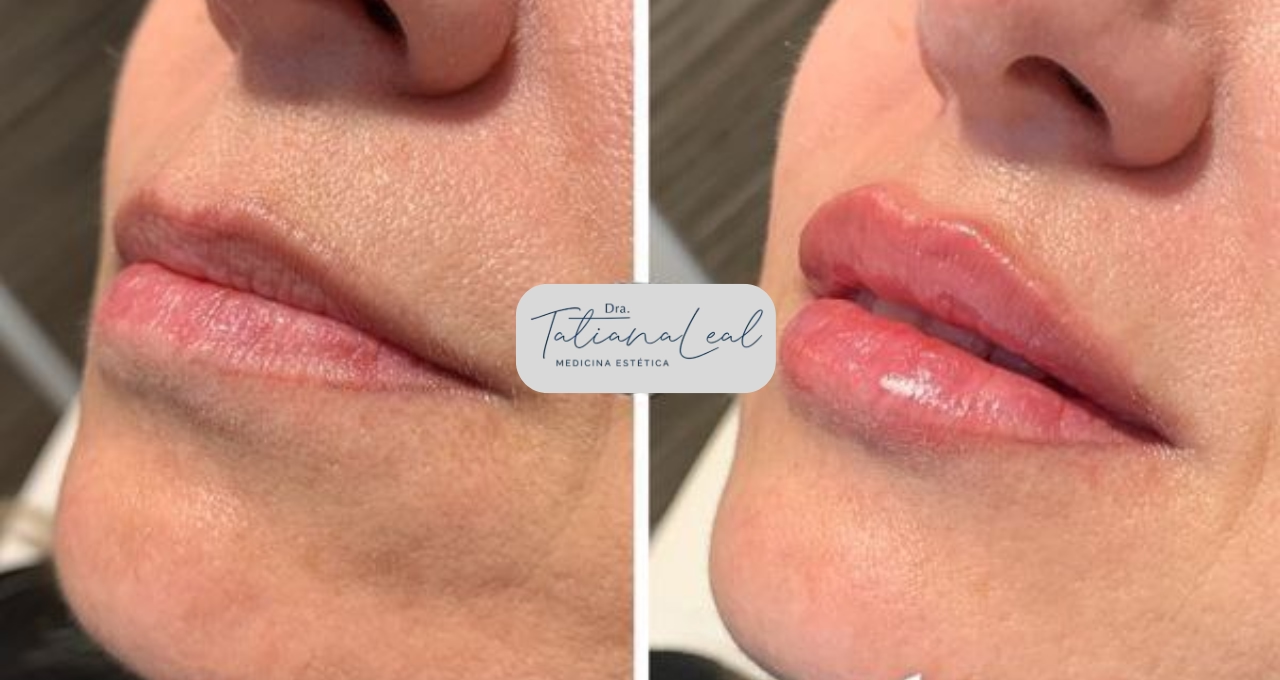
Expression Lines in the Mouth and Lips: Effective Treatment
We show you how to eliminate expression lines in the mouth and lips with effective and safe treatments.
Read moreAnatomy of forehead
The forehead has a large frontal muscle that contracts with expressions. Horizontal lines appear by eyebrow elevation, vertical by furrowed brow.
Technical data
| Aspect | Detail |
|---|---|
| Muscle | Frontal and corrugator |
| Skin thickness | 1.5-2 mm |
| Mobility | High expressive |
Benefits for forehead
Elimination of horizontal lines
Smooth skin when raising eyebrows.
Relax furrowed brow
Less serious look.
Prevent deep grooves
Stop deepening.
Contraindications forehead
Muscle weakness
Rare, but possible.
Asymmetry
Requires adjustment.
Migraines
May worsen if sensitive.
Candidates forehead
- Marked horizontal lines
- Habitual furrowed brow
- Healthy skin
- No contraindications

Do Creams for Expression Lines Really Work? The Truth
Discover if creams really eliminate expression lines or if you need professional treatments like botulinum toxin.
Read moreMyths forehead
Myth: Only men
Reality: Affects both genders.
Myth: Unnatural results
Reality: Adequate doses natural.
Myth: Intense pain
Reality: Slight discomfort.
Post-treatment tips forehead
Avoid furrowing brow
Expression awareness.
Sunscreen
Protect treated skin.
Reapplication
Every 4-6 months.
FAQ forehead
How many units?
10-20 depending on severity.
Does it affect eyebrow elevation?
No, if correct dose.
Combine areas?
Yes, common.
Side effects?
Mild temporary headache.
Conclusion
Forehead expression lines respond very well to botulinum toxin when the dose is tailored to the strength of your frontalis muscle and the position of your eyebrows. If you’re looking to soften the lines without losing naturalness or affecting your brow elevation, schedule your assessment and let’s design the most suitable plan for you.
Want to learn more about this treatment?
Schedule your consultation with our doctors and discover the ideal treatment for you
Start your transformation * Limited spots this weekUpdated: January 2026

Expression Lines: What They Are, Why They Appear, and How to Eliminate Them Forever
Complete guide on expression lines: what they are, causes, effective treatments like botulinum toxin and how to prevent them.
Read more
Frequently asked questions
Why do some people develop forehead lines in their 20s?
Early forehead line formation in the 20s is usually driven by a combination of highly expressive brow-raising habits, thin skin with low baseline collagen density, and inadequate sun protection — all of which accelerate structural skin breakdown before age-related decline even becomes a major factor. A strong family history of early facial lines is also a reliable predictor, as skin aging patterns are substantially heritable.
Do forehead lines reflect habitual expressions more than chronological aging?
In younger patients, forehead lines are almost entirely a reflection of habitual expressions — particularly the frontalis muscle's constant upward pull during surprise, attention, or effort — rather than true aging-related tissue loss. This is precisely why botulinum toxin works so well early: it addresses the cause directly by reducing the repetitive movement that imprints the line before it becomes permanent.
What is the rationale for preventive forehead treatment while young?
Starting preventive botulinum toxin treatment in the mid-to-late 20s interrupts the repetitive folding cycle before lines become etched into the skin at rest, meaning significantly less product is needed and results are more natural than corrective treatment years later. Clinical observations suggest that patients who begin early require lower doses over time as muscle activity gradually diminishes and the habitual movement patterns soften.
Can forehead lines affect eyebrow position or create a heavy brow appearance?
Yes, and this is one of the most important technical considerations in forehead treatment: the frontalis muscle is the primary brow elevator, so reducing its activity too aggressively can cause the brow to drop and create a heavy, tired appearance. An experienced physician maps each patient's individual brow position and muscle anatomy before treatment to ensure the dose is sufficient to soften lines without compromising brow support.
What treatments work when forehead lines have already become static?
When forehead lines are visible at rest, botulinum toxin alone is no longer fully sufficient and must be complemented by treatments that rebuild the skin's structural deficit. Options include biostimulators such as Sculptra to restore collagen density, micro-needling with radiofrequency to tighten and resurface, and superficial filler micro-droplets to physically fill the etched groove — typically combined in a staged protocol for the most natural and durable outcome.
How long does it take to see results on forehead lines, and when should the treatment be repeated?
The first signs of muscle relaxation are noticeable between days 3 and 5 after the treatment, with the full result established between days 10 and 14. The effect on the forehead typically lasts between 4 and 6 months. A maintenance session is recommended before the muscle fully regains its activity, to consolidate the long-term preventive effect.