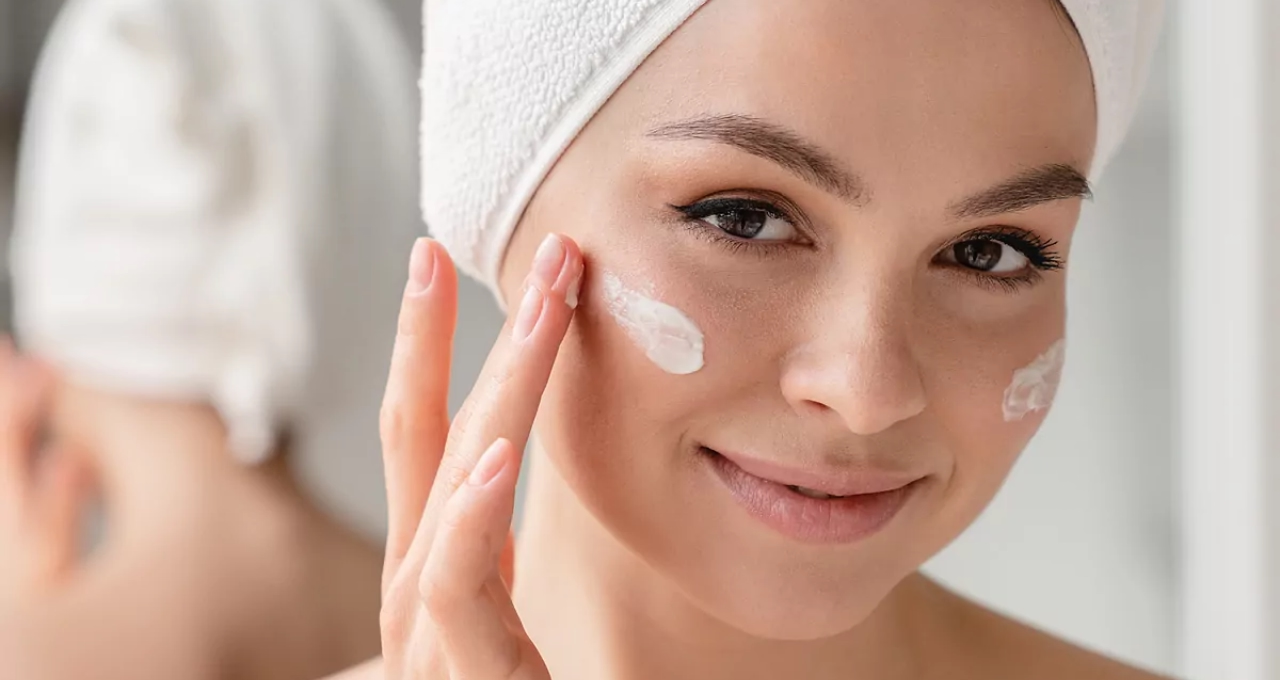
Before judging creams, we need to understand the enemy. There are two main types of lines:
1. Dynamic (expression) lines:
- Cause: Repetitive muscle movement (smiling, frowning).
- Location: Forehead, glabella, crow’s feet.
- Depth: Can become deep over time.
- Response to creams: Very limited. Creams don’t relax the muscle.
2. Static or aging lines:
- Cause: Loss of collagen, elastin, hydration, and volume.
- Location: Cheeks, mouth contour, neck.
- Response to creams: Better response. Active ingredients can improve skin quality.
Mechanism of action: how do creams try to work?
Creams aren’t magic. They act mainly at the level of the epidermis and superficial dermis, through these mechanisms:
- Hydration and plumping: Ingredients like hyaluronic acid attract water, temporarily “inflating” the skin and softening fine lines.
- Exfoliation and renewal: Alpha-hydroxy acids (AHAs) remove dead cells, improving texture and radiance.
- Collagen stimulation: Retinoids and some peptides signal fibroblasts to produce more collagen and elastin.
- Antioxidant protection: Vitamin C and E neutralize free radicals that degrade collagen.
Key ingredients that DO have scientific backing
Not all ingredients are equal. This table classifies the most studied ones:
| Active Ingredient | Level of Evidence | Main Mechanism | Time to See Results | Real Effect on Lines |
|---|---|---|---|---|
| Retinoids (Retinol, Tretinoin) | High | Stimulates collagen synthesis, exfoliates. | 3-6 months | Reduces fine lines, improves texture. Doesn’t erase deep dynamic lines. |
| Hyaluronic Acid | Medium-High | Intense hydration, volumetric plumping. | Immediate (temporary) / 4-8 weeks (penetration formulations) | Softens fine lines caused by dehydration. Temporary effect. |
| Vitamin C (Ascorbic Acid) | High | Antioxidant, protects collagen, brightens. | 2-3 months | Prevents formation, improves tone. Doesn’t eliminate existing lines. |
| Peptides (Matrixyl, Argireline) | Medium | Cell signaling, superficial “muscle-relaxing” effect. | 2-4 months | Mild effect on fine lines. Very limited against marked dynamic lines. |
| Niacinamide (Vitamin B3) | High | Improves skin barrier, reduces inflammation. | 1-2 months | Improves elasticity, reduces appearance. |
| Growth Factor (EGF) | Medium-Low | Stimulates cell proliferation. | 3-6 months | Variable results. Less solid evidence. |
Key takeaway: The most potent ingredients (retinoids and vitamin C) act mainly at a preventive and superficial corrective level. Their ability to penetrate down to the muscle layer where dynamic lines originate is limited or nonexistent.
Scientific limits: why can’t creams eliminate dynamic lines?
The skin barrier and facial anatomy explain the limit:
- Penetration barrier: The epidermis is designed to protect, not to let large molecules through. Only a minimal percentage (usually under 10%) of the active ingredient reaches the dermis.
- Physically impossible: No matter how advanced, a cream cannot relax the muscle contracting beneath the skin. Dynamic lines are caused by muscle action, not just by the quality of the skin over it.
- Regulated concentration: Active ingredient concentrations in cosmetics are much lower than in medical formulas, for safety and to avoid irritation.

Expression Lines: What They Are, Why They Appear, and How to Eliminate Them Forever
Complete guide on expression lines: what they are, causes, effective treatments like botulinum toxin and how to prevent them.
Read moreWhy a good skincare routine isn’t always enough
It’s common to come in for a consultation with a well-built skincare routine — cleansing, vitamin C, retinoids, daily sunscreen — and still see lines appear when making facial expressions. That doesn’t mean the routine has failed: it means a topical product is being asked to solve a problem that originates in the muscle.
On the forehead: when horizontal lines show up on raising the eyebrows, the cause is repeated contraction of the frontalis muscle. Creams with retinoids and peptides improve the quality of the skin covering that muscle — smoother, better hydrated, better texture overall — but they don’t reduce the strength of the muscle contraction. That’s why the line keeps appearing with movement, even though the skin looks noticeably better at rest. Adding botulinum toxin doesn’t undo the work done with the cream: it complements it, because it acts on the mechanism — the muscle — that no topical product can reach.
With crow’s feet: the pattern is similar. A consistent routine kept up for months can keep the skin radiant and well hydrated, and the lines that appear when smiling can still stay practically unchanged, because the orbicularis oculi muscle keeps contracting with the same intensity as always. Here too, botulinum toxin is the treatment that acts directly on the dynamic cause, while the cream keeps a legitimate role in maintaining skin quality between sessions.
The practical takeaway is the same in both cases: if dynamic lines persist unchanged with movement after several months of a well-chosen routine, it’s not that the cream is failing at its job — it’s that it’s being asked for a result that only a treatment capable of relaxing the muscle can deliver.
When ARE creams effective? (The full picture)
Saying “creams don’t work” is just as wrong as saying “they fix everything.” They’re tools within a strategy:
✅ For PREVENTION (skin in your 20s to 30s): A routine with antioxidants (vitamin C) and retinol can significantly delay the appearance of the first lines.
✅ For FINE STATIC LINES (from dehydration or early photoaging): Hyaluronic acid and retinoids can noticeably soften them.
✅ As a TREATMENT ADJUNCT: This is where they shine. Used after botulinum toxin, laser, or biostimulators, creams enhance and prolong results by improving the underlying skin quality.
✅ For OVERALL IMPROVEMENT IN TEXTURE, TONE, AND HYDRATION: Their effect on skin health and radiance is undeniable.
Decision guide: cream, professional treatment, or both?
Answer these questions to find your path:
| Your Situation | Recommended Option | Reason |
|---|---|---|
| You’re under 30 and want to prevent lines | Cream + sunscreen | The optimal stage to build up skin capital. |
| You have fine lines you can feel (static) | Potent cream (retinoids) + evaluation | You can see significant improvement in 3-6 months. |
| You have lines that show when you gesture (dynamic) | Evaluation for botulinum toxin | Creams don’t reach the muscular origin. |
| You have deep lines at rest | Professional treatment (fillers, laser) + maintenance cream | Volume or collagen restoration is needed. |
| You’ve had a treatment and want to maintain results | Cream specifically prescribed by your doctor | Maximizes and extends the treatment’s benefit. |
Expression Lines in the Eyes: Crows Feet and Effective Treatment
Complete guide to eliminate expression lines in the eyes and crows feet with effective treatments.
Read moreCommon myths debunked by science
Myth 1: “If it stings, it’s working”
Truth: Irritation (redness, flaking) is a side effect, not an indicator of efficacy. A well-designed formula minimizes irritation while still delivering the active ingredients.
Myth 2: “The more expensive, the better”
Truth: Price doesn’t guarantee efficacy. Pharmacy or dermocosmetic brands often invest more in R&D than some luxury brands. Trust the ingredient list (INCI) and the scientific reputation, not the price tag.
Myth 3: “Results are immediate”
Truth: Changes at the collagen level take a minimum of 3 months. Instant hydration is not the same as structural repair.
Expert tips for choosing and using creams
- Prioritize clinical evidence: Look for brands that publish in vivo studies on their products, not just testimonials.
- Less is more: A routine with 2-3 well-chosen actives (e.g., vitamin C in the morning, retinol at night) beats 10 products that interfere with each other.
- Sequence matters: Apply products from lightest to heaviest texture (serum -> cream -> sunscreen).
- Patience and consistency: Skin renews itself roughly every 28 days. Evaluate real results after 3 full cycles.
- Consult a doctor: A dermatologist or aesthetic physician can recommend the right strength and formula for your skin type and specific concern.
Frequently asked questions answered by physicians
Can I use retinol and botulinum toxin together? A: Yes, they’re complementary. Retinol improves skin quality over the long term, while toxin treats dynamic lines. Retinol is usually paused 3-5 days before and after a toxin treatment to minimize irritation.
What’s better for crow’s feet, argireline cream or toxin? A: Argireline (a peptide) has a very superficial and mild muscle-relaxing effect. For crow’s feet that show when smiling, botulinum toxin is the gold standard for its efficacy and precision.
Are creams with “botulinum toxin” or “botox effect” the real thing? A: No. That’s marketing. These creams contain peptides that mimic a very mild relaxing effect. They don’t contain the actual neurotoxin, and their effect isn’t comparable to the medical treatment.
I’m 50, is it still worth starting with creams? A: Absolutely. It’s never too late to improve your skin’s health. That said, manage your expectations. At this age, you’ll most likely need to combine creams with professional treatments for optimal results.
Final conclusion: an integrated approach is key
Creams for expression lines DO work, but for specific goals: prevention, texture improvement, hydration, and support for professional treatments. They are not a substitute for medical procedures when it comes to marked dynamic lines or significant volume loss.
The real anti-aging strategy in 2026 is an integrated one:
- Daily prevention: Sunscreen + antioxidants.
- Topical treatment: Creams with proven actives (retinol, vitamin C) suited to your age and needs.
- Targeted professional intervention: Botulinum toxin, fillers, lasers, or biostimulators when the problem goes beyond what creams can address.
Investing in creams without a proper diagnosis is like painting over a cracked wall without repairing the crack first. I invite you to a consultation to design a personalized plan that combines the best of both worlds: the consistency of skincare and the precision of aesthetic medicine.
Want to learn more about this treatment?
Schedule your consultation with our doctors and discover the ideal treatment for you
Reserve your spot Office in Bogotá, Colombia · Reply on WhatsAppUpdated: December 2026
Disclaimer: This article is for informational purposes only and does not replace personal medical consultation. Treatment results may vary by individual.
Expression Lines on the Forehead: Effective Treatment to Eliminate Them
Guide to eliminate expression lines on the forehead with botulinum toxin and other effective treatments.
Read more
Frequently asked questions
What ingredients in creams are clinically proven to help expression lines?
Retinoids — including prescription tretinoin and over-the-counter retinol — have the strongest clinical evidence for improving fine lines by accelerating cell turnover and stimulating collagen synthesis. Peptides such as argireline and matrixyl, along with vitamin C and niacinamide, also show measurable benefit in well-controlled studies, though the effect size is significantly smaller than what botulinum toxin achieves.
Can retinol reduce existing expression lines or only prevent new ones?
Retinol can modestly reduce the appearance of existing fine lines over several months of consistent use by increasing epidermal thickness and improving superficial collagen structure. However, it has no meaningful effect on deeper dynamic lines caused by muscle movement — those require a treatment that addresses the underlying muscular mechanism, not just the skin surface.
How do prescription creams differ from over-the-counter products for expression lines?
Prescription tretinoin is typically 10 to 100 times more potent than the retinol found in cosmetic products because it is absorbed directly in its active form, while retinol must be converted through multiple enzymatic steps after skin penetration. This translates into measurably faster and more pronounced results with tretinoin, at the cost of greater initial irritation that requires a proper introduction protocol under medical guidance.
When should someone stop relying on creams and consult a doctor about expression lines?
If visible lines persist at rest — not just during facial movement — after 3 to 6 months of consistent use of proven topical ingredients, that is a clear sign that the lines have become static and require a medical approach. Similarly, if the emotional or social impact of the lines is affecting confidence and quality of life, a consultation is warranted regardless of how long creams have been used.
Can creams be used to maintain results between medical treatments?
Yes, and this is actually an evidence-based strategy: retinoids and antioxidants used consistently between botulinum toxin sessions help maintain skin quality, extend the visible benefit of treatments, and may gradually improve the background skin texture that medical procedures cannot fully address. A physician-guided home care routine is a complement to, not a replacement for, clinical treatment in mature skin.