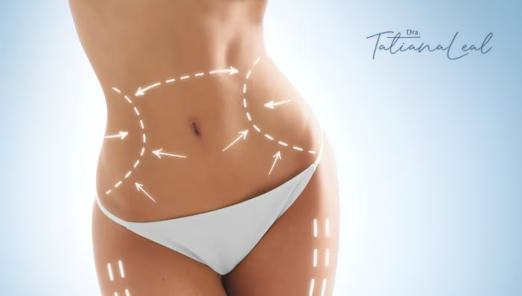
Liposuction and lipolysis are two aesthetic treatments used to eliminate localized fat. Despite their similar objective, they differ in their technique and approach. Liposuction is a surgical procedure, while lipolysis is a non-invasive treatment. The choice between these procedures depends on the patient’s needs and specific conditions. Both have their own characteristics, benefits, and recovery times. Below we will explore these differences in detail.
Fat transfer: a third procedure that is not the same thing
Many patients arrive at consultations confusing lipolysis with fat transfer, or asking whether they can “use the fat that is removed and put it somewhere else.” It is a frequent mix-up and worth clarifying:
Fat transfer (autologous fat grafting or lipofilling) is a surgical procedure that extracts fat from a donor area via liposuction, processes those cells, and reinjects them into another area to add volume: buttocks, cheeks, hands, lips, or breasts. Its goal is entirely different from that of lipolysis.
| Feature | Laser lipolysis | Fat transfer |
|---|---|---|
| Goal | Eliminate localized fat | Add volume to another area |
| Technique | Minimally invasive laser | Liposuction + reinjection |
| Anesthesia | Local | General or sedation |
| Recovery | 48–72 hours | 2–4 weeks |
| Requires operating room | No | Yes |
| Indication | Define/reduce areas | Increase volume |
If your goal is to reduce fat in a specific zone, fat transfer is not the answer. If your goal is to increase buttock volume or correct asymmetries using your own fat, laser lipolysis is not the path either. Each procedure has a precise indication, and conflating them in the same conversation usually leads to misaligned expectations.
The evaluation consultation with Dr. Tatiana Leal is the right place to determine which procedure —or combination— genuinely addresses your objective.

Is Laser Lipolysis Right for You? Everything You Need to Know Before Deciding
Learn everything about non-invasive laser lipolysis: from real benefits to risks you should consider before undergoing treatment.
Read moreLiposuction: Procedure and characteristics
Liposuction is an aesthetic procedure that aims to eliminate localized fat in different areas of the body. Below are its characteristics and relevant aspects.
Definition and technique used
Liposuction is a surgical procedure that involves fat aspiration through specialized cannulas. This process is performed under anesthesia and requires minimal skin incisions. The technique allows the plastic surgeon to sculpt specific areas, achieving precise and desired results in the patient’s figure.
Traditional liposuction vs. new techniques
Different liposuction techniques have evolved over time:
Traditional liposuction: Uses cannulas to directly suction fat. This method is effective for removing considerable deposits and is commonly accepted.
Ultrasound-assisted liposuction: Employs ultrasonic waves to facilitate the breakdown of fat cells, allowing for easier aspiration and less trauma to surrounding tissues.
Laser liposuction: Uses laser energy to liquefy fat before aspiration, providing additional benefits such as collagen stimulation in the skin.
| Characteristic | Liposuction | Lipolysis |
|---|---|---|
| Procedure type | Surgical with incisions | Non-invasive |
| Anesthesia | General or local | Not required |
| Recovery | 2-3 weeks | 3-5 days |
| Results | Immediate and dramatic | Gradual and subtle |
| Treatment areas | Extensive body zones | Small, localized areas |
| Tissue trauma | Major | Minimal |
| Medical control | Intensive follow-up | Spaced controls |
| Daily activity | Rest required | Immediate reincorporation |
| Risks | Moderate to high | Minimal |
| Body contour | Significant change | Subtle improvement |
Procedures in Bogotá and Medellín
In cities like Bogotá and Medellín, liposuction is widely offered by specialized clinics and centers.
These procedures are performed in controlled environments, complying with required health regulations. Experienced professionals conduct prior evaluations to determine the best options and personalize treatment according to patient needs.
Anesthesia and required medical team
The anesthesia used can be general or local, depending on the extent of liposuction and the surgeon’s recommendation. The medical team involved includes:
- Certified plastic surgeons
- Qualified anesthesiologists
- Specialized nursing staff for post-operative care
- Adequate surgical instruments and modern technology to ensure procedure safety
Lipolysis: Non-surgical treatment
Lipolysis has become a popular alternative for those seeking to eliminate localized fat without undergoing surgery. Below are the fundamental aspects of this treatment.
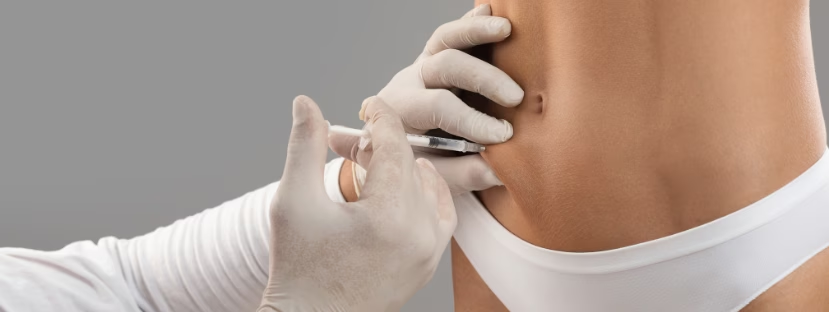
How does lipolysis work?
Lipolysis uses different techniques to destroy fat cells without requiring incisions.These techniques allow fat breakdown through minimally invasive interventions.
After treatment, the body metabolizes and eliminates fat cells through the lymphatic system. This process not only helps reduce fat but also improves skin appearance in treated areas.
Lipolysis techniques, including lipolaser
Laser Lipolysis: This technique uses laser energy to liquefy fat, facilitating its elimination without incisions. Besides reducing fat, it can stimulate collagen production, improving skin firmness.
Lipolytic Mesotherapy: Through local injections of specific substances, this technique helps dissolve accumulated fat in problem areas, being less invasive than traditional surgery.
Benefits of lipolysis for localized fat
Among the advantages offered by lipolysis are:
- Shorter recovery time compared to liposuction
- Visible results that gradually improve over time as the body eliminates decomposed fat cells
- Outpatient procedure, generally not requiring hospitalization
- Low risk of complications, as it doesn’t involve general anesthesia or deep incisions
Lipolysis compared to plastic surgery
Lipolysis represents a less invasive option with fewer risks compared to liposuction. While plastic surgery focuses on significant fat extraction, lipolysis offers more subtle results, aimed at defining and improving specific body areas.
Key differences between liposuction and lipolysis
| Characteristic | Liposuction | Lipolysis |
|---|---|---|
| Procedure Type | Surgical invasive | Non-surgical, non-invasive |
| Duration | 1-4 hours depending on area | 30-60 minutes per session |
| Anesthesia | General or local | None required |
| Maximum fat removal | Up to 5 liters (safe limit) | 200-500 ml per session |
| Recovery time | 2-6 weeks | 24-48 hours |
| Number of sessions | 1 session (typically) | 3-6 sessions (average) |
| Visible results | Immediate (though swelling takes time) | Gradual (2-3 months) |
| Approximate cost | $3,000 - $8,000 USD | $300 - $800 USD per session |
| Common side effects | • Swelling (2-3 weeks) • Bruising (2-4 weeks) • Moderate pain • Risk of infection | • Mild swelling (2-3 days) • Temporary redness • Minimal discomfort |
| Main contraindications | • Heart conditions • Blood clotting disorders • Pregnancy • BMI > 35 | • Pregnancy • Liver disease • Active infections |
| Results longevity | Permanent with maintained weight | 6-12 months, maintenance required |
| Most treated areas | • Abdomen • Flanks • Thighs • Arms • Back | • Double chin • Abdomen • Small flanks • Small localized areas |
Liposuction and lipolysis are two procedures that seek to eliminate body fat, although their methods and results vary significantly. Below are the main differences between both treatments.
Surgical vs. non-surgical procedures
One of the most marked differences between liposuction and lipolysis is that the former is a surgical procedure, while the latter is a non-invasive treatment.
- Liposuction: Involves skin incisions to suction fat from problem areas. This requires anesthesia and a controlled surgical environment.
- Lipolysis: Is carried out through non-invasive techniques, such as laser use or injections, that break down fat cells without surgery.
Expected results and recovery time
The time required to see results and the recovery process differs considerably between treatments.
- Liposuction: Results are immediate and clear, but recovery can be prolonged, often several weeks, depending on the amount of fat extracted.
- Lipolysis: Effects are more subtle and progressive, possibly taking several weeks to become visible as the body eliminates decomposed fat.
Ideal candidates for each treatment
The ideal candidates for each procedure vary according to the type of fat they wish to eliminate and their aesthetic goals.
- Liposuction: Recommended for people with larger, localized fat deposits seeking significant transformations. May not be indicated for those with severe skin laxity.
- Lipolysis: More suitable for those wanting to improve small fat areas and not requiring dramatic figure changes. Ideal for people who prefer less invasive procedures.
Impact on body contour
Both procedures have different impacts on body contour, depending on the amount of fat eliminated and technique used.
- Liposuction: Offers significant contour remodeling, allowing better definition of body proportions after removing large fat volumes.
- Lipolysis: Subtly improves general appearance by reducing localized fat without drastically altering body contour.

We no longer offer laser lipolysis: why we now recommend Scizer
If you were looking for laser lipolysis at our clinic, here's what changed: why we stopped offering it, and why Scizer is the alternative we recommend today to reduce localized fat without surgery.
Read morePatient experience and recovery
Post-treatment experience and recovery process are fundamental aspects for those undergoing aesthetic procedures. In both liposuction and lipolysis, patients can expect different realities, depending on the approach used.

Postoperative experience in liposuction
Patients opting for liposuction generally experience a more intense recovery phase. This is because it’s a surgical procedure. Among the characteristics of this experience:
- Pain and discomfort in treated areas, which can be controlled with prescribed medications
- Bruising and swelling, which are common and usually decrease over time
- Use of compression garments, which help reduce swelling and model body contour
- Restrictions on physical activities, recommending rest for a specific time to avoid complications
Recovery process in lipolysis
In contrast, recovery for those choosing lipolysis is generally faster and less complicated. This non-invasive procedure allows patients to resume daily activities without major inconveniences. Key recovery process characteristics include:
- Mild discomfort that is usually temporary and minor compared to liposuction
- No need for compression garments, as there are no incisions or fat extraction
- Patient can begin to notice body changes gradually as the body eliminates decomposed fat cells
Potential side effects and aftercare
In both liposuction and lipolysis, it’s fundamental to be aware of possible side effects and follow healthcare professionals’ recommended care. For liposuction, side effects may include:
- Infections at incision sites, which although uncommon, require medical attention
- Skin sensitivity alterations, which may be temporary or, in some cases, prolonged
In lipolysis, effects are less common but may include:
- Redness or inflammation in treated area, which normally disappears quickly
- Adverse reactions to used products, although these are rare and controllable
It’s essential to follow specialist instructions and maintain open communication during recovery to ensure optimal results and minimize complications.
What if you want neither surgery nor laser lipolysis sessions? Scizer, the third way
An important note if you’re comparing these options today: we no longer perform laser lipolysis at our clinic. We replaced it with Scizer, a macro-focused ultrasound and radiofrequency device that pursues the same goal —reducing localized fat without surgery— but with no incisions and no anesthesia, something neither liposuction nor laser lipolysis offered.
Compared to liposuction, Scizer remains the non-invasive option: no operating room, no general anesthesia, and no weeks of recovery, though with a per-session limit on the volume of fat it can treat — the same limit laser lipolysis had. If your case requires removing several liters of fat, liposuction is still the right procedure; if you want to define specific areas without an operating room, Scizer is the alternative we offer today. Read more about why we made this change.
Final considerations for choosing the right treatment
Selecting the most convenient aesthetic treatment is fundamental to achieving desired results. Several factors must be considered before deciding between liposuction and lipolysis.
Factors to evaluate with a specialist
Consultation with a qualified professional is an essential step. During evaluation, consider:
- General health status and existing medical conditions
- Specific aesthetic goals of each patient
- Amount of fat desired to be eliminated and its location on the body
- Expectations about recovery and short and long-term results
Importance of a healthy post-treatment lifestyle
Maintaining an adequate lifestyle is crucial to preserve results of any aesthetic procedure. Below, some points to consider:
- Adoption of a balanced and nutritious diet
- Regular exercise to strengthen and tone the body
- Adequate hydration and limitation of alcohol and tobacco intake
Local expert opinions in Colombia
Aesthetic medicine professionals in Colombia generally agree on the importance of personalizing each treatment.
Choosing a reliable doctor can considerably influence patient satisfaction. Clear communication about expectations and expected results with the specialist is key in the process. Contact us
Want to learn more about this treatment?
Schedule your consultation with our doctors and discover the ideal treatment for you
Schedule your treatment * Limited spots this weekUpdated: December 2024
Disclaimer: Results may vary from person to person. All procedures are performed by certified doctors in our state-of-the-art facilities.

Scizer vs Cryolipolysis: The Comparison You Need to Read Before Deciding
If you're deciding between Scizer or cryolipolysis, this technical comparison will show you the real differences in effectiveness, speed of results, discomfort, and price.
Read more
Frequently asked questions
What volume of fat can liposuction versus laser lipolysis realistically remove?
Liposuction can safely extract between 3 and 5 liters of fat in a single surgical session, making it the appropriate choice for patients with large, well-defined fat deposits. Laser lipolysis is designed for targeted areas of localized fat and is most effective for volumes under 500 ml per area, so it is not a substitute for surgery when the treatment goal requires significant volume reduction.
How does the recovery comparison actually break down in weeks versus days?
After traditional liposuction, most patients need 2-3 weeks before returning to desk work, with full physical activity restricted for 4-6 weeks due to the surgical trauma involved. Laser lipolysis patients typically return to normal daily activity within 3-5 days, with only mild compression garment use required, and exercise can usually resume within 10-14 days.
Which procedure produces longer-lasting results?
Both procedures permanently destroy fat cells in the treated area, so results are long-lasting as long as the patient maintains a stable weight. However, liposuction removes a significantly larger number of fat cells, which makes it more resistant to weight regain in the treated area. With laser lipolysis, the smaller number of cells destroyed means neighboring untreated fat cells can expand more noticeably if body weight increases.
Who is a genuine candidate for surgery versus who can achieve their goal non-surgically?
Surgery is the appropriate choice for patients with large or multiple fat deposits, significant skin laxity requiring simultaneous skin tightening, or areas that require precise anatomical sculpting. Non-surgical laser lipolysis is better suited for patients with small, isolated pockets of stubborn fat, good baseline skin tone, and who cannot or prefer not to undergo general anesthesia or a multi-week recovery.
What is the real cost difference between liposuction and laser lipolysis in Colombia?
In Colombia, traditional liposuction typically ranges from 4,000,000 to 10,000,000 COP depending on the number of areas treated, the surgical team, and the facility. Laser lipolysis per area generally ranges from 800,000 to 2,000,000 COP per session, but multiple areas and sessions are often needed, so the cumulative cost can approach surgical pricing when treating several zones.