
If you are considering Scizer or cryolipolysis to remove localized fat, this technical comparison will save you months of doubt and possible disappointment. Cryolipolysis (CoolSculpting) freezes fat and takes 8-12 weeks to show results, while Scizer combines ultrasonic cavitation and radiofrequency, achieving visible skin reduction and tightening from the first or second week. After 18 years of applying both treatments in my clinic, I have seen real differences in speed, discomfort, skin quality, and satisfaction. In this article, I analyze both technologies without bias, with advantages, disadvantages, and objective criteria so you can choose the most appropriate one.
The most common mistake is to decide based on price alone: cheap can be expensive if the treatment does not work for you.
Quick Comparison Table: Scizer vs Cryolipolysis
| Characteristic | Scizer | Cryolipolysis |
|---|---|---|
| Mechanism | Ultrasound + radiofrequency | Controlled freezing |
| Temperature | Heating 40-45°C | Cooling -11°C |
| Visible results | 1-2 weeks | 8-12 weeks |
| Maximum result | 4-6 weeks | 12-16 weeks |
| Typical sessions | 2 sessions | 2-4 sessions |
| Session duration | 60-90 min | 60-90 min |
| Discomfort during | Moderate heat | Intense cold initial + suction |
| Post pain | None | Moderate 3-7 days |
| Bruising | No | Frequent (40-60% of cases) |
| Effect on skin | Tightening (improves laxity) | Neutral or negative |
| Reduction | 8-12 cm abdomen (2 sessions) | 8-10 cm abdomen (2-3 sessions) |
| Treatable areas | Multiple and small | Limited (needs “pinch”) |
| Recovery | Immediate | 7-14 days |
| Price Bogotá | $900K/session | $1.2M-$1.8M/session |
| Total investment | $1.8M (2 sessions) | $2.4M-$7.2M (2-4 sessions) |
| FDA approved | Yes | Yes |
This table summarizes key differences. Now I’ll delve deeper into each point so you understand what these numbers really mean for your experience.
Learn in detail what Scizer is and how it works its ultrasound technology before continuing.
Speed of Results: Scizer Wins by Wide Margin
Scizer Timeline
Day 0-3: Treated area slightly red for 1-2 hours. Mild reduction in swelling noticeable.
Week 1-2: First visible changes. Reduction of 2-3 cm in most cases. Skin feels tighter.
Week 3-4: Noticeable contour reduction. Clothing fits differently. Most patients get excited here.
Week 4-6 (after second session): Maximum result stabilized. Accumulated reduction of 8-12 cm in abdomen. New collagen completely formed.
Cryolipolysis Timeline
Day 0-7: Bruising and moderate sensitivity. Pain like “muscle soreness” to touch. Many patients report discomfort sleeping on their side.
Week 1-4: No visible changes. Frustrating period where you don’t see anything and wonder if it worked.
Week 6-8: Mild changes begin. Reduction of 1-2 cm noticeable.
Week 10-12: Noticeable reduction finally visible. 4-5 cm reduction.
Week 12-16: Maximum result. Total reduction of 8-10 cm if everything went well.
Why this difference? Scizer’s ultrasonic cavitation destroys fat cells that your lymphatic system eliminates in 7-14 days. Cryolipolysis generates apoptosis (programmed cell death) which is a much slower process: 8-12 weeks for cells to die and be eliminated.
The psychological implication is important. With Scizer you see progress week by week, which maintains high motivation. With cryolipolysis you spend 2 months looking in the mirror without seeing anything, generating anxiety about whether it’s really working.
Effect on Skin Quality: Clear Advantage for Scizer
Scizer includes a multipolar radiofrequency component that heats the deep dermis stimulating fibroblasts. This generates:
- Immediate contraction of existing collagen fibers (tightening effect visible from session 1)
- Neocollagenesis during following 4-6 weeks
- Improvement in skin thickness, density, and elasticity
- Visible reduction of cellulite in many cases
It’s common for my Scizer patients to report that their skin looks tighter and firmer, not just thinner, thanks to this radiofrequency component.
Cryolipolysis has no skin tightening component. It only freezes and kills fat cells. The result can be:
- Volume reduction without skin improvement
- In some cases, visual worsening of laxity because you reduce fat that was “filling” the skin
- No effect on cellulite
- Skin may be left with irregular texture if application wasn’t perfect
Post-pregnancy abdomen is a pattern I see frequently: patients who tried cryolipolysis first do reduce fat, but notice that their skin looks visibly more lax. When they switch to Scizer, in addition to continuing to lose centimeters, the skin tends to improve in firmness thanks to the radiofrequency component built into the device.
If you have moderate laxity (skin that hangs a bit when you bend over), cryolipolysis can visually worsen the problem. Scizer addresses fat AND laxity simultaneously.

We no longer offer laser lipolysis: why we now recommend Scizer
If you were looking for laser lipolysis at our clinic, here's what changed: why we stopped offering it, and why Scizer is the alternative we recommend today to reduce localized fat without surgery.
Read moreDiscomfort and Comfort: Patient Experience
During the Procedure
Scizer: Moderate increasing heat. Tolerability 8/10. The radiofrequency phase is the hottest but completely bearable. Doesn’t require anesthesia. Many patients fall asleep or are on their phone calmly.
Cryolipolysis: Intense cold very uncomfortable the first 5-10 minutes (some describe it as “painful”). Then complete numbness of the area. The applicator suction generates a strong pinching sensation. Tolerability 6/10 during initial phase.
Post-Procedure
Scizer:
- No bruising
- No pain
- Mild sensitivity to touch for 24-48h
- Return to normal routine immediately
- Can exercise the next day
Cryolipolysis:
- Bruising in 40-60% of cases (last 7-14 days)
- Moderate pain like “muscle soreness” for 3-7 days
- Some patients report pain when sitting or lying on treated area
- Numbness that can last weeks or months (rare but documented)
- Some need painkillers the first few days
If your priority is comfort and zero downtime, Scizer is clearly superior.
Versatility of Treatable Areas
Scizer can treat:
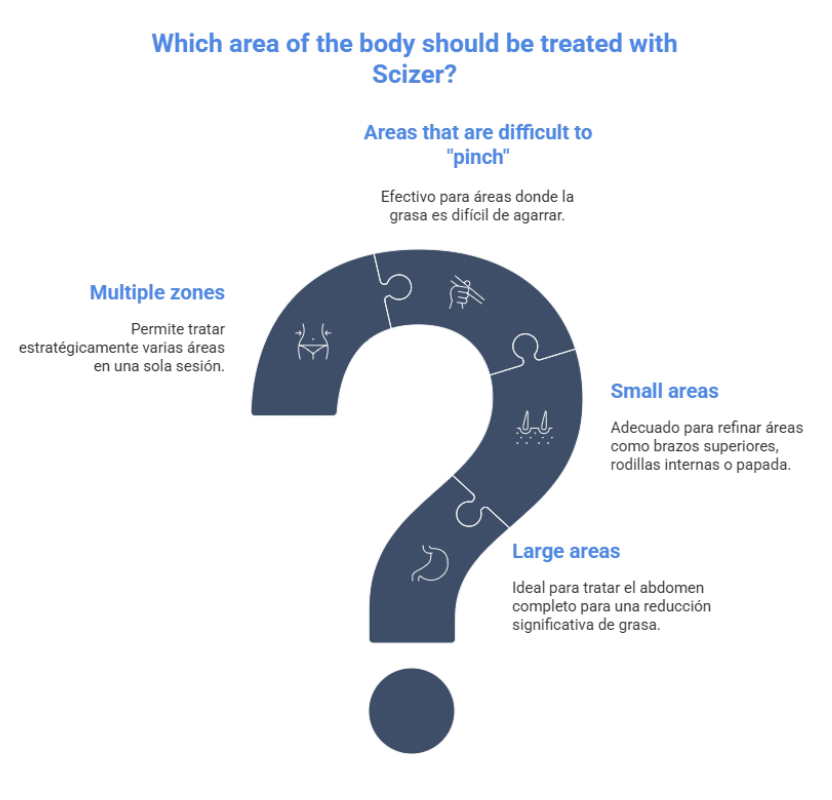
- Large areas (complete abdomen)
- Small areas (upper arms, inner knees, double chin)
- Areas difficult to “pinch”
- Multiple zones in one session (12 squares strategically distributed)
Cryolipolysis is limited to:
- Areas where you can apply suction (needs to “pinch” tissue)
- Zones with sufficient fat thickness (minimum 2-3 cm pinch)
- Generally 1-2 areas per session because each applicator takes 60-90 min
If you have several small problematic areas (arms + back + flanks), Scizer allows you to address everything harmoniously. With cryolipolysis you would need multiple separate very expensive sessions.
When Cryolipolysis May Be the Better Option
I’ll be honest: cryolipolysis maintains its place in specific cases.
1. Very localized fat deposits in thin person
If you’re a thin person (BMI 20-24) with a single very specific and isolated fat deposit (example: only flanks), and you have young skin with excellent elasticity, cryolipolysis can give good results with 1-2 sessions.
2. You’re not in a hurry
If you’re planning with 6 months anticipation (wedding, important event) and time is not a critical factor, cryolipolysis works well. The results eventually arrive.
3. Limited budget for few sessions
Although the cost per session of cryolipolysis is higher ($1.2M-$1.8M vs $900K for Scizer), it needs fewer sessions. If you can only invest in 2 total treatments, cryolipolysis can give better accumulated results than 2 Scizer sessions (although Scizer also gives excellent results with 2 sessions).
4. Very young skin (under 30)
If you’re under 30 with super elastic and firm skin, the risk of post-cryolipolysis laxity is minimal. The tightening benefit of Scizer is less critical in these cases.
However, for most patients I see in consultation (30-55 years, with some laxity, seeking progressive visible results), Scizer is the better option in 7 out of 10 cases.
Why Patients Are Switching from Cryolipolysis to Scizer
Post-pregnancy Abdomen with Laxity
This is one of the most frequent patterns I see in consultation. After one or more pregnancies, the abdomen often combines localized fat excess with a degree of skin laxity. When treatment only addresses fat — as is the case with cryolipolysis — it’s common for the skin, having lost the volume that was filling it out, to look more lax rather than firmer. Because Scizer includes a radiofrequency component, it works on both problems at once: reducing fat while stimulating contraction of existing collagen, which tends to produce a more balanced-looking result.
Exercise-Resistant Flanks
In patients who exercise regularly but can’t eliminate localized fat in the flanks, the slowness of cryolipolysis can work against motivation: several weeks pass without visible change, and in some cases patients relax their diet discipline because they feel “it isn’t working.” With Scizer, since changes are noticeable from the first weeks, it’s easier to sustain the habits that support the final result.
Multiple Small Areas
When fat accumulation is spread across several small zones (arms, knees, lower back, abdomen), cryolipolysis becomes less practical because each applicator covers a limited area and requires separate sessions per zone, raising both time and total cost. Scizer’s applicators can be distributed across several zones within the same session, making it more feasible to address the body as a whole.
Scizer: What It Is and How This Fat Reduction Technology Works
Scizer combines high-intensity ultrasound with radiofrequency to eliminate localized fat without surgery. Learn how it works, benefits, treatable areas, and expected results.
Read moreHow to Decide: Scizer or Cryolipolysis
Do you have visible laxity in addition to fat?
YES → Scizer is better option (tightening benefit included) NO (super firm young skin) → Both work, continue evaluating
Can you commit to waiting 3-4 months to see results?
NO (I want results in weeks) → Scizer (visible changes week 2-3) YES (I have patience and time) → Both options viable
Do you have multiple small areas to treat?
YES (arms + back + flanks, etc.) → Scizer (more versatile) NO (only 1-2 large areas) → Both options viable
Are you sensitive to intense cold or post-procedure pain?
YES → Scizer (tolerable heat, no post pain) NO (I tolerate discomfort) → Both options viable
What is your available budget?
$1.8M-$2.5M: Scizer 2 sessions complete protocol $2.4M-$4M: Cryolipolysis 2 sessions vs Scizer 2 sessions (Scizer comes out better) $4M+: Both options viable for multiple areas
My recommendation after 18 years: Scizer is the better option for 7 out of 10 patients I evaluate, especially when there is laxity, progressive visible results are sought, or multiple areas are treated. Cryolipolysis maintains its place when the patient has very localized deposits, excellent skin, and ample time availability to wait for results.
Read more about real Scizer results with documented cases before deciding.
Price: Total Investment Analysis
Projected Investment in Bogotá 2026
| Concept | Scizer | Cryolipolysis |
|---|---|---|
| Price per session | $900,000 | $1,200,000 - $1,800,000 |
| Recommended sessions | 2 | 2-4 |
| Total investment | $1,800,000 | $2,400,000 - $7,200,000 |
| Cost per cm reduced | $150,000 - $225,000 | $240,000 - $360,000 |
Hidden factor: retreatments. In cryolipolysis, 30-40% of cases need additional session in zones that didn’t respond well. This can significantly elevate total investment.

With Scizer, the 2-session protocol is predictable. You rarely need sessions beyond what was planned.
Honest analysis: The price per session of Scizer is lower. You need fewer sessions. The total investment is significantly lower in most cases. Plus you get tightening benefit included.
One cryolipolysis session that doesn’t give expected result and needs repeating ($1.8M lost) costs more than 2 well-executed Scizer sessions ($1.8M total with predictable and consistent results).
Learn the complete detail of the price of Scizer in Bogotá including financing options.
FAQ: Doubts About Scizer vs Cryolipolysis
Can I combine Scizer and cryolipolysis?
Not in the same area simultaneously. You can do one first and the other later (wait 4-6 months). It doesn’t make much sense to combine because Scizer already offers the best of both worlds.
Which hurts more?
Cryolipolysis is more bothersome: intense initial cold + post-procedure pain 3-7 days. Scizer: tolerable heat during + zero post pain.
Do Scizer results last less than cryolipolysis?
No. Both destroy fat cells permanently. Durability depends on maintaining stable weight, not the technology used.
If I did cryolipolysis and it didn’t work, will Scizer work?
Probably yes. The mechanisms are completely different. Ultrasonic cavitation vs freezing. I’ve treated several cases that didn’t respond to cryolipolysis and responded excellently to Scizer.
Can Scizer correct cryolipolysis irregularities?
In some cases yes. If cryolipolysis left an area with irregular texture, Scizer’s radiofrequency component can improve the skin. I evaluate case by case.
For large abdomen which is better?
It depends. If the abdomen is very large (BMI >32), you should first lose general weight. Neither Scizer nor cryolipolysis are for obesity. If it’s abdomen with BMI 26-30, both work but Scizer gives you results faster + tighter skin.
What happens if I gain weight after treatment?
With both technologies: the destroyed cells don’t return, but the remaining ones can grow. Gaining 5+ kg can partially reduce result. Maintain stable weight.
Which has less risk of side effects?
Scizer. Cryolipolysis side effects include: bruising (40-60%), pain (common), prolonged numbness (5-10%), and in rare cases paradoxical adipose hyperplasia (fat growth instead of reduction, 0.05% cases but exists). Scizer has a cleaner safety profile.
Does Scizer work on cellulite and cryolipolysis doesn’t?
Correct. Scizer improves appearance of cellulite through radiofrequency tightening effect. Cryolipolysis has no effect on cellulite.
Why do some doctors only offer cryolipolysis?
Equipment investment. A cryolipolysis device costs $80K-$150K USD. A quality Scizer equipment costs similar or more. Some doctors only have one or the other and naturally recommend what they have. I have both and choose according to case.
Scizer vs. Laser Lipolysis: The Other Common Question
Many patients comparing Scizer with cryolipolysis also ask me about laser lipolysis, the fiber-optic, micro-incision technique I offered at the clinic for years. Today I no longer perform laser lipolysis: I replaced it with Scizer for most localized-fat cases, for these reasons:
| Feature | Laser lipolysis | Scizer |
|---|---|---|
| Technique | Laser fiber through 0.5 cm micro-incisions | External ultrasound and radiofrequency, no incisions |
| Anesthesia | Local, with a needle | None |
| Recovery | 48-72 hours, garment 15 days | Immediate |
| Price in Bogotá | $1.5M–$4M COP per zone | $900K COP per session ($1.8M full protocol) |
| Skin tightening | Stimulates collagen, no dedicated radiofrequency | Multipolar radiofrequency included |
| Permanence | Permanent | Permanent |
The main difference versus cryolipolysis is that laser lipolysis is actually invasive (it requires incisions and anesthesia), while Scizer and cryolipolysis are both non-invasive. If avoiding any incision is your priority, Scizer and cryolipolysis are the two options to compare — and you already saw above why Scizer usually wins that comparison too. Read the full story of why we stopped offering laser lipolysis and now recommend Scizer.
My Professional Recommendation After 18 Years
Both are valid technologies, FDA certified, with solid clinical evidence. Both destroy localized fat effectively when used in appropriate candidates.
My preference is Scizer in most cases for these reasons:
- Progressive visible results maintain patient motivation
- Included tightening benefit prevents common problem of post-reduction laxity
- More comfortable experience without bruising or post pain
- Versatility to treat multiple small areas
- Better cost-benefit ratio in most scenarios
I still recommend cryolipolysis when: very young patient (<28 years) with excellent skin, single very localized fat deposit, and ample time availability to wait for results. Represents perhaps 2-3 out of every 10 patients I evaluate.
The best way to decide between Scizer or cryolipolysis isn’t by reading online comparisons (although they help), but by evaluating your specific case with measurements, skin analysis, and realistic discussion of expectations.
In the assessment I’ll show you:
- Exact measurements of your problem areas
- Result prediction with each technology for YOUR case
- Personalized protocol with specific timeline
- Total investment without surprises
I won’t tell you what to buy. I’ll explain what works better for your specific body and objectives.
| [Schedule no-cost assessment] | Learn Scizer in detail | See real documented cases |

Is Laser Lipolysis Right for You? Everything You Need to Know Before Deciding
Learn everything about non-invasive laser lipolysis: from real benefits to risks you should consider before undergoing treatment.
Read more
Frequently asked questions
Which technology destroys a greater percentage of fat cells per session?
Both technologies can achieve similar total fat cell reduction of approximately 20-25% in the treated area per full session cycle. The practical difference is efficiency: Scizer typically achieves this in 2 sessions while cryolipolysis may require 2-4 sessions per area depending on the applicator size and fat volume, which is why Scizer's total treatment investment is lower for patients treating the abdomen and flanks.
Which procedure involves less discomfort during the actual treatment?
Scizer produces a warming sensation and moderate heat during the session that most patients describe as tolerable without anesthesia. Cryolipolysis begins with an intense cold and suction sensation during the first 5-10 minutes that many patients find more uncomfortable than the heat from Scizer. Post-treatment, cryolipolysis also causes moderate tenderness and soreness for up to 7-14 days, while Scizer patients typically report no post-treatment pain.
Which is better suited for visceral fat versus subcutaneous fat?
Neither technology treats visceral fat (the fat stored inside the abdominal cavity around organs), as both operate at the subcutaneous level above the muscle fascia. Scizer penetrates to 13-15 mm and cryolipolysis works on the pinchable fat layer above the muscle. If a patient's primary concern is a protruding abdomen driven largely by visceral fat, neither device will produce satisfying results, and metabolic lifestyle changes are the appropriate intervention.
Which gives faster visible results after treatment?
Scizer produces visible changes within 1-2 weeks as destroyed fat cells release their contents and the lymphatic system begins clearing them. Cryolipolysis triggers a slower inflammatory process (cryoapoptosis) that takes 8-12 weeks to produce noticeable results and reaches maximum effect at 12-16 weeks. For patients with a specific event or deadline, Scizer is clearly the superior choice.
What is the cost comparison per treated area in Bogotá?
In Bogotá, a single Scizer session for the abdomen area costs approximately 900,000 COP, and the standard 2-session protocol totals around 1,800,000 COP. Cryolipolysis ranges from 1,200,000 to 1,800,000 COP per session depending on the applicator used, and treating the same area adequately often requires 2-4 sessions, bringing the total to 2,400,000-7,200,000 COP. Scizer's faster results and lower total investment make it more cost-effective for most patients.