
“Do I really not need general anesthesia?” asked Sarah, a 35-year-old tech executive, during a consultation a while back. Like many of our patients, she was attracted by the promise of a “non-invasive” procedure but had concerns about its safety.
Today we explain what the real risks of laser lipolysis were — the procedure we performed for over a decade — and why, after systematically comparing its results against Scizer, we decided to stop offering it.
What laser lipolysis was, and why we stopped offering it
Laser lipolysis was for years a minimally invasive procedure: an ultra-thin laser fiber, introduced through a 0.5 cm micro-incision under local anesthesia, heated and broke down localized fat cells so the body could clear them naturally over the following weeks.
It wasn’t a bad technology — it still isn’t, at clinics that perform it well — but after comparing its results against Scizer in our own patients, we decided to concentrate our protocol on the technology that delivers better results with lower risk. Scizer combines macrofocused ultrasound and multipolar radiofrequency, works entirely from outside the skin, and pursues the same goal — reducing exercise-resistant localized fat — without any of the risks we documented for years with the laser fiber.
The real risks we documented across more than 1,000 cases
With the same honesty we apply to any procedure, here are the real risks of laser lipolysis we documented over more than a decade performing it:
Fluid accumulation (seromas)
This happened more often when a patient skipped the post-treatment protocol, especially wearing the compression garment. Warning signs: excessive swelling, a fluctuation sensation, increasing discomfort. This risk doesn’t exist with Scizer: with no incision and no fiber under the skin, there’s no space for fluid to collect.
Infections
Rare but possible, almost always tied to the fiber’s insertion point. They required rigorous area cleansing and, in some cases, preventive antibiotics. Scizer removes this variable at the root: with no incision, there’s no entry point to become infected.
Burns and temporary nerve tingling
These happened when laser energy stayed concentrated on one spot too long, or the fiber sat too close to the skin; nerve-related tingling usually resolved within weeks. Both complications depended directly on the provider’s manual handling of the fiber under the skin. Scizer has no fiber and no subdermal contact: that dependency on manual skill disappears.
Irregular scarring
The treated area could develop texture or pigmentation changes, with higher risk in patients with a history of keloids or hyperpigmentation. Since the laser lipolysis incision was the source of this risk, there’s no incision to scar with Scizer.

Scizer vs Cryolipolysis: The Comparison You Need to Read Before Deciding
If you're deciding between Scizer or cryolipolysis, this technical comparison will show you the real differences in effectiveness, speed of results, discomfort, and price.
Read moreLaser lipolysis vs. Scizer: the comparison that changed our protocol
| Laser lipolysis (no longer offered) | Scizer (what we recommend today) | |
|---|---|---|
| Incision | Yes, 0.5 cm per zone | None |
| Anesthesia | Local | Not required |
| Seroma risk | Yes | Not applicable |
| Infection risk | Low, but real | Not applicable |
| Burn / nerve damage risk | Low, but real | Not applicable |
| Skin tightening | Mild thermal stimulation | Dedicated radiofrequency, same device |
| Recovery | 48-72 hours, compression garment 15 days | Immediate, no mandatory garment |
| Treatable areas | Abdomen, flanks, arms, back, chin | Same areas |
The one honest caveat: the laser fiber, working under the skin, kept a slight edge for very deep, small, isolated fat pockets. Those cases are uncommon in consultation; if yours fits that profile, we’ll say so directly during your assessment and discuss which alternative — including surgical options — makes more sense.
Contraindications we still evaluate today
These conditions called for special evaluation or were absolute contraindications for laser lipolysis, and they remain part of the assessment for any fat-reduction procedure, Scizer included:
- Pregnancy and breastfeeding
- Uncontrolled diabetes; even controlled diabetes required evaluation
- Coagulation disorders and active autoimmune disease
- Pacemakers or metallic implants in the area (specific to the fiber technique; Scizer has its own restrictions around electronic devices, reviewed during the assessment)
- Significant excess weight: neither laser lipolysis nor Scizer is a weight-loss treatment — both define localized fat in people near their ideal weight
Why Scizer is now our go-to technology for localized fat
After systematically comparing both technologies in our patients, Scizer became our protocol for three concrete reasons:
Zero incisions, zero anesthesia. The entire treatment is applied from outside the skin: no needles, no cannulas, none of the risk tied to any invasive procedure.
Skin tightening built into the same device. Scizer’s multipolar radiofrequency stimulates collagen with dedicated power that laser lipolysis never had. For patients with some skin laxity alongside localized fat — the most common profile past age 30 — that translates into a more visible final result.
Zero downtime. No mandatory compression garment, no significant restrictions: our patients return to their routine the same day.
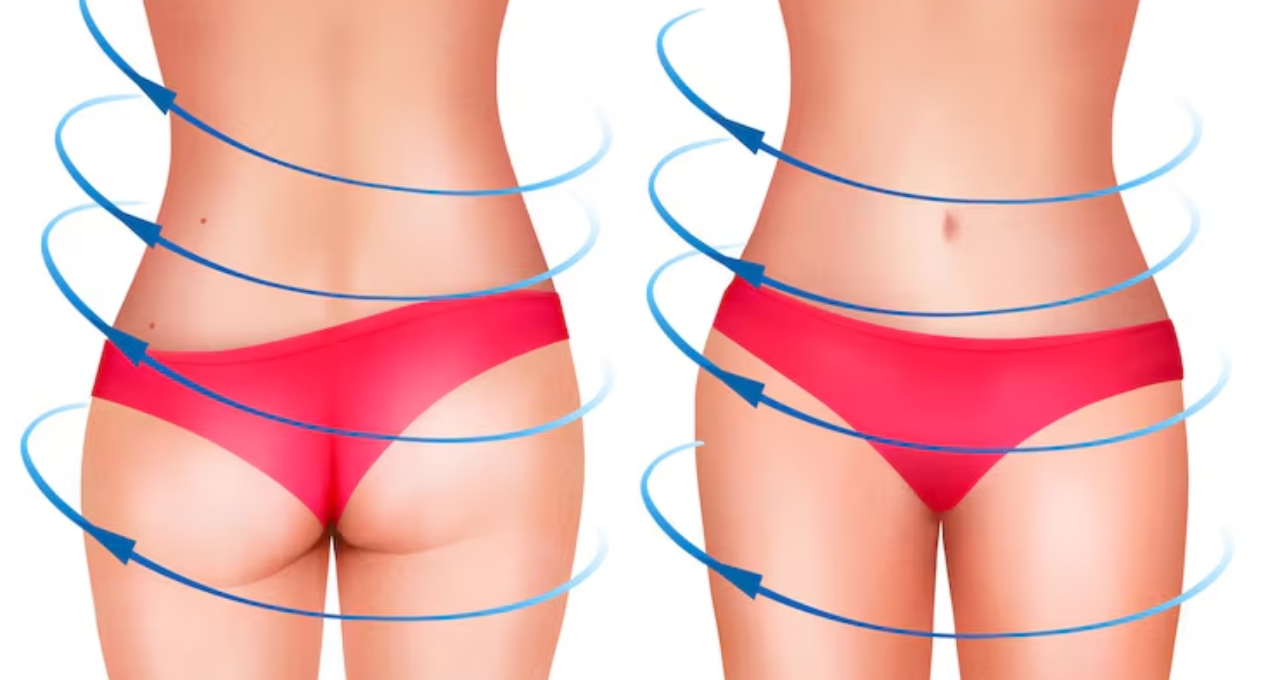
Scizer before and after: real documented results
See real, documented Scizer results: 8-12 cm reductions in the abdomen, improvements in flanks and thighs, with photos, measurements, and a results timeline.
Read moreIf you were looking for laser lipolysis, here’s what changes for you
If your goal was reducing localized fat in the abdomen, flanks, arms, or back that doesn’t respond to exercise, that goal is still achievable — now with Scizer. Read the full story in why we stopped offering laser lipolysis and now recommend Scizer, or check the technical and pricing detail on the Scizer page.
If you already had a pending assessment for laser lipolysis, book again: we’ll evaluate your case with Scizer at no extra cost.
Want to learn more about this treatment?
Schedule your consultation with our doctors and discover the ideal treatment for you
Start your transformation * Limited spots this weekUpdated: September 2026
Disclaimer: Results may vary from person to person. All procedures are performed by board-certified doctors in our state-of-the-art facilities in compliance with FDA regulations.

We no longer offer laser lipolysis: why we now recommend Scizer
If you were looking for laser lipolysis at our clinic, here's what changed: why we stopped offering it, and why Scizer is the alternative we recommend today to reduce localized fat without surgery.
Read more
Frequently asked questions
What medical conditions made someone ineligible for laser lipolysis?
Patients with active infections, blood coagulation disorders, uncontrolled diabetes, or autoimmune diseases were generally not candidates for laser lipolysis. Pregnancy, breastfeeding, pacemakers, and certain metallic implants in the treatment area were also absolute contraindications. Those same conditions are still reviewed before any Scizer session today, though its non-invasive profile removes much of that risk from the outset.
How did we tell a real complication from normal swelling in the first few days?
With laser lipolysis, normal inflammation showed up as moderate swelling and tenderness that eased after the first 48 hours. A real complication showed increasing pain, fever above 38°C, or discharge from the insertion point. With Scizer that distinction barely applies: there's no incision site to monitor in the first place.
Why did the risk increase with an inexperienced provider?
An undertrained provider could apply incorrect energy levels, raising the risk of internal burns and uneven contours: fiber depth and heat needed precise clinical judgment. It's one of the reasons we now prefer Scizer — working entirely from outside the skin removes that variable tied to manual fiber technique.
What was the actual risk of burns or nerve damage with laser lipolysis?
Burns happened when laser energy stayed too long on one spot or the fiber sat too close to the skin; nerve-related tingling was usually temporary. Both risks depended directly on the provider's manual handling of the fiber under the skin. Scizer has no fiber and no subdermal contact, so that dependency on manual skill disappears.
Does Scizer carry the same risks as laser lipolysis?
No. Scizer uses macrofocused ultrasound and radiofrequency applied entirely from outside the skin, with no incisions, no fiber, and no anesthesia — so the risks tied to an invasive technique simply don't exist: no seromas, no internal burns, no puncture scar. What remains is the risk profile of any energy-based skin treatment — temporary redness or tenderness — far lower than laser lipolysis.
Do you still offer laser lipolysis at the clinic?
No. We stopped offering it and now recommend Scizer for virtually every case we used to treat with laser lipolysis: same localized-fat-reduction goal, none of the risks described in this article, plus the added benefit of radiofrequency skin tightening in the same device.
Graphics credits, references and sources
- A Promising Alternative to Traditional Liposuction — revisión reciente sobre avances, limitaciones y eficacia.
- A Review (Fakhouri et al.) — repasa literatura previa, discute mecanismos y evidencia clínica
- Comparative Study of Wavelengths for Laser Lipolysis — análisis técnico sobre qué longitudes de onda funcionan mejor