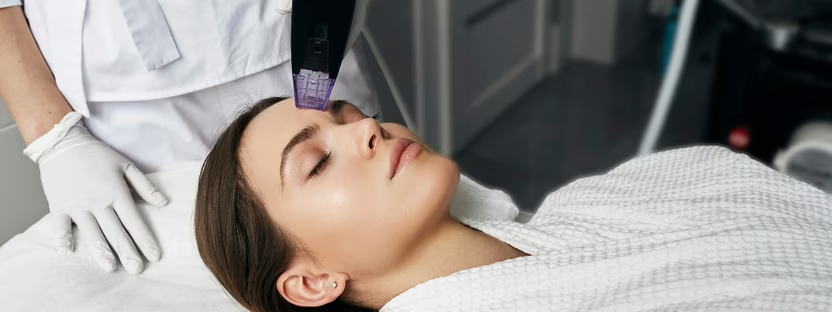
One of the parts of my work as an aesthetic medicine physician that I value most is the evaluation consultation — that moment when a patient arrives with an expectation and together we determine whether the treatment they have in mind is truly the most suitable for their goals. Facial radiofrequency is an excellent treatment, but it is not the right answer for everyone.
In short: you are a good candidate for facial radiofrequency if you have mild to moderate laxity, reasonable skin elasticity, and expectations of gradual, natural results. If laxity is severe or skin damage is very advanced, there are likely more appropriate options.
The ideal candidate profile
After many years evaluating patients at our clinic in Bogotá, I can clearly describe who gets the best results with facial radiofrequency:
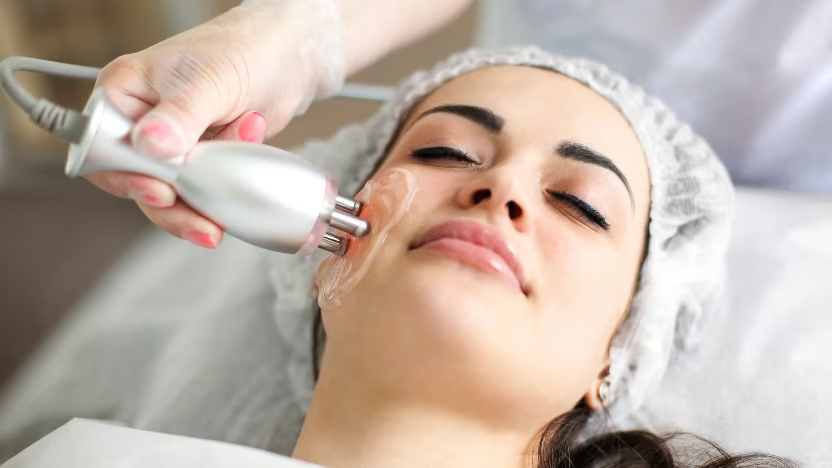
Age range: 30–55 years
Radiofrequency works by stimulating the body’s own collagen production. For this to be effective, the tissue needs sufficient regenerative capacity. In general:
- Under 30: Skin has sufficient collagen of its own. RF can be used preventively, but visible results are smaller because skin is already in good condition.
- Between 30 and 55: The optimal range. Collagen production has begun to decrease (1% per year since age 25), there is initial or moderate laxity, but tissue still responds well to the stimulus.
- After 55–60: Results are more variable. Heavily sun-damaged skin or skin with marked volume loss may respond less. It is not a contraindication, but expectations need to be adjusted.
Laxity degree: mild to moderate
Radiofrequency is ideal for what we call “grade I and II laxity” in aesthetic medicine:
Grade I (mild): Skin that has begun to lose firmness, especially visible in the facial contour and neck. Expression lines are present but not deep. Excellent candidate.
Grade II (moderate): Visible loss of facial oval definition, neck with some laxity, present nasolabial folds. Very good candidate, may need more sessions or combination with other treatments.
Grade III (severe): Visible excess skin, marked double chin, significant facial ptosis. Radiofrequency may provide some improvement but is generally insufficient as the sole treatment.
Good residual skin elasticity
I assess this during the physical consultation. Skin that, when gently pinched, quickly returns to its position has good elasticity and will respond well to radiofrequency. Skin that is slow to recover or forms permanent folds has lower response capacity.
No significant volume loss
Radiofrequency firms and tightens, but does not replace lost volume. If a patient has hollow cheeks, deep folds, or loss of mandibular projection due to fat tissue loss, RF may be part of the treatment but not the only tool. I generally combine RF with hyaluronic acid in these cases.
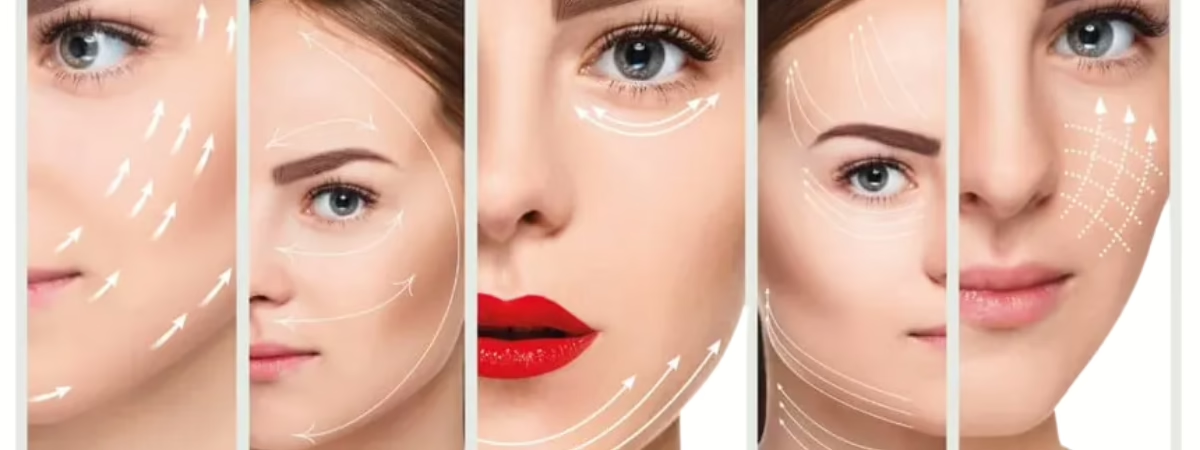
HIFU Facial vs Facial Radiofrequency: Differences, Benefits and How to Choose
Can't decide between HIFU facial and facial radiofrequency? Dr. Tatiana Leal explains the key differences, who each treatment is best for, and how to combine them for maximum results — all at Bogotá prices.
Read moreAbsolute contraindications: when RF cannot be performed
Active electronic implants
The electromagnetic field of radiofrequency can interfere with devices such as pacemakers, defibrillators, insulin pumps, or other electronic implants. If you have any implanted electronic device, RF is contraindicated.
Pregnancy
As a precaution (no safety studies in pregnant women exist), RF is contraindicated during pregnancy. After delivery, it can be evaluated.
Active cancer
If there is an active cancer diagnosis in the area to be treated, RF is contraindicated. Consult with the oncologist in other cases.
Metal implants in the treatment area
Fixed dental prostheses (titanium dental implants) in the jaw or cheek area must be reported. Depending on the type and location, it may be necessary to adjust the protocol or avoid that area.
Active autoimmune skin diseases
Lupus erythematosus, active scleroderma, and other diseases affecting the skin are contraindications. In remission, each case must be evaluated with the rheumatologist.
Relative contraindications: when to postpone
Active herpes in the area to be treated: Wait for complete resolution of the outbreak. RF can reactivate herpes in predisposed patients — in those cases, I prescribe antiviral prophylaxis before treatment.
Active inflammatory acne: Active lesions with inflammation are a temporary contraindication. Stable acne in the maintenance phase is not a problem.
Undiagnosed skin lesions: Any pigmented, asymmetric, or atypical-looking lesion should be evaluated before applying RF in that area.
Active dermatitis or eczema: Wait for remission.
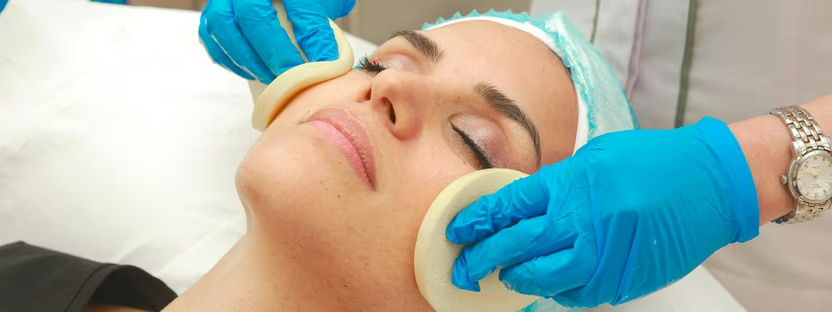
Home facial radiofrequency vs clinic: the differences nobody explains
Home radiofrequency devices emit 2 to 5 watts. Professional medical equipment emits 50 to 200 watts. That difference explains everything. Here is an honest analysis of both options.
Read moreWhen HIFU is better than radiofrequency
HIFU (Micro-Focused Ultrasound) acts at greater depth than standard radiofrequency, reaching the SMAS layer (superficial muscle) and generating a more pronounced lifting effect.
I prefer HIFU when:
- There is moderate-to-severe laxity requiring a marked lifting effect
- The patient seeks longer-lasting results with fewer sessions
- The goal is the neck and décolletage area with loss of definition
I prefer radiofrequency when:
- Skin has quality and texture that needs improvement in addition to tone
- A more progressive protocol with less discomfort is desired
- The patient wants more gradual, natural-looking results
In many cases I combine both technologies in the same protocol.
The evaluation process at our clinic
Before recommending facial radiofrequency, we conduct a complete evaluation that includes:
- Medical history: Medications, diseases, previous procedures
- Skin evaluation: Elasticity, thickness, tissue quality
- Photographic analysis: Standardized comparison for follow-up
- Goal definition: What the patient wants to achieve and in what timeframe
- Treatment plan: Specific protocol, number of sessions, possible combinations
If after reading this you think you may be a good candidate, we invite you to learn about facial radiofrequency treatments available at our clinic and schedule an evaluation consultation.
Dr. Tatiana Leal is an aesthetic medicine specialist in Bogotá, Colombia.

Facial Radiofrequency: Complete Guide — What It Is, How It Works and What It Treats
What is facial radiofrequency and how does it work? Dr. Tatiana Leal explains its mechanism, treatment areas, number of sessions needed, and differences from HIFU facial — available in Bogotá at 70% less than US prices.
Read more
Frequently asked questions
Who is the ideal candidate for facial radiofrequency?
The ideal candidate is a person between 30 and 55 years old with mild to moderate facial laxity, reasonable residual skin elasticity, no significant volume loss, and realistic expectations for gradual, natural-looking results. Radiofrequency works by stimulating the body's own collagen, so it requires sufficient regenerative capacity in the tissue.
What are the absolute contraindications for facial radiofrequency?
Absolute contraindications include: pacemakers or other active electronic implants, pregnancy, active cancer in the area to be treated, metal implants in the application area, and active autoimmune diseases affecting the skin. Relative contraindications include: active herpes, highly inflamed acne, skin lesions in the area, and certain systemic diseases.
In what cases is facial radiofrequency not enough?
RF may be insufficient when there is severe laxity with significant volume loss, when excess skin is substantial (marked ptosis), when the patient is over 60–65 with heavily sun-damaged skin, or when goals differ significantly from what RF can achieve. In these cases, HIFU or plastic surgery may be more appropriate options.