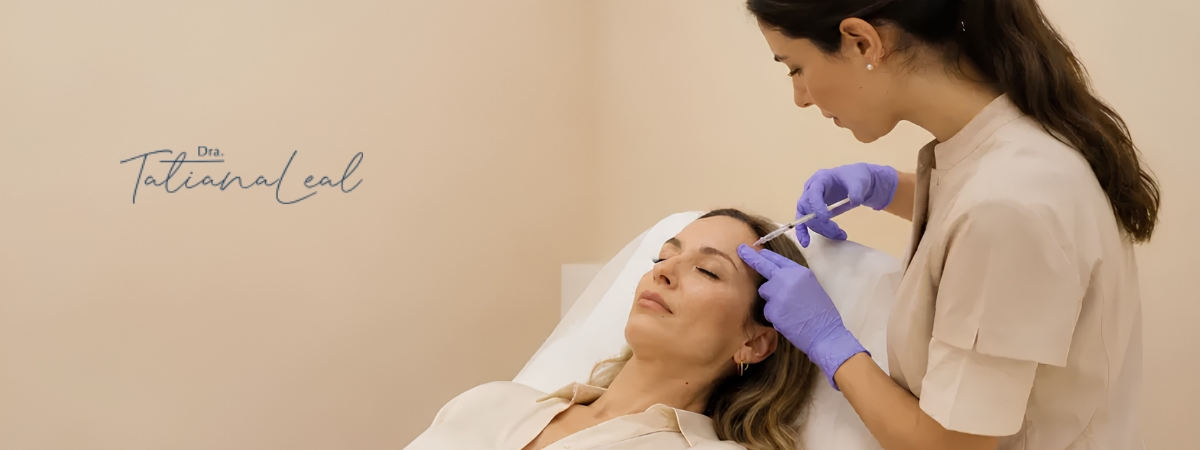
The first question I receive from almost every patient evaluating Sculptra is not about results — it is about safety. What side effects does Sculptra have? How long does swelling last? Can it cause nodules? These are completely valid questions that deserve precise medical answers, not marketing.
During my 18 years applying Sculptra in Bogotá, I have managed more than 800 cases. What I am going to share here is what I tell every patient during consultation: the real clinical information, without minimizing or exaggerating the risks.
The main conclusion, which I will develop in detail: Sculptra by Galderma, with INVIMA registration in Colombia and FDA approval since 2004, is one of the biostimulators with the best available safety profile. But like any medical procedure, it has side effects you need to know about and contraindications that must be respected.
What side effects can Sculptra cause?
Sculptra side effects fall into two categories with very different characteristics: expected and temporary ones, and those that require medical attention.
Expected side effects (normal and temporary)
Valeria, a 44-year-old engineer, called me on the second day after treatment, concerned: “Doctor, I have swelling, some redness, and my skin feels different. Is something wrong?” Nothing was wrong. What she described is exactly the sign that biostimulation had begun.
Normal Sculptra side effects include:
Swelling (edema): The most frequent. It appears in the first 24–48 hours and represents the controlled inflammatory response that PLLA (poly-L-lactic acid) generates to activate fibroblasts. It lasts 3–7 days in the facial area and 5–10 days in the buttocks.
Bruising: Present in 15–25% of applications. More frequent in areas with greater vascularization (periorbital area, cheeks). They reabsorb within 5–10 days without treatment.
Local redness: First 24–48 hours at the injection points. Normal and self-limiting.
Sensitivity to touch: The treated area may feel sensitive or slightly painful for 3–5 days. It does not interfere with daily activities.
Transient nodules: In the first few weeks, small irregularities may be felt beneath the skin, representing the product before it is fully distributed. Most disappear spontaneously or with massage.
Carmen, a 48-year-old attorney, described it precisely: “For the first three days my face was slightly fuller than normal and I had small bruises I covered with concealer. By day four I was completely fine for an important meeting.”
Side effects requiring medical evaluation
Signs that warrant contacting your physician differ from the above:
- Nodules that persist more than 6–8 weeks without reducing
- Notable asymmetrical hardening
- Intense pain that does not subside after 5 days
- Skin changes (pigmentation, depression) in treated areas
- Signs of infection (excessive heat, pus, fever)
To be clear: in my practice with more than 800 cases, the effects that required additional intervention represented less than 2% of treatments, and all resolved satisfactorily.
Preventive collagen biostimulation: why Dr. Tatiana Leal recommends it from age 25
Collagen starts decreasing at 1% per year from age 25. Biostimulators can intervene before that loss becomes visible. Dr. Tatiana Leal explains when it makes sense and what options exist.
Read moreHow long does swelling last after Sculptra?
This is the most frequently asked question and the one that generates the most anxiety. The precise answer:
Facial area: Post-Sculptra swelling lasts between 3 and 5 days in most patients. It may extend to 7 days in people with more reactive skin or who took ibuprofen before the procedure without having stopped it.
Buttocks: The swelling is more noticeable due to the larger volume of product (4–8 vials vs. 2–4 for the face). It lasts between 5 and 10 days. Patients should consider avoiding important meetings for the first 3 days and tight clothing for the first week.
Neck and décolletage: Similar to the facial area, 3–5 days of mild swelling. This is the area where swelling is least visible to others.

To minimize swelling:
- Apply cold (not direct ice, but wrapped in a cloth) for 15 minutes every 2–3 hours on the first day
- Sleep with your head slightly elevated for the first few nights
- Avoid intense cardiovascular exercise for the first 3 days
- Avoid alcohol 48 hours before and after the procedure
- Stop ibuprofen and aspirin 5–7 days before if your physician authorizes it
Daniela, a 37-year-old nutritionist, organized her schedule strategically: “I had the treatment on Friday at noon. By the following Monday I was completely normal to start the work week. I only needed the weekend to recover.”
What are Sculptra nodules and how are they prevented?
Sculptra nodules are the most discussed complication in beauty forums and also the most misunderstood. Let me explain exactly what they are, why they occur, and how they are prevented.
A nodule is a small localized accumulation of PLLA that was not distributed evenly throughout the tissue. They are not dangerous — PLLA is biocompatible and biodegradable — but they can be visible or palpable beneath the skin.
Why do nodules occur?
There are two main causes: the injection technique and the patient’s adherence to the massage protocol. If the product is deposited in the wrong plane or in excessive quantity per point, the PLLA microparticles tend to cluster. If the patient does not correctly perform post-treatment massages, that clustering does not redistribute.
How are they prevented?
Prevention has two responsible parties: the physician and the patient.
On the physician’s side: precise injection technique in the correct subcutaneous plane, proper product dilution (Galderma recommends 5–8 mL of sterile water per vial), and not exceeding the maximum volume per injection point.
On the patient’s side: the 5-5-5 massage protocol: 5 minutes of gentle circular massage, 5 times a day, for 5 days. This protocol is not optional. It is the most effective measure for ensuring even distribution and preventing nodules.
What if I already have nodules?
If a nodule appears and does not resolve with massage within 6–8 weeks, there are management options: sustained-pressure massage, saline injection to facilitate dispersion, or in exceptional cases, intralesional corticosteroid injection. PLLA nodules always respond to one of these treatments.
Isabel, a 41-year-old physician who was my patient, documented it with scientific rigor: “I followed the 5-5-5 protocol impeccably, and by day 5 there were no palpable irregularities. The key is not skipping a single day of massages.”
Contraindications: who cannot get Sculptra?
Sculptra contraindications are one of the most important topics in this guide, because respecting these limitations is what ensures the treatment is safe.
Absolute contraindications
Sculptra should not be applied if you have:
- Pregnancy or breastfeeding: PLLA has no safety studies in these conditions. It is not that it is demonstrably dangerous, but that evidence of safety does not exist — and that is sufficient reason not to use it.
- Known allergy to poly-L-lactic acid: Rare, but if it exists, the risk of a serious reaction is real.
- Active infection in the area to be treated: Facial, cutaneous, or severe systemic. The infection must be resolved first.
- Documented tendency to keloid scarring: PLLA can stimulate an exaggerated scar response in people with this genetic predisposition.
- Uncontrolled autoimmune diseases: Active lupus, rheumatoid arthritis in flare, or similar conditions can generate exaggerated inflammatory responses.
Relative contraindications (require individual evaluation)
These situations require case-by-case medical assessment:
- Anticoagulants or antiplatelet agents: They increase the risk of bruising. In many cases treatment can proceed after temporary medication adjustment with the prescribing physician.
- History of biopolymers in the area: Sculptra and biopolymers are chemically incompatible. Applying Sculptra over biopolymers can generate unpredictable reactions.
- Active cancer therapy: Ongoing chemotherapy or radiation therapy. Not because of PLLA toxicity, but due to the compromised immune response.
- Active inflammatory skin diseases: Psoriasis, severe rosacea, or active dermatitis in the area to be treated.
Paola, a 46-year-old patient with lupus in stable remission, was evaluated over three consultations before proceeding: “Dr. Tatiana coordinated with my rheumatologist to confirm that my disease had been inactive for 18 months. Only then did we proceed, and the result was excellent with no complications.”
This coordination between specialists is exactly the standard that should be followed in complex cases.
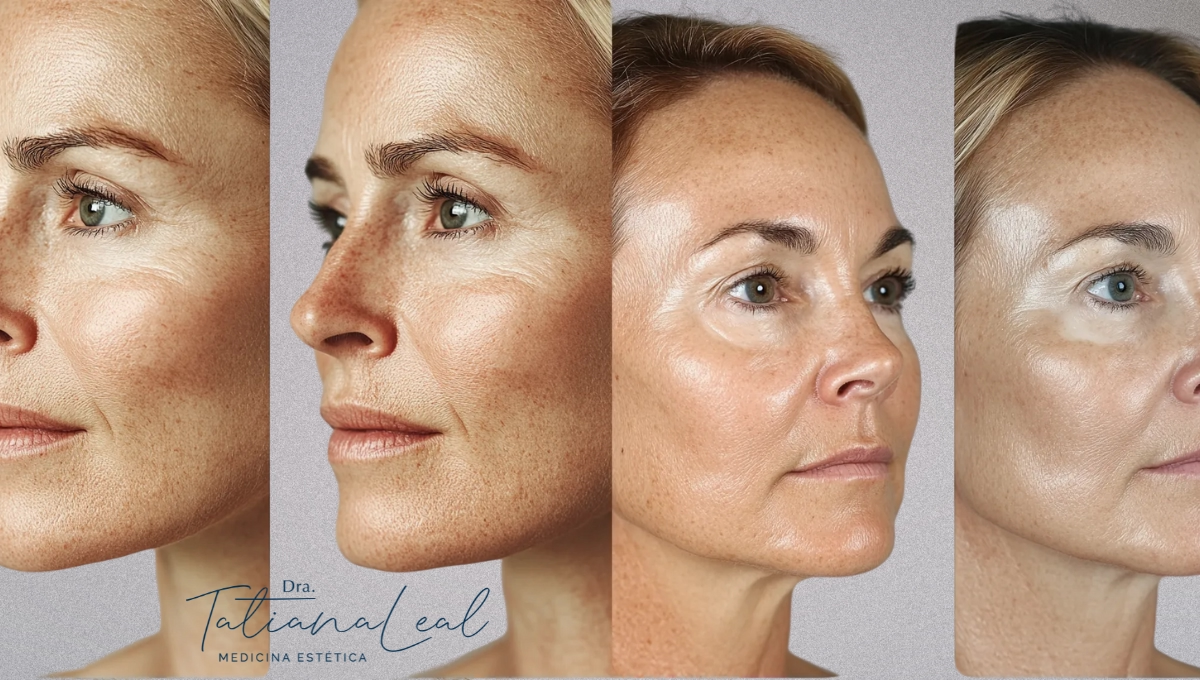
Sculptra Evolution: The Month-by-Month Progress Clinics Don’t Show
How does your skin really change with Sculptra each month? The documented evolution that shows why this biostimulator works differently from anything else.
Read moreIs Sculptra safe? Clinical evidence and FDA and INVIMA approval
The question of Sculptra safety has an answer backed by solid clinical evidence:
Sculptra (Galderma PLLA) has been approved by the FDA for two indications:
- 2004: for correction of facial lipoatrophy in HIV patients
- 2009: for correction of facial wrinkles and nasolabial folds in immunocompetent adults
Both approvals were based on controlled clinical studies with follow-up of up to 25 months, which documented a favorable safety profile with mainly mild and self-limiting side effects.
In Colombia, Sculptra holds a current INVIMA registration, meaning it has met the safety and efficacy requirements established by the Colombian health authority. This registration is renewable and subject to continuous post-market surveillance.
Long-term safety data are reassuring:
A 2024 systematic review published in Polymers (MDPI) that analyzed 23 studies with more than 2,400 patients found that serious adverse events represented less than 0.5% of cases, and all were related to incorrect injection technique, not product toxicity.
Comparison with other biostimulators:
The PLLA in Sculptra biodegrades completely in 18–24 months, converting into water and carbon dioxide. This biodegradability is a significant safety advantage: unlike PMMA (permanent) or the calcium hydroxyapatite in Radiesse (which persists longer), PLLA leaves no permanent residues that could cause complications decades later.
Sculptra is NOT a biopolymer — important differences for patients in Colombia
In Colombia there is a particularly harmful confusion between Sculptra and biopolymers. This confusion has led some patients to unnecessarily reject a safe treatment, or worse, accept biopolymers believing they are equivalent to Sculptra.
They are radically different products:
| Characteristic | Sculptra (PLLA) | Biopolymers (PMMA, silicone, oil) |
|---|---|---|
| Biodegradable | ✅ Yes (18–24 months) | ❌ No (permanent) |
| FDA approval | ✅ Yes (2004 and 2009) | ❌ Not for cosmetic use |
| INVIMA registration | ✅ Yes | ❌ Those used illegally do not |
| Mechanism | Collagen biostimulation | Permanent mechanical filling |
| Late complications | Rare and manageable | Migration, granulomas, necrosis |
| Removal if problems arise | Not necessary (reabsorbed) | Complex surgery |
The risks of Sculptra are completely different from the risks of biopolymers. A PLLA nodule is managed and resolved. Silicone or PMMA granulomas may require extensive surgery decades after application.
If you have a history of biopolymers and are evaluating Sculptra, this is precisely a relative contraindication that requires careful medical evaluation — not because Sculptra is dangerous, but because the two materials are not compatible in the same tissue.
My protocol for minimizing all risks
After 18 years and more than 800 cases of Sculptra with a complication rate below 2%, these are the measures I implement systematically:
Before the procedure:
- Complete assessment consultation with a detailed clinical history
- Review of current medications (especially anticoagulants)
- Standardized photographic evaluation
- Detailed instruction on the 5-5-5 massage protocol
During the procedure:
- Galderma Sculptra with full traceability (verifiable lot number)
- Correct dilution following current protocol
- Technique in the appropriate subcutaneous plane by area
- Controlled volume per injection point
After the procedure:
- Written instructions for managing swelling
- 5-5-5 massage protocol demonstrated during consultation
- Availability to answer questions in the first 5 days
- Photographic follow-up at 4 weeks
Sculptra safety does not depend solely on the product — it depends on the combination of a certified product, a trained physician, and an informed patient. All three elements are equally necessary.
If you have specific questions about your case, a complex medical history, or previous procedures in the areas you are considering treating, an in-person medical consultation is the only path to a correct personalized evaluation.
Want to learn more about this treatment?
Schedule your consultation with our doctors and discover the ideal treatment for you
Reserve your spot * Limited spots this week
Sculptra price in Colombia 2026: full city-by-city cost breakdown
How much does Sculptra really cost in Colombia? A detailed 2026 analysis, city-by-city comparisons, financing options, and tips to optimize your investment.
Read more
Frequently asked questions
How many days does swelling last after Sculptra?
Post-Sculptra swelling is normal and temporary. In the facial area it lasts between 3 and 5 days, and may extend to 7 days in patients with more reactive skin. In the buttocks, swelling can be more noticeable and last 5–10 days. This is not a complication — it is the controlled inflammatory response that initiates biostimulation. It is reduced with cold compresses during the first 24 hours and by avoiding intense exercise for the first 3 days.
What are Sculptra nodules and how are they prevented?
Nodules are small accumulations of the product beneath the skin that can form if the PLLA is not distributed evenly. They are prevented by two measures: precise injection technique by the physician (correct plane, amount per injection point) and the 5-5-5 massage protocol that the patient performs at home for 5 days (5 minutes, 5 times a day). In experienced hands using properly diluted Galderma Sculptra, the incidence of nodules is less than 1%.
Who cannot get Sculptra?
Absolute contraindications for Sculptra include: pregnancy and breastfeeding, known allergy to poly-L-lactic acid, active infection in the area to be treated, uncontrolled autoimmune diseases, and a documented tendency to keloid scarring. Relative contraindications that require individualized medical evaluation include: anticoagulant therapy, active inflammatory diseases, history of biopolymers in the area, and active cancer therapy.
Does Sculptra for the buttocks have more side effects than facial treatment?
Sculptra side effects in the buttocks are similar in type but generally more noticeable in magnitude: greater post-treatment swelling (5–10 days), possibility of more extensive bruising due to the larger volume of product applied (4–8 vials vs. 2–4 for the face), and discomfort when sitting for the first 2–3 days. However, the incidence of nodules is not higher, as gluteal tissue is more tolerant. The post-Sculptra massage protocol for the buttocks is identical to the facial one: 5-5-5.
Does Sculptra have long-term side effects?
Clinical studies with follow-up of up to 5 years have not identified long-term side effects associated with Sculptra. PLLA is completely metabolized within 18–24 months, being absorbed by the body without leaving permanent residues. Unlike biopolymers (PMMA, silicone), Sculptra does not migrate, does not form permanent granulomas, and does not require surgical removal. The FDA approved it in 2004 and 2009 based precisely on its long-term safety profile.
Are bruises after Sculptra normal?
Yes, bruising is a minor and temporary side effect of Sculptra. It appears in 15–25% of patients in the facial area, most frequently around the eyes and cheeks. Bruises reabsorb on their own within 5–10 days. To minimize them: stop ibuprofen, aspirin, and omega-3 supplements one week before; avoid alcohol 48 hours before; and apply cold compresses in the first few hours. If you use concealer, you can cover them from the following day.