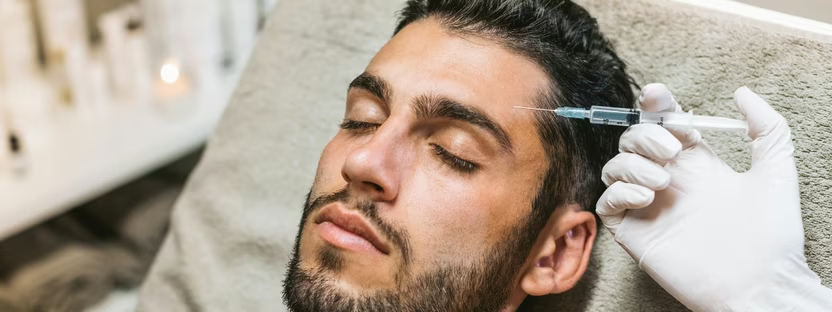
A few years ago, most patients arrived at my consultation when there was already something to “correct” — an established wrinkle, visible volume loss, laxity that bothered them. Today, I have patients of 26, 28, or 32 who arrive not because they have something that concerns them, but because they want to understand what they can do to keep their skin in good condition for as long as possible.
This mindset shift has a name: prejuvenation.
In short: prejuvenation is the aesthetic medicine approach that acts before visible aging, with small and gradual interventions that keep skin in optimal condition longer and reduce the need for more intense corrective interventions in the future.
The difference between anti-aging and pre-aging
The traditional anti-aging paradigm assumes a reactive position: something ages, we treat it. Prejuvenation inverts the logic: we intervene before aging is visible, maintaining the current state rather than trying to recover a previous state.
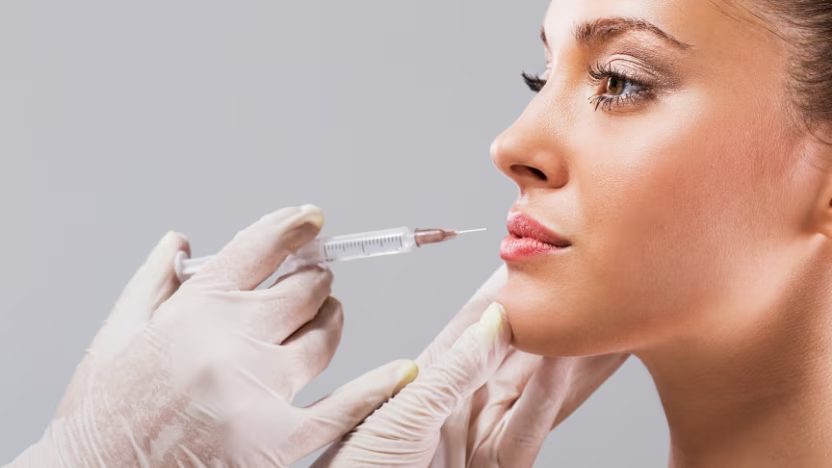
This conceptual difference matters because treating what has not yet been lost is easier and requires less than recovering what has already been lost.
Concrete example:
- Anti-aging approach: 45-year-old patient with significant cheek volume loss → needs 3–4 ml hyaluronic acid + radiofrequency + possibly HIFU
- Prejuvenation approach: 32-year-old patient with barely perceptible beginning of volume loss → 1–2 ml biostimulator + medical skincare routine + sun protection → volume loss is significantly slowed
The result in both cases can be similar, but the prejuvenation path requires less intervention, is more natural, and the patient never reaches the point of “needing” a major correction.
Preventive Botox before 30: what is baby botox and how it really works
Baby botox uses very low doses to slow wrinkle formation without producing a 'frozen' effect. Here is the science behind the concept, which zones it covers, and why dose is everything.
Read moreThe pillars of the prejuvenation protocol
Pillar 1: High-efficacy sun protection (the most important and most underestimated)
80% of visible cutaneous aging is a direct consequence of accumulated sun exposure (photoaging). Sun protection with SPF 50+ broad-spectrum, used correctly every day (not only when there is visible sun), is the highest-impact intervention in any prejuvenation protocol.
At our clinic we recommend medical-grade sun protectors with UVA/UVB/visible infrared coverage and additional components (antioxidants, niacinamide). Not all “SPF 50” products on the market are equivalent.
Pillar 2: Active medical skincare
Very few actives have solid evidence of impact on aging. Those with robust evidence that I include in prejuvenation protocols are:
Retinoids (retinol or tretinoin): The active with the greatest evidence of collagen stimulation and cell renewal. Should be used under medical supervision, especially for sensitive skin or those who have not used it before.
Stabilized vitamin C (L-ascorbic acid at 10–20%): Antioxidant that protects existing collagen from oxidative damage and has evidence of new synthesis stimulation.
Niacinamide: Reduces transepidermal water loss, improves skin barrier, reduces spots. A versatile and well-tolerated active.
Signaling peptides: Some specific peptides have evidence of collagen stimulation and reduction of superficial muscle contractions.
Pillar 3: Low-dose preventive Botox
Detailed in previous posts in this cluster. In the prejuvenation context, low-dose Botox in the zones of highest muscle activity (forehead, glabella, crow’s feet) slows the formation of permanent wrinkles.
Pillar 4: Collagen stimulation
Collagen production decreases 1% per year from age 25. Prejuvenation intervenes to stimulate endogenous production before the loss becomes visible.
Treatments with evidence for this:
- Radiofrequency: Controlled heat that stimulates fibroblasts without ablation
- Micro-focused HIFU: Reaches deeper planes, especially useful for the neck and mandibular area
- Biostimulators: Sculptra (PLLA) or Radiesse at low doses for diffuse collagen stimulation
Pillar 5: Nutrition and lifestyle
It is not possible to separate skin aging from overall body aging. The factors that most impact skin from within:
Sufficient protein: Collagen is a protein. Without enough amino acids, collagen synthesis is suboptimal. Dietary antioxidants: Vitamin C, vitamin E, polyphenols, carotenoids. A varied diet in colorful vegetables and fruits provides antioxidant protection that complements topical actives. Hydration: Dehydrated skin ages visually faster. Quality sleep: During deep sleep, GH (growth hormone) is produced and cell repair processes are most intensely activated.
How I design a prejuvenation protocol at our clinic
When a young patient arrives at our clinic in Bogotá interested in prejuvenation, the evaluation process includes:
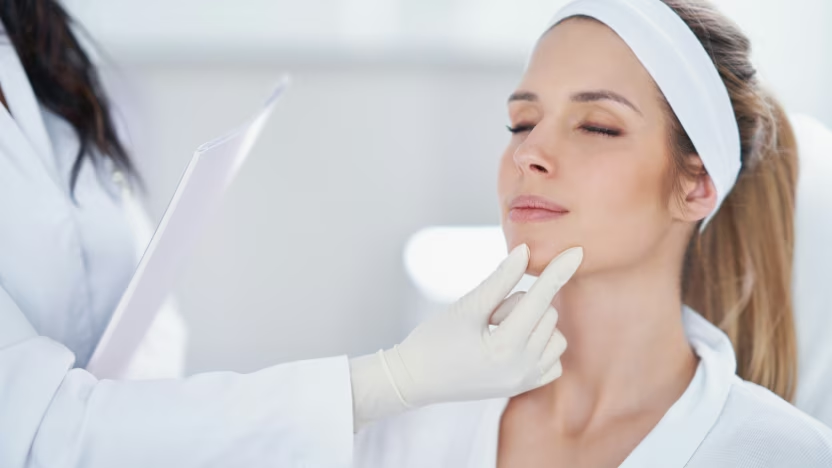
Skin analysis: Type, quality, accumulated photodamage, pores, spots, elasticity.
Musculature evaluation: Muscle activity, presence or absence of resting lines.
Habits history: Sun, tobacco, sleep, diet, stress.
Family history: How parents and grandparents aged (relevant predictive factor).
Personalized plan: Based on all these factors, I design a protocol that may include clinical treatments (Botox, RF, biostimulators) and skincare and lifestyle recommendations specific to that profile.
The ultimate goal is that at 45 or 50 years old, the patient looks like a natural, rested version of herself — not like someone who “has had things done,” but like someone who has taken very good care of her skin over the years.
To find out if a prejuvenation protocol makes sense for you, schedule an evaluation consultation at our clinic.
Dr. Tatiana Leal is an aesthetic medicine specialist in Bogotá, Colombia.
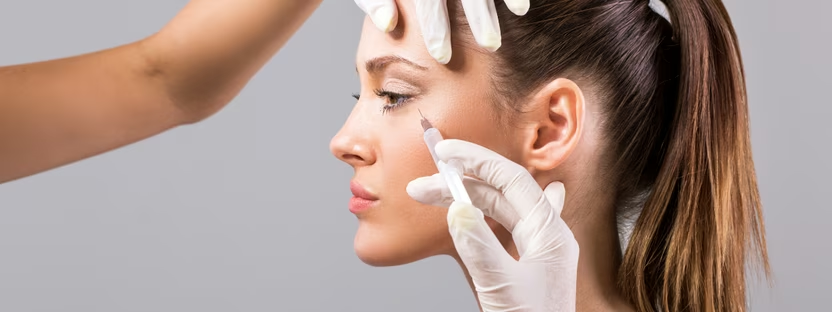
What age should you start Botox? Dr. Tatiana Leal's honest guide
The question 'what age to start Botox?' has no single answer — it depends on your facial musculature, skin type, and goals. Dr. Tatiana Leal explains the real signs that indicate it is time to consider botulinum toxin.
Read more
Frequently asked questions
What is prejuvenation in aesthetic medicine?
Prejuvenation (or pre-juvenation) is an aesthetic medicine approach that intervenes preventively before visible aging signs appear. Unlike traditional anti-aging that treats already-present signs, prejuvenation acts in the phase when changes are microscopic or barely perceptible, with the goal of keeping skin young longer and requiring less corrective intervention in the future.
Who is prejuvenation for?
Prejuvenation is especially relevant for people between 20 and 40 years old who want to maintain their current appearance longer, who prefer gradual and natural interventions, and who have accelerated aging risk factors (sun exposure, stress, smoking, family genetics). It is also useful for professionals whose appearance impacts their career.
Does prejuvenation require surgery?
No. Prejuvenation relies exclusively on non-surgical treatments: medical skincare, preventive Botox at low doses, radiofrequency or HIFU to stimulate collagen, biostimulators in early phases, and strict sun protection. The goal is precisely to avoid reaching the need for surgery or considerably delay that moment.