
One of the first questions patients ask when they sit down to discuss Sculptor is: “When will I actually see something?” It is a completely valid question, and it deserves an honest, detailed answer — not the vague “in a few weeks” that sometimes circulates on social media.
In short: Sculptor results follow a biological timeline that cannot be artificially accelerated. What can be done is understanding it well to calibrate expectations correctly and maximize the factors that do depend on you.
Why Sculptor results are not immediate
Sculptor does not produce instantly visible changes. And that is precisely the signal that it is working correctly.
What happens during and after each session is a biological process in two stages:
Stage 1 — Supramaximal stress: The 20,000 contractions the device generates in 30 minutes subject muscle tissue to extreme metabolic stress. Type II muscle fibers experience controlled micro-tears — the same basic mechanism as intense exercise, but amplified. Fat cells in the treated area receive signals to release fatty acids.
Stage 2 — Repair and remodeling: In the days and weeks that follow, the body actively works to repair and enlarge the damaged muscle fibers (hypertrophy). The fatty acids released by fat cells initiate an apoptosis process that progressively eliminates them. This biological process cannot be rushed — it has its own timing.

Sculptor vs EMS electrostimulation: the technical differences that really matter
Both Sculptor and EMS use energy to stimulate muscle without voluntary exercise. But the mechanisms are radically different. Penetration depth, contraction type, and clinical evidence separate them significantly.
Read moreThe session-by-session timeline: what really happens
Sessions 1 and 2 (Weeks 1–2 of the protocol)

What happens in the body: The muscle experiences supramaximal stress for the first time. Some tension and a “deep muscle tiredness” sensation in the 24–48 hours after the first session is normal — similar to DOMS (delayed onset muscle soreness) from intense exercise, but localized.
What does not happen: You will not see visual changes. Do not expect them. What is occurring is microscopic: controlled inflammation signaling muscle repair, initiation of apoptotic signaling in fat cells.
What my patients report: Many tell me the abdomen feels “different” — firmer to the touch, with a slight sense of work having been done. That is real, but it is not the final result.
Sessions 3 and 4 (Weeks 2–3 of the protocol)
What happens: The muscle now has an initial adaptive response. The body is better prepared for supramaximal contractions. The same session intensity may feel slightly different — some patients perceive it as more intense, others tolerate it better.
First signals: Some patients start noticing incipient firmness at the end of this week. This is the sign that initial muscular hypertrophy is occurring. Fat does not yet show measurable changes.
What I monitor at the clinic: I adjust intensity according to each patient’s response. Sculptor allows modulating parameters — I often progressively increase intensity between sessions 3 and 4 to maximize the stimulus in tissue that has already been conditioned.
Sessions 5 and 6 (Weeks 3–4 of the protocol)
The stimulus peak: The final sessions are, in my experience, the most productive from the standpoint of total biological stimulus. With the tissue already conditioned, the body tolerates and responds better to the device’s maximum intensity.
At the end of the protocol: At this point, the real biological process — hypertrophy and adipose apoptosis — is only just beginning to manifest externally. Some patients already notice something. Most do not yet.
Weeks 1–4 post-protocol: change starts becoming visible
This phase is where my patients sometimes become impatient, and it is exactly where communicating correct expectations matters most.
The muscular hypertrophy process continues actively for 4–8 weeks after the last session. Fat cells undergoing apoptosis take time to be eliminated by the lymphatic system.
What to expect: Around weeks 3–4 post-protocol, most patients notice:
- Greater firmness and definition to the touch
- Clothing fitting differently (especially pants in the abdominal or glute area)
- Photographs showing a difference compared to “before”
Weeks 8–12 post-protocol: maximum results
This is when results are most visible. Clinical research confirms that changes in body composition — muscle mass increase and fat reduction — are maximum around 8–12 weeks post-treatment.
What independent studies show for a standard 4–6 session protocol:
- Muscle mass increase: 16%–19% in the treated area (measured by ultrasound and MRI)
- Fat reduction: 15%–19% in the treated area
- Reduction of abdominal diastasis: up to 11% reduction in separation between the rectus abdominis muscles
These are averages — individual results vary based on initial body composition, age, exercise habits, and diet.
Factors that accelerate or limit results
Factors that favor better results
Sufficient dietary protein: Muscular hypertrophy requires amino acids as raw material. At our clinic we recommend ensuring intake of 1.6 to 2 grams of protein per kilogram of body weight during the post-treatment period.
Adequate hydration: The lymphatic process of eliminating apoptotic fat cells requires good hydration. At least 2 liters of water daily.
Moderate exercise between sessions: Walking, light cardio, or exercise of non-treated areas between sessions is positive. Avoid overloading the treated area in the 48 hours post-session.
Quality sleep: Deep sleep is when protein synthesis is most active. Sleep deprivation during the post-Sculptor period can reduce the hypertrophy response.
Factors that limit results
Significant caloric surplus: Eating significantly more than you burn can partially counteract the adipose apoptosis process through new fat accumulation.
Active smoking: Tobacco reduces peripheral circulation and can compromise the lymphatic elimination of apoptotic cells.
Elevated BMI: With a BMI above 28–30, the subcutaneous fat layer acts as a barrier that may reduce the effectiveness of muscle contractions. It does not prevent results, but it modifies them.
Medications affecting muscle metabolism: Certain corticosteroids or chronic anti-inflammatories can interfere with the hypertrophy response. Always inform the physician of all medications being taken.

Body Sculptor vs the gym: the real differences nobody explains
Sculptor uses supramaximal contractions that human muscles cannot generate voluntarily. Here is exactly how it differs from the gym and when it makes sense to combine them — or not.
Read moreMuscle toning vs. fat reduction: which comes first
This is a question I receive frequently, and the answer is: both processes occur in parallel, but they become perceptible at different times.
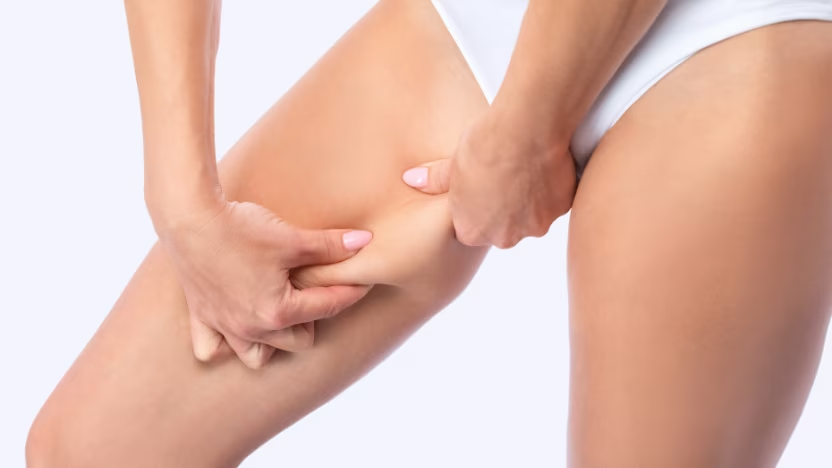
Muscle toning is perceptible sooner because muscle increases in size and density relatively quickly. Many patients notice firmness to the touch from weeks 3–4 post-protocol.
Fat reduction is a slower process because it depends on lymphatic elimination of dead cells. This process can take up to 12 weeks to complete visually.
This has a practical implication: if you measure results very early (weeks 2–3 post-protocol), you may see increased firmness but not necessarily significant changes in centimeters or on the scale. The scale may even go up slightly initially if muscle gain precedes fat elimination.
Long-term maintenance of results
The fat cell reduction from Sculptor is permanent — cells that die through apoptosis do not regenerate. However, with significant caloric surplus, remaining fat cells can hypertrophy.
Gained muscle mass, on the other hand, requires maintenance. My usual recommendations are:
- Regular exercise: At least 2–3 weekly sessions of strength or resistance training to preserve the gained muscle.
- Booster sessions: Most patients do 1–2 Sculptor maintenance sessions every 3–6 months to reinforce tone.
If you are considering Sculptor treatment at our clinic, we can evaluate your case and design a protocol with realistic expectations and a maintenance plan adjusted to your lifestyle.
Dr. Tatiana Leal is an aesthetic medicine specialist in Bogotá, Colombia.

How many Sculptor sessions do I need? The guide for your profile
There is no single number of Sculptor sessions that works for everyone. Dr. Tatiana Leal explains how she evaluates each patient to determine the optimal protocol: variables, the difference between initial treatment and maintenance, and why the number varies.
Read more
Frequently asked questions
When do Sculptor results appear?
The first changes in firmness and tone are typically noticeable around weeks 3–4 after completing the protocol. The most visible results in muscle definition and fat reduction appear between weeks 8 and 12 post-treatment, when the hypertrophy and adipose apoptosis processes have completed.
Does Sculptor reduce fat or only tone muscle?
It does both simultaneously. During supramaximal contractions, adjacent fat cells release fatty acids that then undergo apoptosis (programmed cell death). Studies show fat reduction of 15%–19% in the treated area, parallel to a muscle mass increase of 16%–19%.
How long do Sculptor results last?
Results are permanent as far as fat cell reduction goes — the cells that die do not regenerate. The gained muscle mass lasts several months but requires maintenance through exercise or periodic booster sessions. Most patients do 1–2 maintenance sessions every 3–6 months.