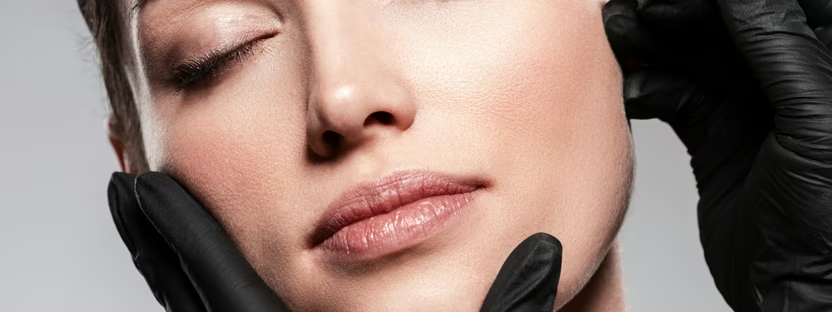
The term “baby botox” appeared in aesthetic medicine conversations a few years ago and has not stopped growing since. And it makes sense: it perfectly captures the idea of a gentle, delicate intervention with results that do not announce “treatment done.”
But behind that trendy word is a real, solid medical concept that deserves precise explanation.
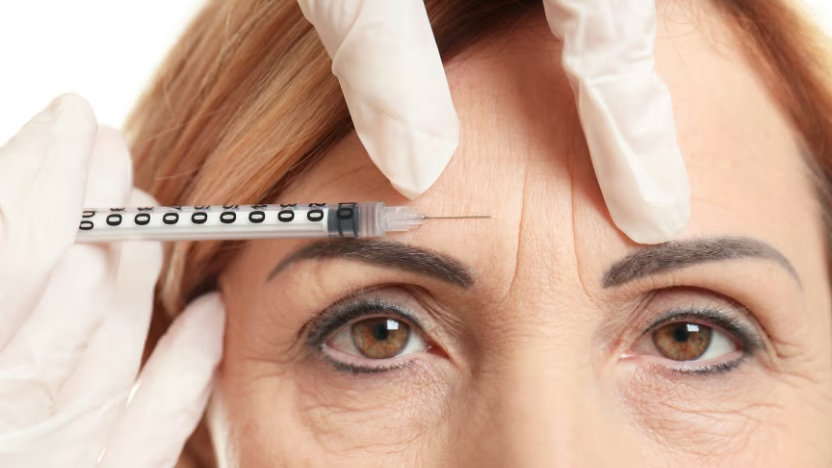
In short: baby botox or preventive Botox is the application of low doses of botulinum toxin in zones of high muscle activity, with the goal of softening contractions (not suppressing them) and slowing the formation of permanent wrinkles. The difference from corrective Botox is in the dose, the goal, and the timing of the indication.
The science behind the preventive concept
Permanent wrinkle formation is a simultaneous biomechanical and biological process:
The biomechanical factor: Repeated muscle contractions create “fold lines” in the skin. Over time, those lines leave marks even when the muscle is not contracting. It is the principle of material fatigue when bent repeatedly at the same point.
The biological factor: With aging, skin loses collagen (1% per year since age 25), elastin, and hyaluronic acid. This loss causes skin to take longer to recover between folds and eventually not fully recover its position.
Preventive Botox acts primarily on the biomechanical factor: it reduces the intensity of muscle contractions, which reduces the depth and frequency of folds in the skin. The long-term result is skin that takes longer to show permanent wrinkles.
A review published in Journal of Cosmetic Dermatology (2021) analyzed patients who had used preventive Botox since age 25–30 and compared them with same-age controls without treatment. Treated patients showed significantly fewer deep wrinkles at 40–45 years than the control group.
What age should you start Botox? Dr. Tatiana Leal's honest guide
The question 'what age to start Botox?' has no single answer — it depends on your facial musculature, skin type, and goals. Dr. Tatiana Leal explains the real signs that indicate it is time to consider botulinum toxin.
Read moreThe key difference: the dose
Corrective and preventive Botox use the same active ingredient (type A botulinum toxin). The difference is in the dose:
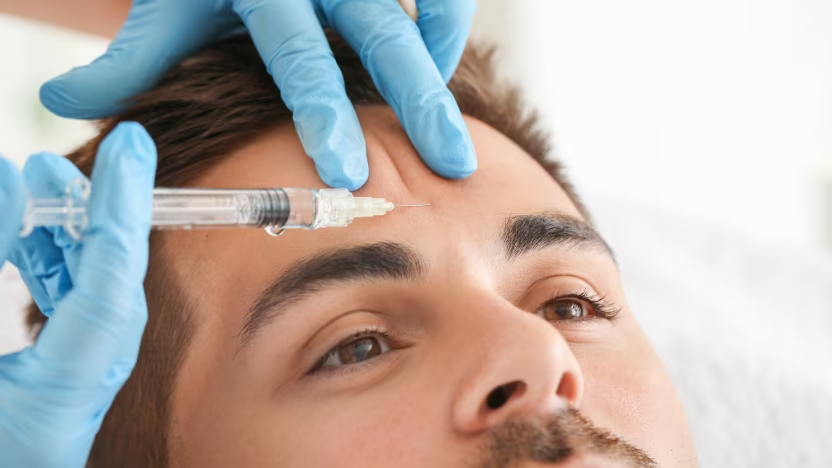
Corrective Botox (for established wrinkles):
- Forehead: 10–20 units
- Glabella: 20–30 units
- Crow’s feet: 8–15 units per side
- Goal: sufficiently suppress contraction so the existing wrinkle relaxes
Preventive Botox (baby botox):
- Forehead: 4–10 units
- Glabella: 10–15 units
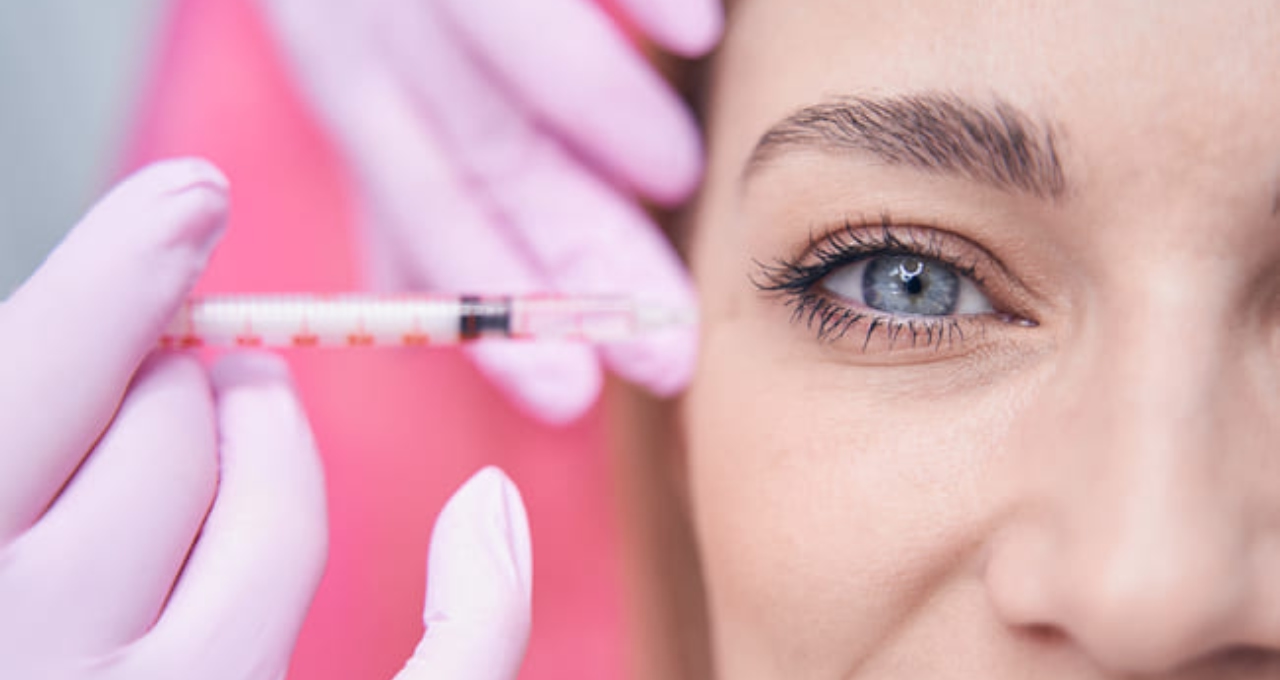
- Crow’s feet: 4–8 units per side
- Goal: reduce contraction intensity while preserving expression
With these low doses, the patient maintains all facial expressiveness — simply with slightly less muscular intensity. No one can detect that she has had treatment.
Zones suitable for preventive Botox
Forehead (frontalis muscle)
Horizontal forehead lines result from repeatedly raising the eyebrows. They are especially marked in people with low brows who constantly lift them to open their eyes.
In the preventive context, I apply very low doses that soften movement lines without blocking natural eyebrow movement. A major precaution here: too much Botox in the forehead can produce eyebrow drop. With low preventive doses, this risk is minimal.
Glabella (corrugator and procerus muscles)
The glabella is the zone where I most frequently indicate preventive Botox. Glabellar lines (the “frown lines”) form from the frowning gesture, which many people make unconsciously all day, even in front of a computer or while reading.
These lines have an important psychological component: they make the person look angry or worried even when calm. Preventive Botox in this zone has an impact on the perception of facial expression that goes beyond aesthetics.
Crow’s feet (orbicularis oculi muscle)
Crow’s feet lines appear with smiling. Unlike glabellar lines, these are strongly linked to expressiveness and personality — crow’s feet are part of a genuine smile.
In the preventive context, Botox in this zone should be applied with a minimal intervention philosophy: softening the deeper lines without eliminating those that make the smile look natural.
5 mistakes I see in patients who come after bad aesthetic results — Dr. Tatiana Leal
Every week patients arrive at our clinic seeking correction of unsatisfactory results from other treatments. With empathy and without judgment, Dr. Tatiana Leal shares the 5 most frequent mistakes that lead to these situations — so you can avoid them.
Read moreWhy technique matters so much in preventive Botox
With low doses, precision of placement is more critical than with high doses. A localized excess of Botox in an area with little total dose can create asymmetries that are difficult to detect and correct.
Dr. Tatiana Leal, at our clinic in Bogotá, performs all Botox injections with prior dynamic evaluation (evaluating musculature in movement), individual injection point mapping for each patient, and a two-week review to adjust if necessary.
This personalization is especially important in young patients where the goal is preventive and results must be completely natural.
How often is preventive Botox applied?
With low doses, the duration of effect may be slightly shorter than with high doses (3–4 months vs. 4–6 months). However, over time, many patients report being able to space sessions further apart — the muscle gradually “re-educates” itself and maintains lower baseline activity even when the Botox effect has partially been reabsorbed.
In practice, most of my patients with preventive Botox have treatment every 4–5 months. After 2–3 years of consistent treatment, some transition to every 6–8 months.
To find out whether preventive Botox is appropriate for your case, we invite you to an evaluation consultation at our clinic. More information about botulinum toxin treatment here.
Dr. Tatiana Leal is an aesthetic medicine specialist in Bogotá, Colombia.
Expression Lines in the Eyes: Crows Feet and Effective Treatment
Complete guide to eliminate expression lines in the eyes and crows feet with effective treatments.
Read more
Frequently asked questions
What is baby botox or preventive Botox?
Baby botox (also called preventive Botox or micro-botox) is the application of very low doses of botulinum toxin — generally 30% to 50% of standard corrective doses — with the goal of reducing muscle activity without completely paralyzing it, preserving the naturalness of expressions while slowing the formation of permanent wrinkles.
Does baby botox look natural?
Yes, the main goal of baby botox is precisely to maintain naturalness. At the correct low doses, the patient can make all facial expressions with less muscular intensity but without the 'frozen' effect. The result is that the person looks rested and fresh, but no one can detect that they have had treatment.
How often is preventive Botox applied?
Preventive Botox is generally applied every 4–6 months for high-mobility zones (glabella, forehead) or every 6–9 months when the dose is very low and the goal is preventive. Over time, some patients find they can space sessions further apart because the muscle gradually 're-educates' itself.