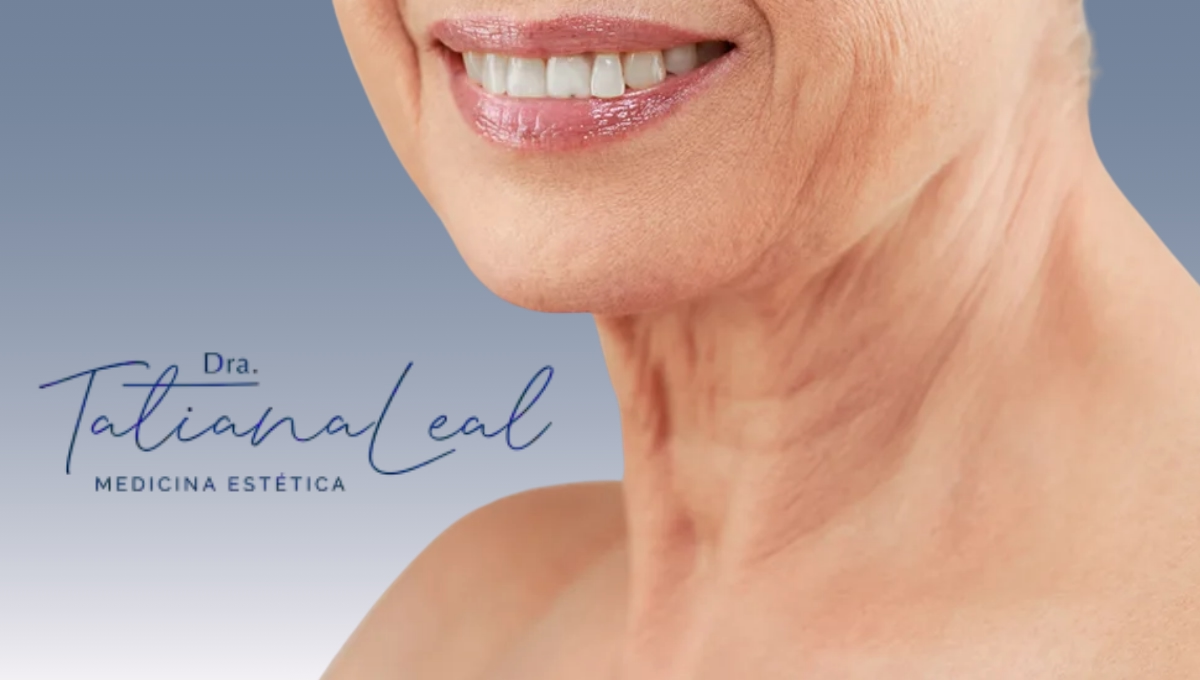
The neck ages before the face — and no one expects it.
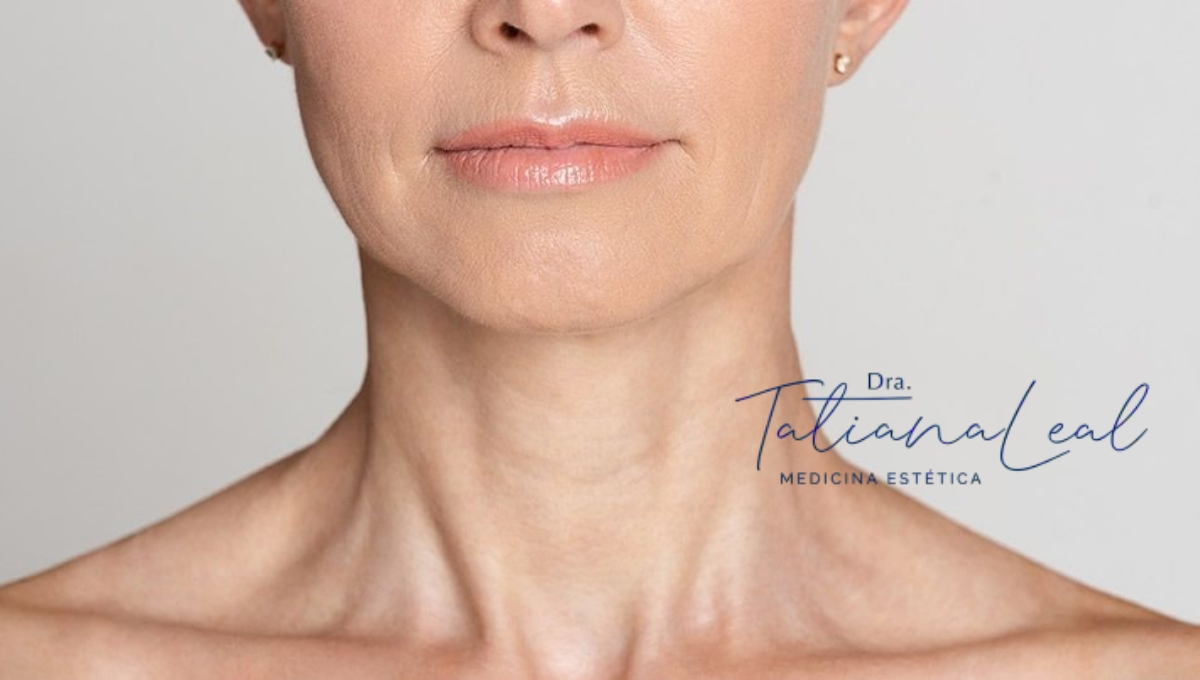
Many patients come to my office worried about their facial wrinkles, and when we analyze the full picture, it’s the neck that adds the most years to them. Cervical skin is thin, has little subcutaneous fat for support, and receives constant sun. The result, over time: neck flaccidity that no cream can correct.
In this article, I explain why it happens, how to recognize warning signs, and what are the most effective treatments available today.
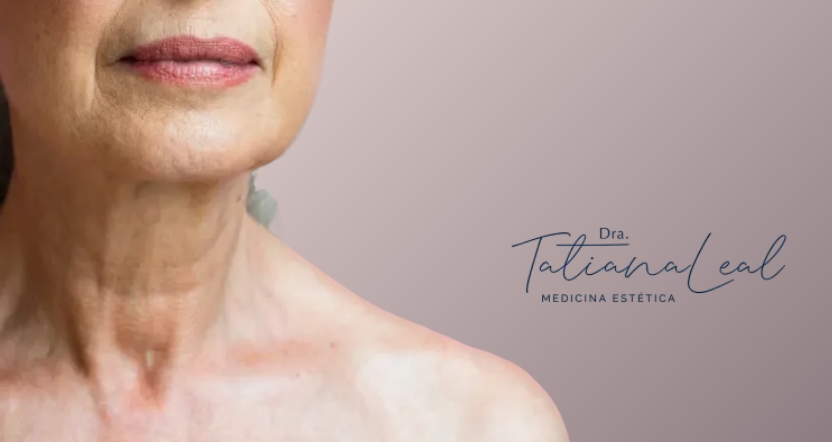
Why does the neck become flaccid: the real causes
Neck flaccidity does not have a single cause. It is the result of several processes occurring simultaneously:
1. Loss of collagen and elastin
From age 25, we produce approximately 1% less collagen each year. In the neck, this loss is more evident because the cervical dermis is intrinsically thinner than the facial one. Without the collagen framework, the skin loses firmness and begins to sag.
2. Atrophy of subcutaneous fatty tissue
The layer of fat that supports the neck skin decreases with age. When this natural filler disappears, the skin is left without support and falls, creating that appearance of turkey neck that worries so much.
3. Muscle laxity: the platysma
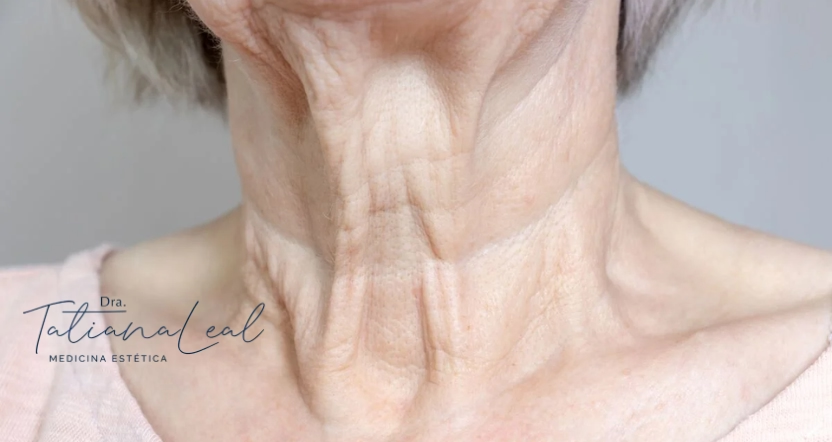
The platysma is the superficial muscle of the neck. With aging, its fibers separate in the midline, forming the so-called platysma bands — those vertical cords that become visible when we tense the neck.
4. Accelerating factors
- Unprotected sun exposure: photoaging destroys collagen at an accelerated rate.
- Smoking: reduces blood flow and new collagen synthesis.
- Posture: tech neck: constantly looking down creates horizontal folds that over time become permanent.
- Genetics: some people have a greater predisposition to lose firmness in that area.
- Weight fluctuations: cycles of weight gain and loss repeatedly stretch and relax the neck skin.
Radiesse prices in Colombia 2026: neck, hands and face
Radiesse prices in Colombia start from $2,000,000 COP per session depending on the area treated. Here are the real prices by zone, what affects the cost, and why the evaluation consultation is the right first step.
Read moreWarning signs: when to act?
Neck flaccidity has a predictable progression. Recognizing the stage you are in is key to choosing the right treatment:
Early stage (30-40 years):
- The first fine horizontal wrinkles appear (Venus necklaces)
- The skin begins to lose luminosity and smoothness
- The cervicomental angle begins to lose definition
Moderate stage (40-55 years):
- Horizontal wrinkles are deeper and permanent
- The double chin begins to form
- Platysma bands become visible
- Neck contour loses definition
Advanced stage (55+ years):
- Marked excess skin on the neck
- Prominent double chin
- Very visible platysma bands
The best treatments for neck flaccidity in 2026
The good news is that, except in cases of very advanced flaccidity, surgery is not the only option. Today we have non-invasive treatments with very satisfactory results.
Radiesse for neck: tightening and bio-stimulation
Radiesse for neck is currently the most comprehensive treatment for moderate neck flaccidity. Its calcium hydroxylapatite microspheres have a dual action:
- Immediate tightening effect: provides volume and firmness from the first session.
- Progressive neocollagenesis: stimulates new collagen production for 12 to 18 months.
Ideal for: mild to moderate flaccidity, horizontal neck wrinkles, loss of cervicomental angle definition.
Duration: 12 to 18 months with minimal maintenance.
Thread lifts for neck and double chin
Thread lifts for neck produce an immediate mechanical lifting effect and stimulate collagen through PDO or PLLA threads. They are especially useful when there is moderate double chin and a visible “hook” effect is desired.
Ideal for: moderate double chin, mild-moderate flaccidity with tissue sagging.
Duration: 12 to 18 months.
Botulinum toxin in the neck (Nefertiti lift)
Botulinum toxin injected into the platysma bands relaxes these muscle structures and produces an upward tightening effect on the neck (the so-called Nefertiti lift). It is a complementary treatment, ideal for the muscular component of flaccidity.
Ideal for: visible platysma bands, turkey neck with predominant muscular component.
Duration: 4 to 6 months.
HIFU / Ultherapy for neck
Focused ultrasound stimulates collagen in the deep layers of the skin without needles. Its results are slower (2-3 months) but can reach deeper planes than injectable treatments.
Ideal for: moderate-severe flaccidity as a complement to other treatments.
Duration: 12 to 18 months.
Neck biorevitalization
Biorevitalization with hyaluronic acid or PDRN improves hydration, luminosity, and texture of neck skin, but has no significant tightening effect. It is an excellent complement to improve skin quality before or after more volumetric treatments.
Ideal for: improve skin texture and quality as a complement or in very early stages.
Radiesse vs thread lifts for neck: which is better for your case?
Radiesse or thread lifts for neck tightening? They are two of the most effective treatments, but they work differently. Discover which one is most suitable for your case.
Read moreComparative of treatments for neck flaccidity
| Treatment | Tightening | Bio-stimulation | Duration | Recovery |
|---|---|---|---|---|
| Radiesse neck | High | High | 12-18 months | 24-48 h |
| Thread lifts | High | Moderate | 12-18 months | 3-7 days |
| Botulinum toxin | Moderate | No | 4-6 months | Immediate |
| HIFU/Ultherapy | Moderate | High | 12-18 months | Immediate |
| Biorevitalization | Low | Moderate | 3-6 months | Immediate |

What treatment is most suitable for you?
The answer depends on your degree of flaccidity, expectations, and circumstances:
- If your flaccidity is mild and you are looking for prevention: biorevitalization + sun protection.
- If you have horizontal wrinkles and moderate loss of definition: Radiesse neck is the most complete option.
- If you also have double chin or sagging tissues: combination of Radiesse + thread lifts.
- If the platysma bands are the main problem: botulinum toxin in the neck.
- If the flaccidity is severe with excess skin: evaluation for cervical surgery.
The most important thing is a personalized evaluation where the degree of flaccidity, skin quality, anatomy, and real objectives are examined. A well-designed protocol can transform the neck without surgery and without recovery time.
If you want to know what treatment is suitable for your case, schedule a personalized consultation where we will evaluate your neck and design the most effective protocol for your goals.
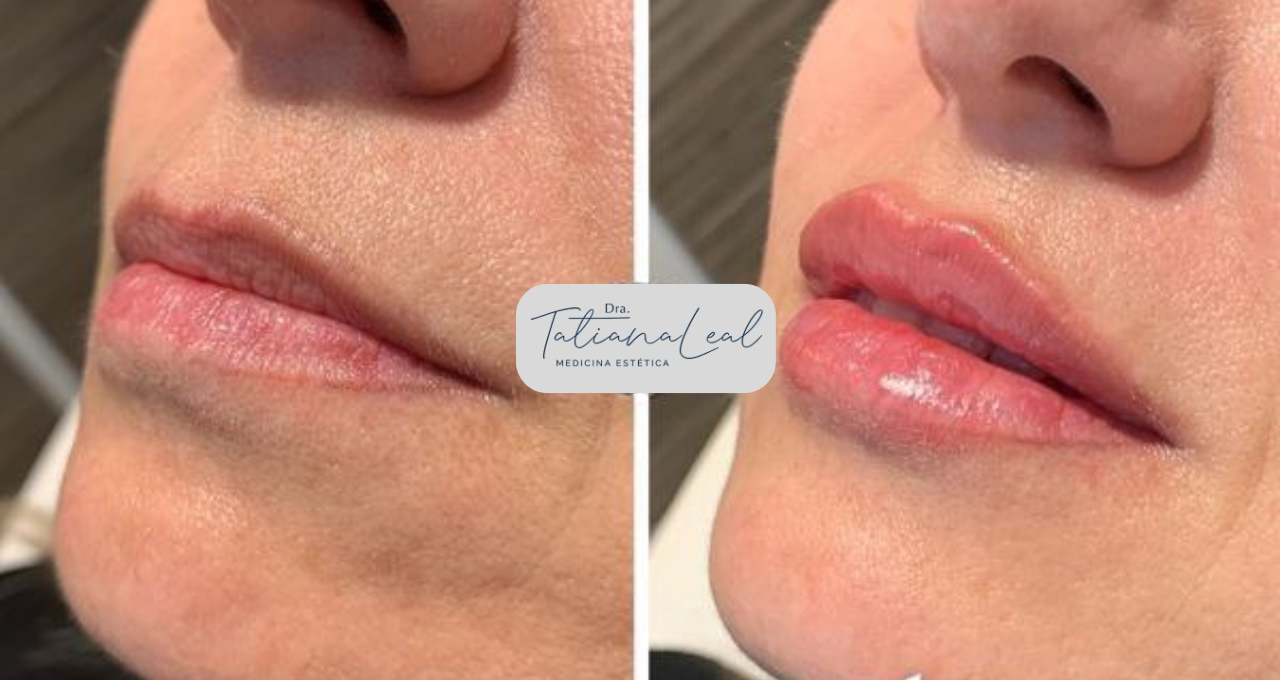
Expression Lines in the Mouth and Lips: Effective Treatment
We show you how to eliminate expression lines in the mouth and lips with effective and safe treatments.
Read more
Frequently asked questions
At what age does neck flaccidity start?
Neck flaccidity can begin at age 30 in people with risk factors such as unprotected sun exposure, smoking, or genetic predisposition. However, the most noticeable changes usually appear between 40 and 50 years old, when natural collagen production decreases significantly and the skin loses elasticity noticeably.
Does exercise help eliminate neck flaccidity?
Neck exercise (especially strengthening the platysma) can slightly improve neck muscle tone, but it cannot reverse collagen loss or recover lost skin elasticity. It is a useful complement, not a standalone solution.
What is the best treatment for neck flaccidity without surgery?
It depends on the degree of flaccidity. For mild flaccidity, neck biorevitalization may be sufficient. For moderate flaccidity, Radiesse neck offers the most effective combination of immediate tightening and collagen bio-stimulation. For severe flaccidity with excess skin, surgical neck lifting may be necessary. Personalized evaluation is essential to choose the right treatment.
Do anti-aging creams work for neck flaccidity?
Creams cannot recover lost collagen or elastin. Some creams with retinol or peptides can slightly improve skin texture and slow down additional firmness loss, but their effects on established flaccidity are minimal. They are useful as preventive complements, not as treatments.
What is tech neck and how is it treated?
Tech neck refers to the horizontal wrinkles that appear on the neck from repeatedly looking down at a mobile or computer. It is effectively treated with Radiesse (for tightening and bio-stimulation), botulinum toxin (to relax the platysma), and deep hydration. Posture correction helps prevent recurrence.