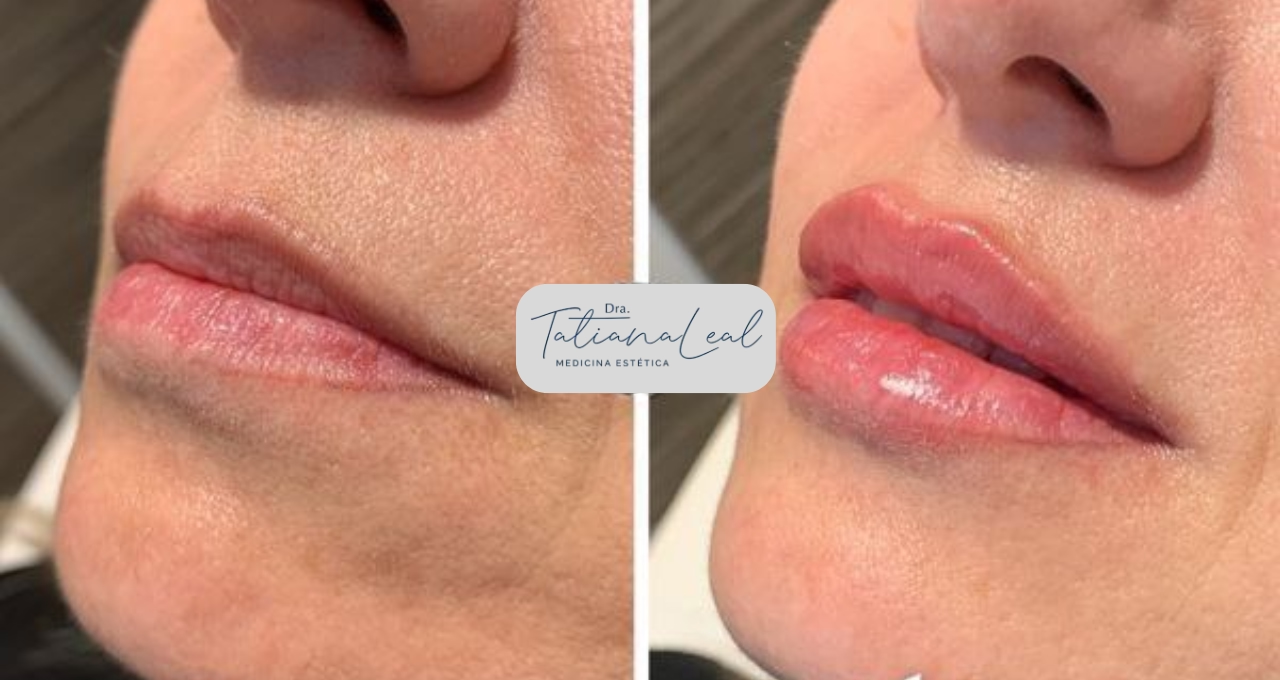
As a physician specializing in the treatment of perioral expression lines, in this guide I explain how the lines around the mouth known as “barcode lines” form, what accelerates their appearance, and what you can realistically expect from a well-indicated botulinum toxin treatment.
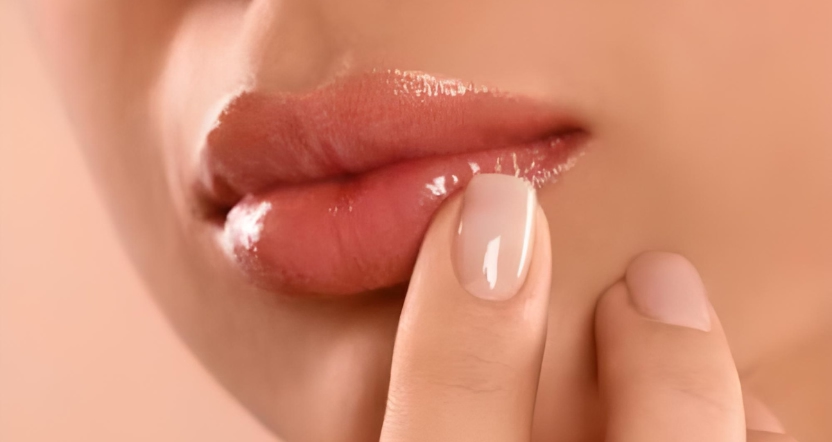
What determines the result in your case?
Not all lines around the mouth respond the same way to treatment, which is why an individual assessment is the most important step before defining dose and technique.
Dynamic versus static lines: if the barcode lines only appear when pursing the lips, whistling, or drinking through a straw, and disappear with the mouth at rest, the response to botulinum toxin tends to be more complete. If they’re already visible at rest (static lines), toxin still helps soften them and slow their progression, but the result is more gradual and sometimes needs to be complemented with hyaluronic acid to achieve a smooth surface.
Activity of the orbicularis oris muscle: people who speak very expressively, whistle, play wind instruments, or smoke tend to have more intense, repetitive contraction of this muscle, which may require a finer dose adjustment within the usual range (2 to 4 total units) to achieve a natural result without compromising speech articulation.
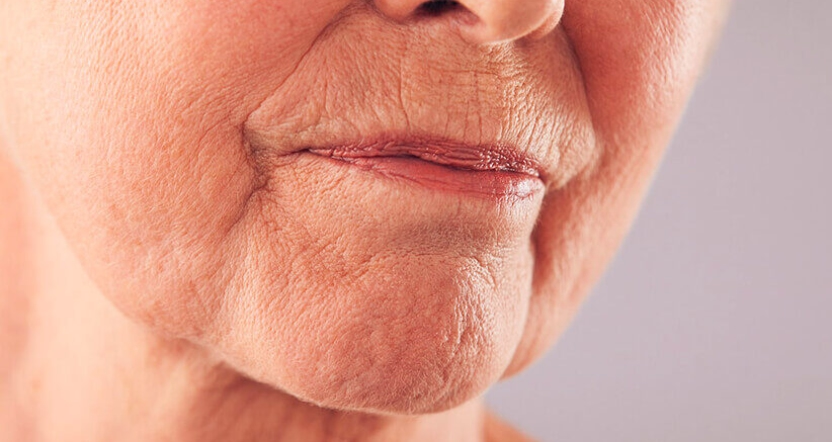
Loss of lip volume: when there’s also loss of bone support or lip volume in addition to dynamic lines — common with age or tooth loss — combining botulinum toxin with hyaluronic acid usually gives a more complete result than either treatment alone.
Realistic limits: very deep lines with a marked static component don’t disappear completely with botulinum toxin alone; in those cases, fillers or biostimulators are a necessary complement to smooth the surface at rest.
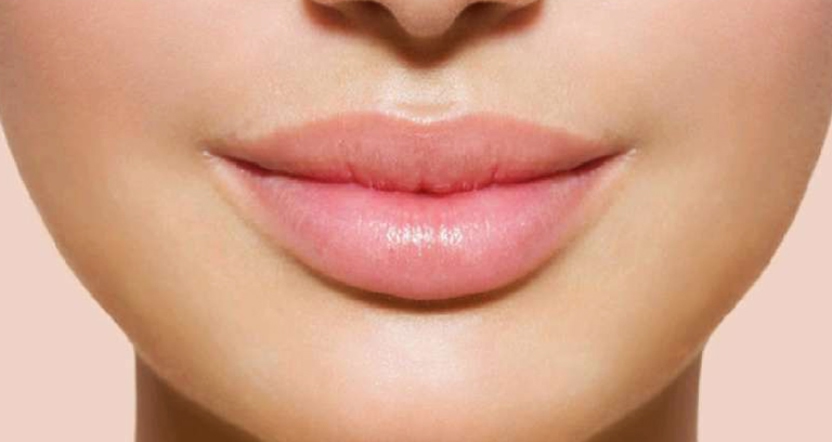
General results timeline
Day 3: Effect begins
You start noticing progressive relaxation of the orbicularis oris muscle; barcode lines visibly soften when speaking or pursing the mouth.
Day 7: Optimal effect
The effect reaches its peak, coinciding with the window of visible results most patients report.
Month 4: Gradual decline
The effect begins to progressively decrease as the muscle regains activity, signaling it’s time to schedule your next session.
Factors
Habits: Smoking accelerates.
Age: Better in 35-50.
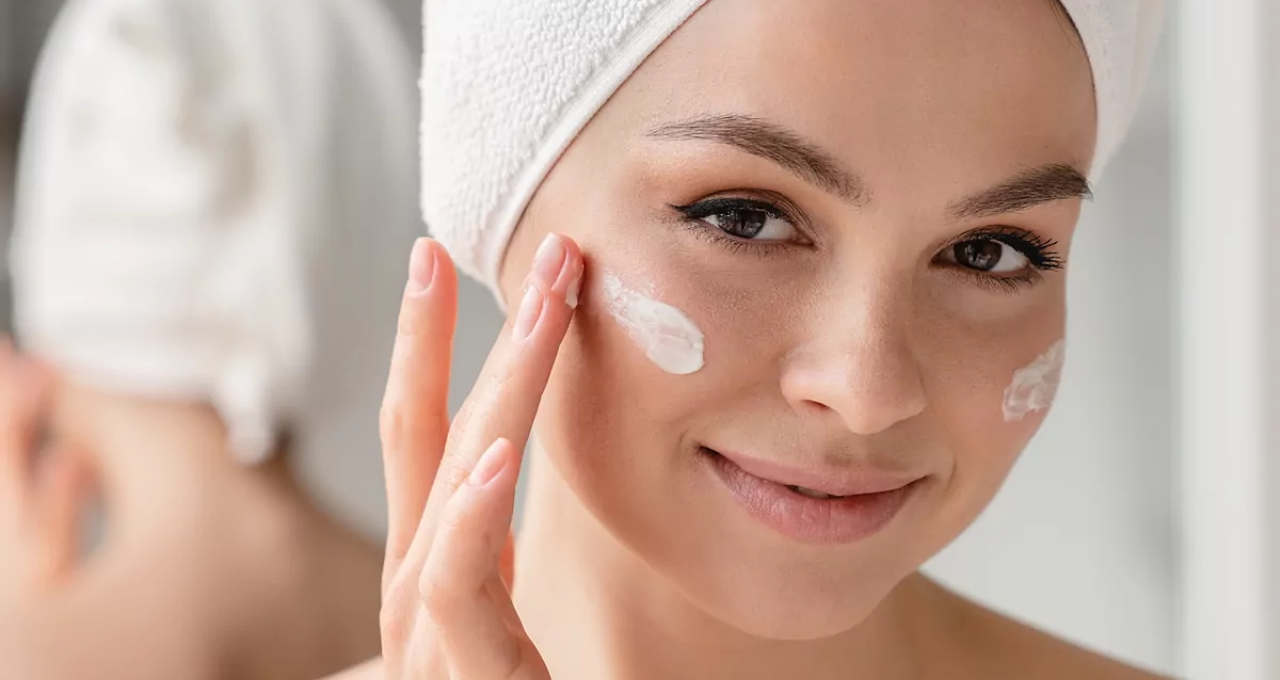
Do Creams for Expression Lines Really Work? The Truth
Discover if creams really eliminate expression lines or if you need professional treatments like botulinum toxin.
Read moreAnatomy perioral
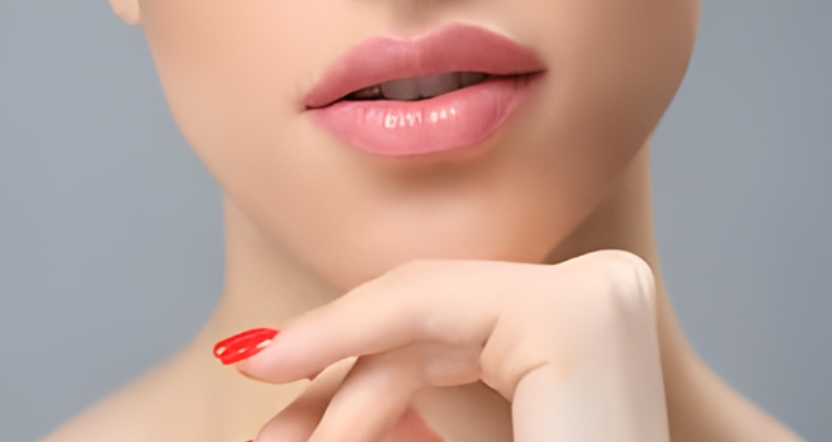
The mouth area has complex muscles like lip orbicular. Vertical lines appear by movements when speaking, smoking, drinking.
Technical data
| Aspect | Detail |
|---|---|
| Muscles | Orbicular + zygomatics |
| Skin thickness | 1-1.5 mm |
| Mobility | High by speech |
Benefits for mouth
Soften lip lines
Lines less visible when gesturing.
More defined lips
Better contour.
Prevent deep wrinkles
Stop progression.
Contraindications mouth
Smile asymmetry
Requires fine adjustment.
Herpes labialis
Wait remission.
Local allergies
Rare reactions.
Candidates mouth
- Marked lip lines
- Frequent lip movements
- Healthy skin
- No excessive smoking
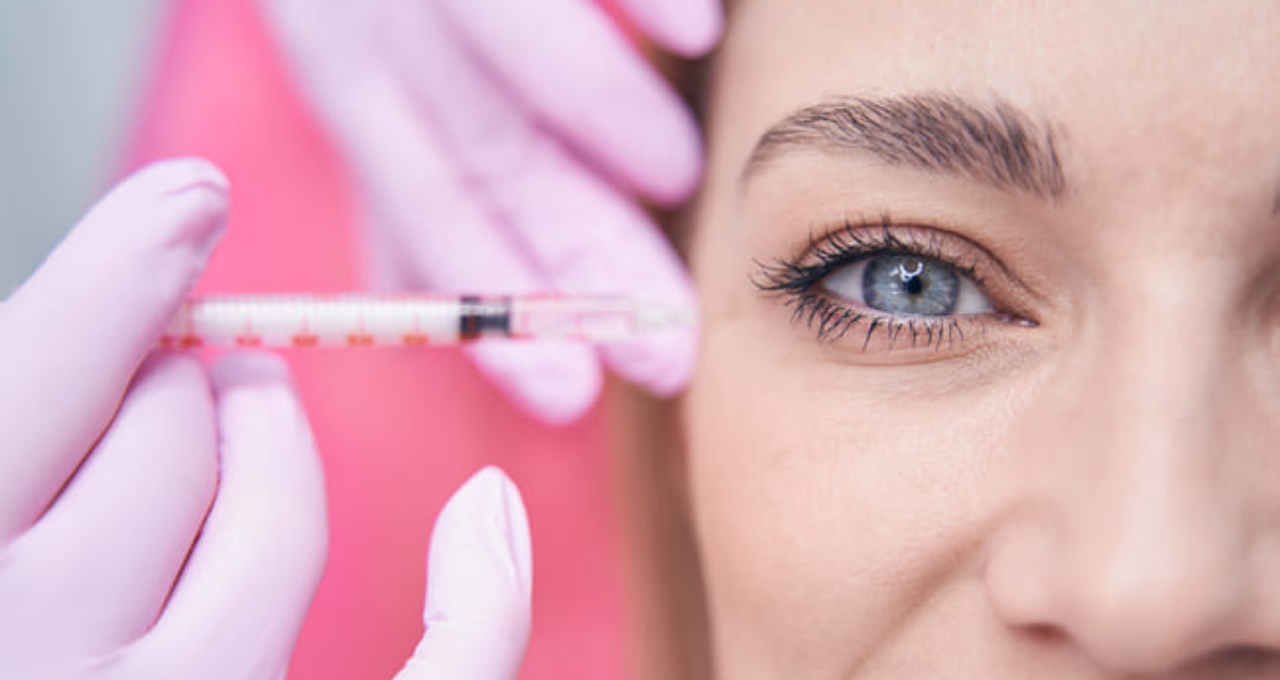
Expression Lines in the Eyes: Crows Feet and Effective Treatment
Complete guide to eliminate expression lines in the eyes and crows feet with effective treatments.
Read moreMyths mouth
Myth: Only smokers
Reality: Speech main cause.
Myth: Filler enough
Reality: Toxin for dynamics.
Myth: Permanent results
Reality: Maintenance required.
Post-treatment tips mouth
Avoid kissing
24-48 hours.
Hydration
Lip balms.
Sun protection
Sensitive lips.
FAQ mouth
Does it affect speech?
No, correct doses.
How many units?
Typically 2 to 4 total units, depending on the intensity of the movement and the depth of the lines.
Combine fillers?
Yes for volume.
Side effects?
Mild temporary swelling.
Conclusion
Lines around the mouth respond well to botulinum toxin when the dose is precisely calibrated to perioral anatomy, without compromising speech or natural expression. If you’re looking to soften barcode lines with a natural result, schedule your assessment and let’s design the right treatment plan for you.
Want to learn more about this treatment?
Schedule your consultation with our doctors and discover the ideal treatment for you
Start your transformation * Limited spots this weekUpdated: February 2026
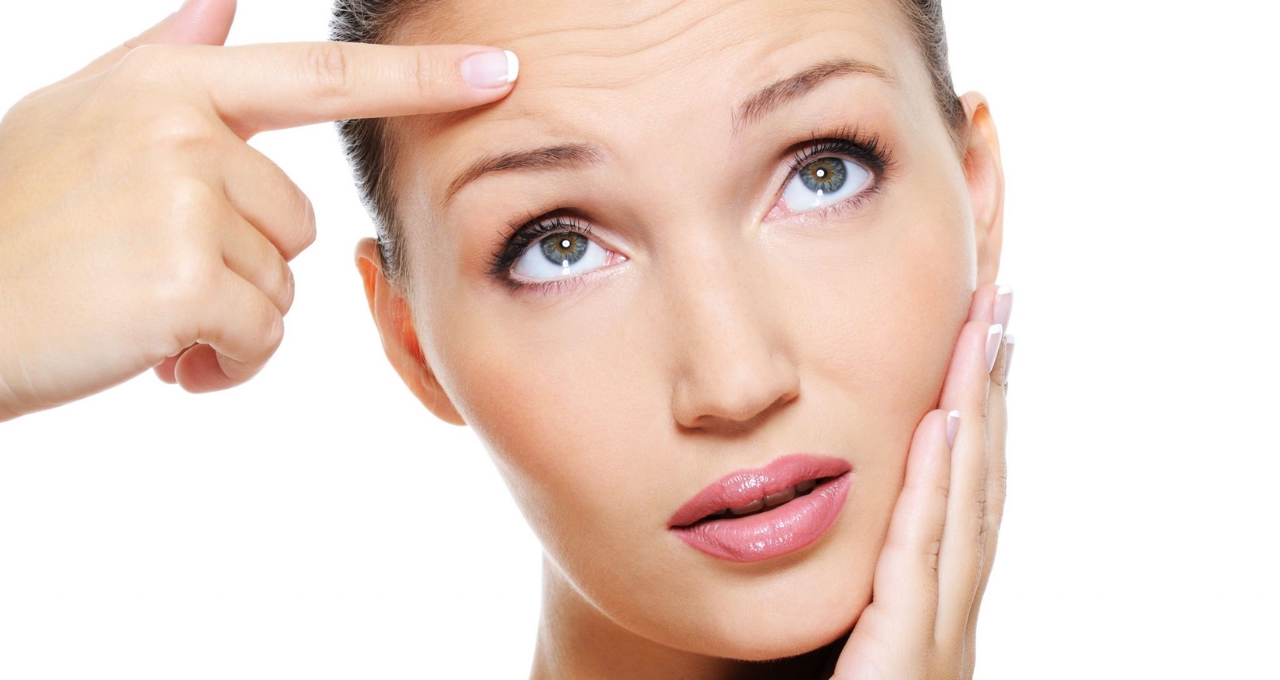
Expression Lines: What They Are, Why They Appear, and How to Eliminate Them Forever
Complete guide on expression lines: what they are, causes, effective treatments like botulinum toxin and how to prevent them.
Read more
Frequently asked questions
Why do smoker's lines form even in people who have never smoked?
The term smoker's lines is misleading because the same vertical lip lines form in non-smokers through any repetitive pursing of the orbicularis oris muscle — drinking through straws, playing wind instruments, or simply having a habitual tight-lipped expression can produce identical lines over years. Smoking accelerates them dramatically through UV exposure, reduced blood flow, and direct chemical damage to the perioral skin, but the muscle mechanism is the same regardless of smoking history.
Which perioral lines respond to topical creams and which require medical treatment?
Very fine superficial lines from chronic dehydration and early sun damage can show measurable improvement with retinoids and barrier-repair creams over 3 to 6 months of consistent use. Deeper vertical lip lines caused by muscle movement — the classic smoker's lines — do not respond meaningfully to topical treatment because no cream can interrupt the muscular contraction that continuously recreates them; those require botulinum toxin or a combination approach.
What is the difference between lip lines and marionette lines in treatment approach?
Lip lines are vertical grooves on the upper and lower lip surface caused primarily by orbicularis oris contractions and are best treated with small doses of botulinum toxin to reduce muscle activity combined with superficial filler for volume. Marionette lines run downward from the mouth corners and are largely structural — created by tissue descent and volume loss — making dermal fillers or biostimulators the primary treatment, with botulinum toxin playing a smaller supporting role for the depressor anguli oris muscle.
Can perioral lines be treated without affecting lip movement for speech and eating?
Yes, and this is the central technical challenge of perioral botulinum toxin: doses must be conservative and precisely placed to reduce the cosmetically bothersome puckering movement while fully preserving the complex fine motor function needed for articulation, whistling, and eating. An experienced physician uses very small doses — typically 2 to 4 units per area — distributed across specific injection points to achieve softening without functional compromise.
Are lip lines related to dental structure or tooth loss?
There is a meaningful relationship: tooth loss and subsequent bone resorption reduce the structural support underlying the perioral soft tissue, causing the skin to fold inward and exaggerating existing lip lines while creating new ones. This is most visible in patients with dentures or significant dental work, where restoring vertical facial dimension — sometimes through collaboration between an aesthetic physician and a prosthodontist — can improve perioral appearance beyond what injectable treatments alone can achieve.
What results are realistic when treating lines around the mouth with botulinum toxin?
Botulinum toxin in the perioral area achieves a 70-85% reduction in active dynamic lines, with visible results in 5-7 days. It's important to have clear expectations: very deep lines with a residual static component do not disappear completely with toxin alone and may require complementary fillers to achieve a smooth surface at rest.