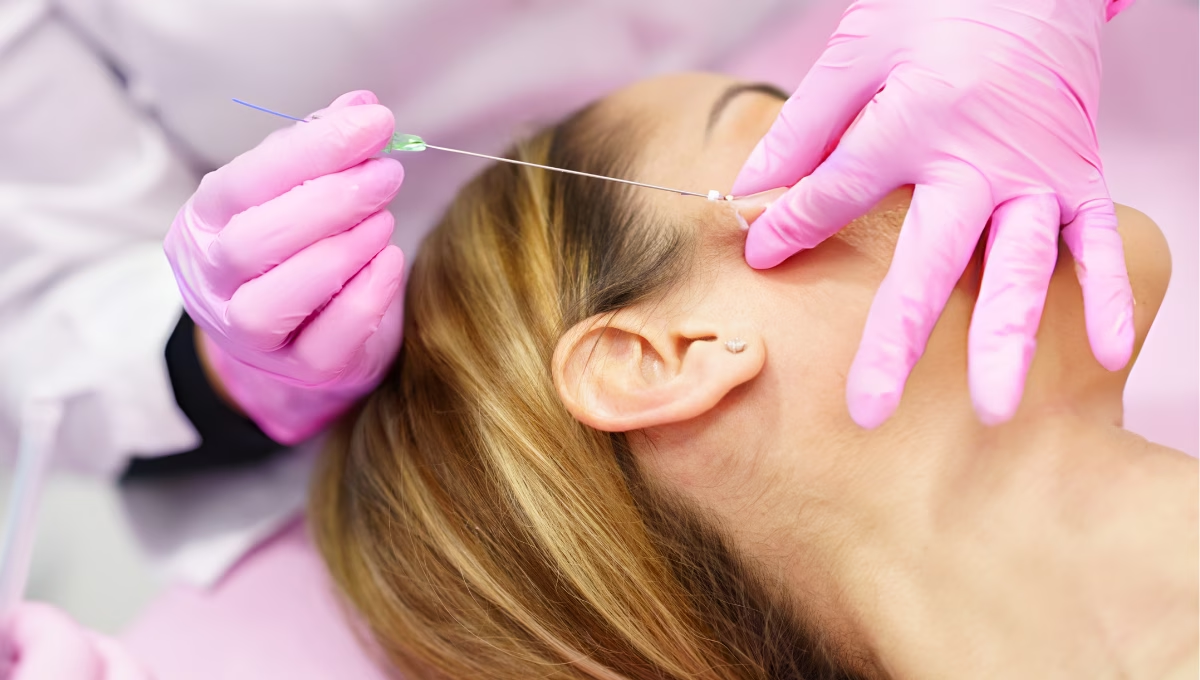
In summary: “Magic threads” are polydioxanone (PDO) threads, biocompatible absorbable filaments inserted under the skin to lift sagging tissue instantly (with barbed threads) and stimulate new collagen production over time (neocollagenesis), improving skin firmness for 8-12 months even after the threads themselves dissolve within 6-8 months. They are used on both face and body—cheeks, jawline, eyebrows, neck, abdomen, and more—and are best suited for mild to moderate sagging as a minimally invasive alternative to surgery. Results are visible immediately with barbed threads and progressively over 4-8 weeks with smooth threads, with optimal outcomes typically seen at 2-3 months.
What exactly are magic threads?
So-called “magic threads” are the popular name for polydioxanone (PDO) threads in the field of aesthetic medicine. This material, used for decades in surgery as an absorbable suture, has revolutionized rejuvenation techniques due to its ability to produce remarkable results without the need for surgery.
PDO threads are extremely fine, biocompatible filaments that are strategically inserted under the skin using a minimally invasive technique. There are different types, with the most common being:
- Smooth PDO threads: Ideal for improving skin quality through biostimulation
- Barbed PDO threads: With small “spikes” or barbs that anchor to the tissue to provide an immediate lifting effect
The term “magic” arises precisely from their ability to achieve visible results immediately with a quick, painless procedure and virtually no recovery time.
How do collagen magic threads work?
Magic threads have a dual mechanism of action that explains their effectiveness:
1. Immediate mechanical effect
Especially in the case of barbed threads, they provide immediate tissue traction. The microbarbs act as small anchors that hold the subcutaneous tissue, lifting sagging areas and redefining contours instantly.
2. Progressive biostimulation effect
The presence of PDO threads in the tissue triggers a natural response from the body:
- The body recognizes the threads as foreign bodies, though biocompatible
- It initiates a healing process that stimulates the production of collagen and elastin around each thread
- Neocollagenesis (formation of new collagen) occurs, progressively improving the quality, elasticity, and firmness of the skin
- This rejuvenating effect continues even after the threads have been reabsorbed (between 6-8 months)
It’s important to note that, despite their popular name, they don’t contain collagen themselves; they are natural collagen stimulators, which provides harmonious and lasting results. The term “collagen magic threads” is used colloquially for their ability to induce the formation of new collagen.
Applications of magic threads on face and body
Versatility is one of the great advantages of PDO threads, as they can be applied in numerous areas both facial and bodily.
Most common facial applications
- Mid-face: Lifting of cheekbones and cheeks to restore lost volume
- Facial oval: Redefinition of facial contour and jawline
- Eyebrows: Elevation of the brow arch creating a natural “fox eyes” effect
- Double chin: Reduction and definition of the submental area
- Neck: Correction of sagging and horizontal lines
- Nasolabial folds: Attenuation of facial expression lines
Notable body applications
- Arms: Improvement of sagging in the inner area
- Inner thighs: Toning and improvement of skin texture
- Abdomen: Tightening of skin with moderate sagging
- Knees: Lifting of sagging skin above the kneecap
- Buttocks: Moderate lifting effect that improves projection
For each area, specific insertion techniques and different types of threads are used, always customized according to the anatomical characteristics and needs of each patient.
Risks and dangers of thread lifts: What no one tells you
It is vital to be transparent: no medical procedure is risk-free. However, in the case of thread lifts, the vast majority of complications come from poor technique or lack of asepsis.
Why do lumps appear with thread lifts?
“Lumps” or irregularities are the most feared side effect, but also the most avoidable. They occur mainly due to:
- Superficial placement: If the thread is too close to the epidermis, the relief is noticeable.
- Threads too thick for thin skin: Material choice error.
- Excessive puckering: Exaggerated tissue tension.
Solution: In expert hands, these lumps usually disappear alone in 2-4 weeks. If they persist, they can be treated with specific massages or, in rare cases, by removing the thread.
Other possible risks
- Bruising: Common but temporary.
- Asymmetry: Requires touch-up.
- Infection: Extremely rare with strict sterility protocols.
The procedure: How are magic threads applied?
The application of magic threads is an outpatient procedure, minimally invasive and relatively quick, which is generally completed in 20-40 minutes depending on the area to be treated.
Before the procedure
- Initial consultation to evaluate needs and expectations
- Assessment of skin quality, degree of sagging, and anatomy
- Personalized treatment design: type, number, and distribution of threads
- Prior photographs to document the initial state
During the session
- Preparation: Deep cleaning and application of local anesthesia
- Marking: Precise tracing of insertion points and trajectories
- Insertion: Introduction of threads using microcannulas through minimal entry points
- Positioning: Strategic placement to achieve the desired tensioning effect
- Adjustment: Final conformation and verification of immediate result
After the procedure
- No bandages or dressings required
- Application of ice if necessary to reduce possible inflammation
- The patient can immediately return to normal life, with minimal restrictions
The microcannula application technique significantly reduces discomfort during the procedure and minimizes the risk of bruising, allowing for ultra-fast recovery.
Silk magic threads vs. PDO threads: What’s the difference?
In today’s market, there are different materials for thread lifting, which can create confusion. “Silk magic threads” is another popular, though technically incorrect, name that usually refers to different types of threads:
| Thread type | Material | Durability | Main characteristics |
|---|---|---|---|
| PDO threads | Polydioxanone | 6-8 months | Superior biocompatibility, effective collagen stimulation, gradual reabsorption process |
| PCL threads | Polycaprolactone | 12-15 months | Greater durability, more prolonged tensioning effect, more lasting collagen stimulation |
| PLLA threads | Poly-L-lactic acid | 18-24 months | Maximum duration, greater capacity for collagen stimulation, more progressive results |
True silk threads (natural material) are not used in modern aesthetic medicine due to their allergenic potential and lower biocompatibility. The term “silk magic threads” is often incorrectly used to refer to the synthetic threads mentioned above, mainly due to their similar appearance to silk.
In Dr. Tatiana Leal’s clinical practice, PDO threads are the preferred option for their optimal balance between safety, efficacy, and patient tolerance.
How long do the results of magic threads last?
The duration of results is one of the most frequently asked questions about magic threads. It’s important to differentiate between the physical permanence of the thread and the duration of the effect:
Material permanence
- PDO threads are completely reabsorbed in approximately 6-8 months
- Reabsorption is gradual and does not imply the sudden loss of the effect
Effect duration
- Immediate effect: The mechanical lifting effect is visible from the first moment
- Adaptation phase: During the first 2-3 weeks, the tissues adjust to the new position
- Biostimulation phase: Between the 1st and 3rd month, a progressive improvement is observed due to collagen production
- Maintenance: Optimal results usually last between 8-12 months
It is recommended to perform maintenance sessions annually to prolong and optimize the results. Factors influencing duration include age, skin type, lifestyle, sun exposure, and quality of the procedure.
Estimated duration table
| Thread Type | Onset of Results | Maximum Duration |
|---|---|---|
| Smooth PDO | 4 weeks (biostimulation) | 8-10 months |
| Barbed PDO | Immediate (lifting) | 10-12 months |
| PCL (Polycaprolactone) | 2 months | 18-24 months |
Magic threads: opinions and scientific evidence
Beyond the attractive commercial name, it’s important to evaluate the efficacy of magic threads from an objective medical perspective.
Scientific evidence
Numerous clinical studies support the effectiveness of PDO threads in facial and body rejuvenation:
- Research confirms a significant improvement in skin elasticity
- A 30-40% increase in collagen density has been documented in treated areas
- Histological analyses demonstrate sustained neocollagenesis for 12-14 months
Clinical experience
In our practice with over 2,500 procedures performed, we observe:
- High level of satisfaction (>90%) among patients
- Predictable and natural results
- Minimal complications when performed by trained professionals
- Complementarity with other aesthetic treatments
Positive opinions mainly focus on the immediacy of results, absence of recovery time, and naturalness of the effect obtained, while less favorable opinions are usually related to excessive expectations or procedures performed by professionals with insufficient experience.
Magic threads: price and economic considerations
The cost of treatment with magic threads can vary significantly depending on various factors:
Factors that determine the price
- Area to be treated: More extensive or complex areas require more threads
- Thread type: Barbed threads usually have a higher cost than smooth ones
- Number of threads: Depending on the degree of sagging and the desired result
- Professional experience: Specialists with more experience usually have higher fees
- Geographic location: Prices vary according to city and area
Indicative ranges in Colombia
While each case is unique and requires a personalized assessment, these are indicative ranges:
- Complete facial treatment: Between 1,500,000 and 3,000,000 COP
- Specific facial areas: Between 800,000 and 1,500,000 COP
- Sad navel treatment: Between 1,000,000 and 2,000,000 COP
It’s important to consider that magic threads represent a significantly more economical alternative than surgical procedures, in addition to avoiding costs associated with hospitalization, general anesthesia, and sick leave.
During your evaluation consultation with Dr. Tatiana Leal, you will receive a detailed and personalized quote based on your specific needs, along with financing options if you require them.
Are magic threads a good alternative to surgery?
One of the great advantages of magic threads is their ability to offer an intermediate solution between conventional non-invasive treatments and surgery.
Advantages over surgery
- No significant incisions: Minimal entry points that don’t leave visible scars
- Local anesthesia: Does not require general anesthesia
- No hospitalization: Outpatient procedure
- Immediate recovery: Practically immediate return to normal life
- Lower risk: Significantly fewer complications
- Reversibility: Being absorbable, the results are not permanent
- Reduced cost: Significantly lower investment
Limitations compared to surgery
- More subtle results: They don’t achieve the same degree of correction as surgery
- Limited duration: They require periodic maintenance
- Specific indications: They’re not suitable for extreme sagging or significant excess skin
Magic threads are ideal for patients with mild to moderate sagging who want to improve their appearance without undergoing surgical intervention, or as a complement to other aesthetic treatments.
Quick Comparison: Threads vs Surgery
| Feature | PDO Thread Lift | Surgical Facelift |
|---|---|---|
| Invasiveness | Minimal (outpatient) | High (operating room) |
| Anesthesia | Local | General / Sedation |
| Scars | None (invisible dots) | Visible (behind ears) |
| Recovery | 3 days | 2-4 weeks |
| Duration | 12 months approx. | 10 years approx. |
| Cost | $$ | \(\)$ |
Combination with other aesthetic treatments
Magic threads offer excellent results on their own, but their effectiveness can be significantly enhanced when strategically combined with other treatments:
Recommended synergies
- With hyaluronic acid fillers: Threads lift and tighten, while fillers restore lost volumes
- With biostimulators: They enhance collagen production at different levels of the skin
- With botulinum toxin: Threads correct sagging while toxin relaxes the musculature causing dynamic wrinkles
- With radiofrequency: Improves skin quality and enhances the tensioning effect
- With HIFU (focused ultrasound): Ideal combination for moderate sagging
Combined protocols
In our clinic, we have developed specific protocols that combine magic threads with other treatments, maximizing results:
- Full Face Rejuvenation Protocol: Threads + botulinum toxin + strategic fillers + biostimulators
- Post-Pregnancy Protocol: Threads for sad navel + abdominal radiofrequency + biostimulators
- Neck & Jowls Protocol: Submental threads + HIFU + mesotherapy for neck sagging
These combinations allow addressing aging from multiple angles, offering a more comprehensive and lasting result.
Care before and after treatment
To maximize results and minimize possible complications, it is essential to properly follow the recommendations before and after treatment with magic threads.
Pre-treatment care
- One week before: Avoid anti-inflammatories, aspirin, and supplements that may increase bleeding (vitamin E, ginkgo biloba, etc.)
- 72 hours before: Do not consume alcohol
- 48 hours before: Avoid aggressive facial treatments
- Day of treatment: Come without makeup and with a perfectly clean face
Post-treatment care
- First 24-48 hours: Apply local cold intermittently if there is inflammation
- First week:
- Sleep on your back with your head slightly elevated
- Avoid exaggerated gestures and chewing very hard foods
- Do not perform intense physical activity
- Avoid saunas, steam baths, and direct sun exposure
- Do not manipulate the treated area
- First 2-3 weeks:
- Avoid dental treatments that require prolonged mouth opening
- Do not receive facial massages or aesthetic treatments in the area
- Limit sun exposure and use SPF 50+ sunscreen
- Maintain adequate skin hydration
Following these simple precautions will maximize results and prolong the effect of magic threads.
The future of magic threads in aesthetic medicine
Magic threads, far from being a passing trend, have established themselves as a fundamental tool in the arsenal of modern aesthetic medicine. Their constant evolution, with new materials, designs, and application techniques, promises to continue revolutionizing non-surgical rejuvenation treatments.
The ideal balance between efficacy, safety, minimal invasiveness, and natural results positions PDO threads as a first-line option for patients seeking to improve their appearance without resorting to surgery.
At Dr. Tatiana Leal’s aesthetic center in Bogotá, we stay at the forefront of these innovations, offering the most advanced techniques backed by our clinical experience and commitment to excellence.
Are you considering treatment with magic threads? We invite you to a personalized evaluation consultation where we will analyze your specific case, resolve all your doubts, and design the treatment plan that best suits your needs.
Frequently asked questions about magic threads
Are magic threads painful?
The procedure is performed under local anesthesia, which ensures a minimal level of discomfort. During placement, it’s common to experience a slight sensation of tightness or pressure, but not acute pain. After treatment, some people may feel some discomfort or tension for 1-2 days, easily controllable with common analgesics.
What age is recommended to start with magic threads?
There is no specific age, as the indication depends more on the state of the skin than chronological age. Generally:
- From 30-35 years: Preventive and to correct incipient signs of sagging
- Between 40-55 years: Ideal period for maximum benefit, correction of moderate sagging
- Over 55-60 years: Can be useful in selected cases with good skin quality
Individualized assessment is fundamental to determine if threads are the best option in each case.
Are magic threads noticeable to the touch or visible?
PDO threads are extremely fine and placed in deep planes, so they are not noticeable to the touch nor visible externally under normal conditions. In very thin people and during the first few days, there could be a minimal tactile perception in some areas, which completely disappears as the threads integrate into the tissue.
Is it possible to remove the threads if I don’t like the results?
One of the advantages of PDO threads is that, if necessary, they can be removed during the first few weeks. However, this is extremely rare given the high level of satisfaction and the naturalness of the results. Additionally, being completely absorbable, they naturally disappear from the body in a few months.
Are there any contraindications for magic threads?
Although it’s a very safe procedure, there are some contraindications:
- Active autoimmune diseases
- Coagulation disorders
- Active infections in the area to be treated
- Pregnancy and breastfeeding
- Treatments with immunosuppressants
- Unrealistic expectations
During the evaluation consultation, a complete medical history will be taken to determine if you are a suitable candidate for this treatment.
Resources and links of interest
This article is for informational purposes and does not replace consultation with a medical professional. Each case is unique and requires personalized evaluation.
Planning a trip to Colombia for aesthetic treatments? Our international patients receive specialized care with personalized protocols to make your experience extraordinary. Enjoy the benefits of world-class aesthetic medicine in Bogotá, with the added value of discovering a vibrant, welcoming country while transforming your appearance.

Frequently asked questions
Yes, polydioxanone is a fully bioabsorbable polymer that has been used in surgical sutures for over four decades, with an established safety record. Once inserted, PDO threads are gradually hydrolyzed by tissue fluids into carbon dioxide and water, leaving no permanent foreign material behind.
As PDO threads break down over 4 to 6 months, the inflammatory response they trigger stimulates fibroblasts to produce new collagen and elastin fibers along the thread tract. This neocollagenesis is responsible for the gradual skin tightening effect that continues and even improves after the physical thread has been fully absorbed.
Smooth PDO threads have a low but real risk of slight migration if placed in areas of high muscle movement or if post-procedure care instructions are not followed. Barbed threads anchor more firmly to tissue and are significantly less prone to migration; however, incorrect insertion depth or angle increases the risk for any thread type.
PDO threads are the shortest-lasting material, typically absorbing within 4 to 6 months, while PCL threads last 18 to 24 months and PLLA threads persist for up to 2 years before full absorption. Longer-lasting materials are not necessarily superior for all patients; the choice depends on the area treated, degree of laxity, and desired outcome.
Screw or tornado PDO threads, which are coiled around a needle, create the largest surface area of contact with tissue and therefore generate the most intense biostimulatory response compared to mono or barbed threads. They are primarily used for volume enhancement and skin quality improvement in areas like cheeks and temples rather than for mechanical lifting.
The number varies depending on the area and the indication. For cheek biostimulation, between 10 and 20 smooth threads can be used per side. For a lifting effect with barbed threads, usually between 2 and 6 threads are placed per half-face. In smaller areas such as the lip contour or forehead, 4 to 10 smooth threads are enough. The physician determines the exact number based on anatomy, degree of sagging, and the desired result.
With barbed threads, the lifting effect is immediate and visible within the first few hours, although initial swelling can partially mask it. With smooth threads, the effect is progressive: skin texture and firmness improve over 4 to 8 weeks as neocollagenesis advances. The optimal result with any type of PDO thread is seen between 2 and 3 months post-treatment.