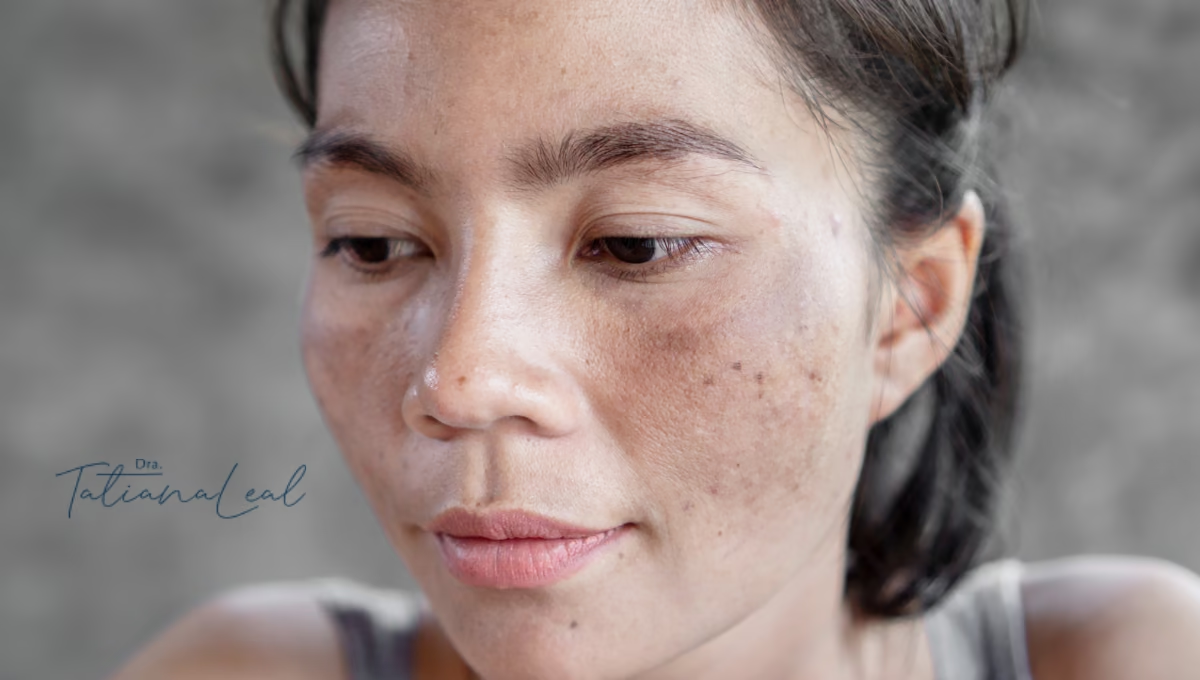
Many patients come to my practice with the same story: patches on the cheeks that appeared during pregnancy, or after a sunny vacation, and that no cream seems to touch. Most of the time it is melasma. It is one of the most common causes of pigmentation on the face and one of the conditions that asks for the most patience, because it responds to treatment but tends to return. That is why I prefer to explain it properly from the start, with no false promises.
What is melasma?
Melasma is a pigmentation disorder: the melanocytes, the cells that make skin pigment, produce too much melanin, and dark patches form, brown or gray-brown, with irregular borders. It is a common skin condition, not contagious and not dangerous to your health, but it is visible and it can take a toll on your confidence.
Melasma on the face almost always appears on sun-exposed areas: the cheeks, forehead, upper lip, bridge of the nose and chin. It is usually symmetrical, with similar patches on both sides of the face.
Melasma and chloasma: the “pregnancy mask”
When melasma appears during pregnancy it is called chloasma, or the mask of pregnancy. It is not a different disease: it is the same melasma, triggered by the hormonal changes of that stage. In some women it fades after delivery, and in others it stays.
Who gets melasma? Women, pregnancy and melasma in men
It is far more common in women and usually starts between the ages of 20 and 40. Pregnancy, hormonal birth control and skin that tans easily all raise the risk. Melasma in men does exist, although it is less common, and it follows the same rules: sun-exposed areas and a central role for the sun.
What causes melasma?
There is no single cause. Melasma appears when several triggers meet a predisposed skin.
Sun and visible light
Sun exposure is the main trigger. Ultraviolet radiation stimulates melanocytes, and visible light does too, which many people don’t know. That is why melasma gets worse after vacations, with outdoor living and in high-UV places such as Colombia, and why sunscreen is part of the treatment, not an add-on.
Hormones: pregnancy and birth control
Estrogen and progesterone increase pigment production. That is why melasma is so common in pregnancy and in women who use hormonal birth control. If you suspect your melasma is hormonal, bring it up at your assessment, but never stop a contraceptive without talking to the doctor who prescribed it.
Skin type and genetics
Many patients with melasma have relatives who also have it, and it is more common in skin that tans easily and in darker skin tones. Some medications that make the skin more sensitive to sunlight can also contribute.
Types of melasma
Depending on how deep the pigment sits, there are three types of melasma. Knowing which one you have helps estimate how long treatment will take.
Epidermal melasma
The pigment sits in the most superficial layer of the skin. Patches are dark brown with well-defined borders. It is the type that responds best to treatment.
Dermal melasma
The pigment sits deeper. Patches are lighter, from light brown to blue-gray, with blurry borders. It is the hardest type to treat, with any method, and the one that takes the longest.
Mixed melasma
It combines superficial and deep pigment, and it is the most common type. It usually improves partially: some areas fade before others.
How melasma is diagnosed at your assessment
Melasma is diagnosed in the clinic by examining the skin: where the patches are, their color, their borders and whether they are symmetrical. I’ll also ask about sun exposure, pregnancy, birth control and family history. This matters because other marks look like melasma, such as sun spots, freckles or the dark marks left by acne or inflammation, and they are not treated the same way. To see how we treat the other kinds of pigmentation, take a look at our pigmentation and spot treatment in Bogotá.
Melasma treatment: what works
Treating melasma is not one single thing. It is a combination of several, kept up over time.
Daily sun protection
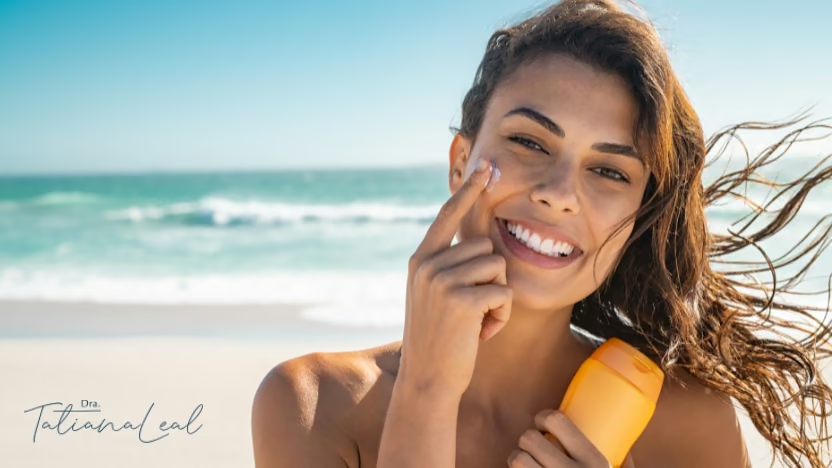
This is the foundation. Without daily sunscreen, any treatment loses what it gains. Use it every day, including cloudy days and days indoors, and reapply when you are outside. With melasma, visible light also matters, and tinted sunscreens help filter it. I go through it in detail in my sun protection guide.
Prescription topical treatment
Lightening creams prescribed by a physician reduce pigment production and are the second pillar. They are chosen for your skin and your type of melasma and adjusted at follow-up visits. Avoid using strong lightening products on your own: misused, they can irritate the skin and darken the patch. In some cases a chemical peel may also be indicated.
Laser for melasma: low-energy Q-Switch
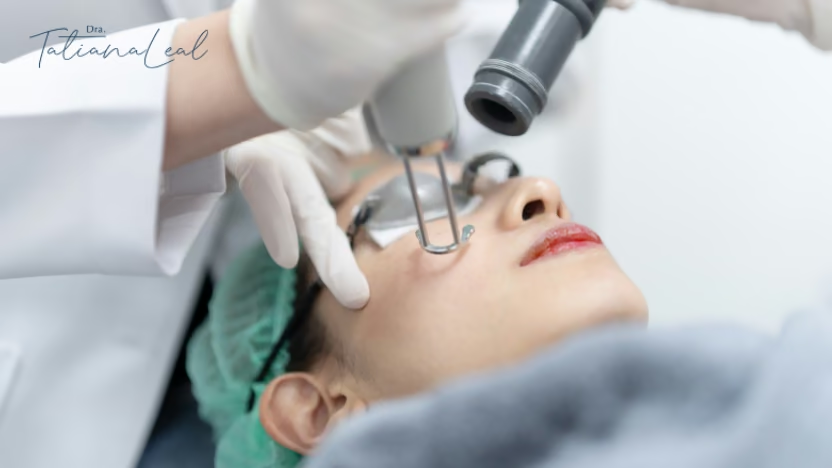
Low-energy Q-Switch laser is one of the melasma treatments with the strongest scientific support. A systematic review of 42 articles (Lee et al., Medicina, 2022) describes it as generally effective and safe, working best when combined with topical treatment and sun protection. The same review warns that, used too aggressively, it can darken the skin instead of lightening it, especially in darker skin. That is why the settings are chosen by a physician. A recent meta-analysis (Zhang et al., Frontiers in Medicine, 2026) also found better results when Q-Switch laser was combined with intense pulsed light than with either technique alone.
In our clinic, melasma needs a longer protocol than sun damage: 4 to 6 sessions, combining the laser with prescription topical treatment. Deeper melasma takes the longest to treat, with any method, and melasma can come back with the sun, which is why the assessment and maintenance are part of the treatment.
Does melasma go away?
The honest answer is that melasma can be controlled, but there is no permanent cure. It can be lightened, sometimes a lot, but it tends to return with the sun or a new hormonal change. Be wary of any treatment that promises to remove melasma for good.
That does not mean it isn’t worth treating. It means the goal is twofold: fade the patches and then keep the result with sunscreen and a maintenance plan that we adjust at follow-up visits. If you live abroad, this is worth knowing before you plan treatment around a short trip to Bogotá: melasma is managed over months, not in a single visit.
Mistakes that make melasma worse
- Using DIY remedies. Lemon, baking soda or homemade masks irritate the skin, and irritation darkens melasma.
- Applying strong lightening products without medical supervision. What worked for someone else can inflame your skin.
- Dropping sunscreen once the patches improve. It is the most common mistake and the one behind most relapses.
- Getting aggressive treatments without an assessment. A laser or peel with the wrong settings can leave the patch darker than before.
My recommendation
If you have patches on your face that won’t fade, the first step is to confirm whether it is melasma and which type. From there we build a realistic plan: sunscreen every day, topical treatment and, when indicated, laser, with follow-up visits to keep the result. With patience and consistency, melasma improves.
Dr. Tatiana Leal is an aesthetic medicine specialist in Bogotá, Colombia.
Add Dr. Tatiana Leal as a preferred source on Google

Sun Protection in Colombia: What You Need to Know to Protect Your Skin
The most common sunscreen mistakes and how to avoid them: the foundation of any melasma treatment.
Read more
Melasma: the questions my patients ask most
Does melasma go away?
Melasma can fade, and pregnancy melasma sometimes lightens on its own after delivery, but in most people it does not simply go away. It can be lightened and kept under control with daily sun protection, prescription topical treatment and, when indicated, laser. It tends to come back with sun exposure or hormonal changes, so maintenance is part of the treatment.
Is there a cure for melasma?
There is no permanent cure. Melasma can be lightened, sometimes a lot, but it tends to return, especially with the sun and hormonal changes. That is why treatment includes sunscreen every day and a maintenance plan once the patches have faded.
Can men get melasma?
Yes. Melasma is much more common in women, but men get it too, in the same areas and with the same central role of sun exposure. Treatment follows the same principles.
How many laser sessions does melasma need?
Melasma needs a longer protocol than sun damage: usually 4 to 6 sessions, combining the laser with prescription topical treatment. The exact number depends on your type of melasma and how your skin responds, and we set it at your assessment.
Is melasma the same as chloasma?
Yes. Chloasma, also called the mask of pregnancy, is melasma that appears during pregnancy, triggered by the hormonal changes of that stage. It is the same condition with a different name.