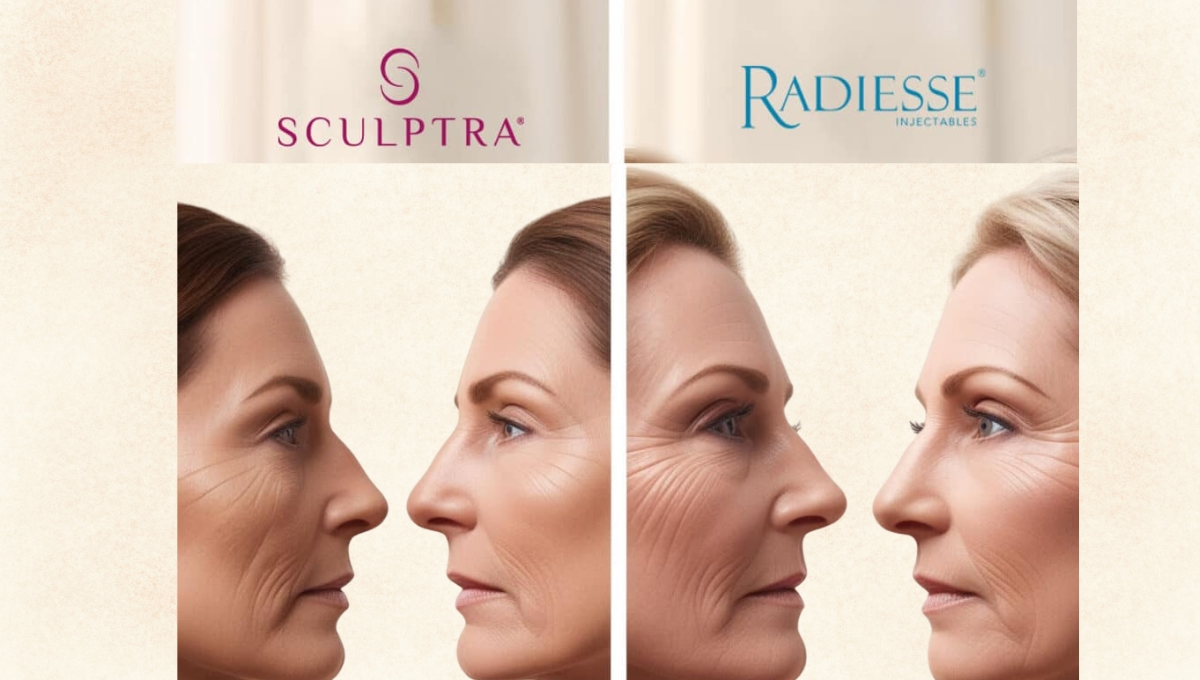
Sculptra vs Radiesse: The ultimate collagen stimulator comparison
Choosing between Sculptra and Radiesse for facial rejuvenation requires understanding their fundamental differences. Both are collagen stimulators, but they work through different mechanisms, produce distinct results, and excel in different treatment areas. Making the right choice depends on your specific aesthetic goals and facial anatomy.
As a medical specialist with 18 years of experience in aesthetic medicine, I’ve extensively used both Sculptra and Radiesse for facial volume restoration and rejuvenation. In this comprehensive guide, I compare these two leading collagen stimulators to help you achieve optimal results.
Understanding the treatments
How Sculptra and Radiesse work
These products stimulate collagen through different mechanisms:
Sculptra (Poly-L-lactic acid)
- Mechanism: PLLA microspheres stimulate gradual collagen production
- Process: Natural collagen synthesis over 3-6 months
- Material: Biocompatible synthetic polymer
- Particle size: 40-63 micrometers
- Consistency: Powder reconstituted with sterile water
Radiesse (Calcium hydroxylapatite)
- Mechanism: CaHA microspheres provide immediate volume + collagen stimulation
- Process: Instant volume + gradual collagen production over 2-4 months
- Material: Calcium-based microspheres in gel carrier
- Particle size: 25-45 micrometers
- Consistency: White, thick paste-like gel
Results comparison
What outcomes can you expect?
The aesthetic results differ significantly:
Sculptra results
- Gradual improvement: Natural-looking enhancement over time
- Subtle volume: 20-30% increase in facial fullness
- Skin quality: Improved texture and firmness
- Duration: Results last 2-3 years
- Best for: Overall facial volume restoration
Radiesse results
- Immediate volume: Instant correction visible right after treatment
- Significant lift: 30-40% volume increase immediately
- Structural support: Excellent for lifting and contouring
- Duration: Results last 12-18 months
- Best for: Deep lines, structural support, definition
Treatment area effectiveness
- Cheeks: Both excellent, Sculptra for gradual fullness, Radiesse for immediate lift
- Marionette lines: Radiesse superior for immediate correction
- Temple hollows: Sculptra ideal for gradual restoration
- Jawline: Radiesse excellent for definition and structure
- Nasolabial folds: Both effective, choice depends on desired onset
Ideal candidates
Who should choose which treatment?
Patient selection varies by treatment goals:
Ideal Sculptra candidates
- Gradual enhancement seekers: Want natural-looking improvement
- Overall facial volume: Need comprehensive volume restoration
- Skin quality concerns: Want improved texture and firmness
- Age 40-65: Optimal for age-related volume loss
- First-time patients: New to injectable treatments
- Subtle results preference: Avoid dramatic changes
Ideal Radiesse candidates
- Immediate results seekers: Want instant improvement
- Structural support needs: Require lifting and definition
- Deep facial folds: Significant lines and volume loss
- Age 35-60: Good for early to moderate aging signs
- Experienced patients: Previous injectable treatments
- Defined features desire: Want enhanced facial contours
Combination candidates
- Comprehensive rejuvenation: Can use both for different areas
- Sequential treatment: Start with Radiesse for immediate correction, maintain with Sculptra
- Hybrid approach: Some providers combine both in same treatment
- Personalized planning: Customized approach based on individual needs
Procedure details
Treatment process comparison
The application techniques differ:
Sculptra procedure
- Preparation: Reconstitution 2+ hours before treatment
- Anesthesia: Topical numbing cream
- Injection technique: Multiple small deposits using cannula
- Sessions: Usually 2-3 treatments, 4-6 weeks apart
- Post-care: Massage treated areas for 5 minutes, 5 times daily for 5 days
- Immediate results: Mild swelling, gradual improvement over months
Radiesse procedure
- Preparation: Ready-to-use syringe
- Anesthesia: Usually includes lidocaine for comfort
- Injection technique: Linear threading or fanning technique
- Sessions: Usually single treatment
- Post-care: Avoid massage for 24 hours
- Immediate results: Full correction visible immediately
Safety and side effects
Understanding risks and complications
Both treatments have excellent safety profiles:
Common side effects (both)
- Swelling: Mild to moderate, resolves in 1-7 days
- Bruising: Minor, typically fades in 7-14 days
- Redness: Temporary, subsides in 24-48 hours
- Tenderness: Mild discomfort at injection sites
- Itching: Temporary sensation during healing
Sculptra-specific considerations
- Nodule formation: Rare, usually technique-related
- Delayed onset: Results appear gradually over months
- Massage importance: Critical for optimal results
- Overcorrection risk: Less likely due to gradual nature
Radiesse-specific considerations
- Palpability: Can feel product under skin initially
- Immediate correction: Requires precise placement
- Migration risk: Lower due to particle size
- Overcorrection risk: Higher due to immediate volume
Safety comparison
- Allergic reactions: Extremely rare for both
- Vascular complications: Very rare with proper technique
- Long-term safety: Both have extensive safety data
- Reversibility: Neither is easily reversible, but both are temporary
Cost analysis
Financial investment comparison
Understanding treatment costs:
Sculptra costs
- Per vial: $1,200,000 - $1,800,000 COP
- Full treatment: 2-3 vials typically needed
- Total cost: $2,400,000 - $5,400,000 COP
- Maintenance: Every 2-3 years
- Value per year: $800,000 - $2,700,000 COP annually
Radiesse costs
- Per syringe: $1,500,000 - $2,200,000 COP
- Full treatment: 1-2 syringes typically needed
- Total cost: $1,500,000 - $4,400,000 COP
- Maintenance: Every 12-18 months
- Value per year: $1,000,000 - $4,400,000 COP annually
Cost-effectiveness
- Initial investment: Similar range for both treatments
- Long-term value: Sculptra more cost-effective over time
- Treatment frequency: Radiesse requires more frequent treatments
- Area coverage: Sculptra may require more product for full face
Recovery and downtime
Post-treatment experience
Recovery experiences are similar:
Immediate post-treatment (0-24 hours)
- Both treatments: Return to normal activities immediately
- Avoid: Intense exercise, alcohol, blood thinners
- Ice application: Helpful for swelling reduction
- Sleep position: Elevate head if facial treatment
First week
- Sculptra: Massage as instructed, avoid pressure
- Radiesse: Avoid massage, gentle cleansing only
- Makeup: Can apply after 24 hours
- Social activities: Normal after 24-48 hours
Long-term care
- Sun protection: Essential for both treatments
- Skin care: Maintain good skincare routine
- Follow-up: Attend scheduled appointments
- Results monitoring: Track progress with photos
Long-term results
Durability and maintenance
Understanding lasting effects:
Sculptra longevity
- Collagen production: Peaks at 3 months, maintains for 2-3 years
- Gradual decline: Effects slowly diminish over time
- Maintenance treatments: Every 2-3 years
- Cumulative effects: Multiple treatments build upon previous results
- Natural aging: Continues but with better collagen foundation
Radiesse longevity
- Immediate volume: Full correction visible immediately
- Collagen phase: Additional volume from collagen over 2-4 months
- Duration: 12-18 months total effect
- Maintenance treatments: Every 12-18 months
- Predictable decline: More consistent timeline than Sculptra
Frequently asked questions
Common patient questions
Which treatment looks more natural?
Natural appearance factors:
- Sculptra: Very natural due to gradual onset
- Radiesse: Natural when properly placed, but more immediate
- Provider skill: Critical for both treatments
- Patient selection: Right treatment for right person = natural results
Can I combine Sculptra and Radiesse?
Combination approaches:
- Different areas: Use each for its strongest applications
- Sequential treatment: Radiesse for immediate correction, Sculptra for maintenance
- Hybrid treatments: Some providers combine both in strategic areas
- Personalized planning: Customized approach based on individual needs
Which treatment hurts more?
Pain and comfort factors:
- Sculptra: Requires reconstitution, may cause more injection sensation
- Radiesse: Contains lidocaine, generally more comfortable
- Technique matters: Cannula vs. needle affects comfort
- Individual tolerance: Pain perception varies significantly
What if I don’t like the results?
Management options:
- Sculptra: Results develop gradually, easier to adjust
- Radiesse: Immediate results, but can be massaged if needed
- Time factor: Both treatments are temporary
- Provider communication: Discuss concerns promptly
Making your choice
Decision-making framework
Use this systematic approach:
Step 1: Define your goals
- Desired onset: Immediate vs. gradual results
- Treatment areas: Specific concerns you want addressed
- Timeline: When do you need to see results?
- Budget considerations: What can you afford for maintenance?
Step 2: Assess your needs
- Volume loss pattern: Overall vs. specific areas
- Skin quality: Texture and firmness concerns
- Age factors: How advanced are your aging signs?
- Previous treatments: What has worked for you before?
Step 3: Consult with expert
- Professional assessment: Get personalized recommendation
- Treatment plan: Understand proposed approach
- Cost breakdown: Full financial transparency
- Expected outcomes: Realistic result expectations
Step 4: Make your decision
- Informed choice: Based on thorough understanding
- Trust your provider: Select experienced practitioner
- Commit to aftercare: Follow all instructions
- Plan for maintenance: Budget for future treatments
Your personalized collagen stimulator consultation
With 18 years of certified experience in advanced aesthetic treatments, I provide comprehensive assessments to help you choose between Sculptra and Radiesse based on your unique facial anatomy, aging patterns, and aesthetic goals.
Are you considering collagen stimulator treatments? In your personalized consultation, I evaluate your facial structure, skin quality, volume loss patterns, and desired outcomes to recommend the most appropriate treatment approach.
Ready to explore your rejuvenation options? Contact us today for a thorough evaluation and discover which collagen stimulator - Sculptra or Radiesse - will help you achieve natural, long-lasting facial rejuvenation.
<a href=”#” class=”boton boton_principal boton_conversion lead_whatsapp” rel=”nofollow noopener noreferrer” title=”Contact Dr. Tatiana Leal” data-treatment=”sculptra-vs-radiesse-for-facial-treatments-complete-guide-2026”
Reserve your spot Personalized attention </a>

Frequently asked questions
Radiesse produces faster initial visible results because its calcium hydroxyapatite carrier gel provides immediate volumizing effect from the moment of injection. Sculptra, by contrast, requires the PLLA microparticles to trigger a collagen synthesis cascade that typically becomes visible after 4 to 8 weeks, with full effect emerging over 3 to 6 months.
Sculptra generally maintains its results more effectively beyond two years because the collagen it stimulates becomes structurally integrated into the tissue and persists even after the PLLA particles have been fully resorbed. Radiesse's biostimulation cycle completes earlier, and volume loss tends to become noticeable between 12 and 18 months for most patients.
Sculptra is typically the gentler option for patients prone to bruising because it is injected with high dilution using blunt cannulas over broader areas, minimizing trauma to blood vessels. Radiesse, when used for structural volumizing, may require more precise placement with sharp needles in vascularized zones, slightly increasing bruising risk in susceptible patients.
Sculptra is always reconstituted from a lyophilized powder with sterile water, typically at 5 to 8 mL per vial using modern high-dilution protocols to prevent nodule formation. Radiesse comes pre-mixed in a ready-to-use syringe and is diluted with lidocaine or saline by the physician at the time of treatment, usually at a 1:1 ratio for biostimulation purposes.
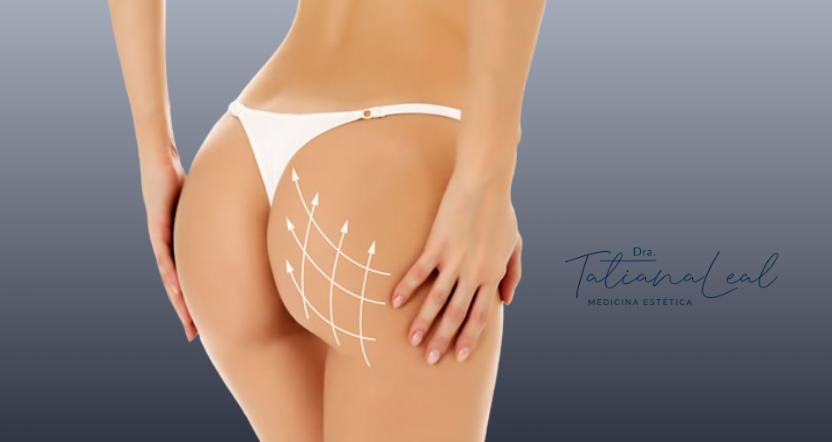
Sculptra has gained broader adoption in Colombia, particularly in Bogotá, due to its established track record in progressive skin quality improvement and the growing demand for natural-looking, gradual rejuvenation. Its versatility for both facial and body applications, including the Brazilian non-surgical buttock lift, has also contributed to its wider clinical use across aesthetic medicine practices in the country.