“Doctor, would you get Sculptra yourself?” Patients often ask me this during their consultation, and my answer tends to surprise them: “Yes—I already have. I also recommended it to my mother, my sister, and my closest friends. But I’ve also decided not to treat patients for whom it wasn’t the right decision.”
As a physician who injects Sculptra and who invested in her own treatment three years ago, I can offer the perspective of someone who has lived the process as both physician and patient.

The question isn’t whether Sculptra works. The question is whether it’s worth it for you specifically, considering your situation, your real goals, and your current ability to invest. I’m going to give you the tools to make that decision intelligently.
The real economics no one spells out
When someone asks if Sculptra is worth it, my first response is a question: “Worth it for what exactly?” Value isn’t set by price alone; it’s the relationship between what you invest and what you actually get.
The true investment in Sculptra goes beyond the upfront cost. It includes time commitment, medical follow-ups, patience during the first months, and adherence to specific protocols. Once you calculate the real cost, you’ll often find the decision is more nuanced than it seemed.

A useful way to frame it is to compare Sculptra with what you would spend on temporary treatments over the same period. If you already maintain your face with sessions repeated every few months, add up what they cost over two years and compare that with the Sculptra program your assessment recommends.
My personal experience: why I chose Sculptra
As a specialist, I have access to virtually any aesthetic treatment. I’ve tried hyaluronic acid, PDO threads, biorevitalization, and almost everything I offer my patients. But when I turned 45 and needed to make a serious decision about my own rejuvenation, I chose Sculptra.
I based my decision on three critical factors:
Factor One: Professional coherence. As a physician who injects Sculptra daily, I have to fully believe in what I offer. I won’t recommend a treatment I wouldn’t get myself.
Factor Two: Absolute naturality. My professional image requires credibility. I needed a refresh that felt like “well-rested and healthy,” not “just had something done.”
Factor Three: Long-term sustainability. At 45, I didn’t want an endless cycle of touch-ups every few months. I wanted a solution that fundamentally improves my skin for years.

My own Sculptra journey confirmed everything I tell patients. The first two months required patience and trust. Month three was the turning point. By month six, I had exactly what I wanted. Three years later, I’ve maintained the benefits and my skin quality is objectively better than before treatment.

Sculptra price in Colombia 2026: full city-by-city cost breakdown
How much does Sculptra really cost in Colombia? A detailed 2026 analysis, city-by-city comparisons, financing options, and tips to optimize your investment.
Read moreWhen Sculptra is absolutely worth it: the clear cases
There are profiles where Sculptra tends to be worth it:
Profile One: The professional (40–55).
If you need to look rested and current in a natural way, without frequent touch-ups or looking “done,” a treatment whose effect builds gradually and lasts makes good use of your investment.
Profile Two: The preventive thinker (35–42).
With early collagen loss, collagen biostimulation aims to improve skin quality before correction is needed. To understand what it can and can’t do, read what Sculptra is for.
Profile Three: Regaining confidence without looking like someone else.
If you want to look like the best version of your age, rather than look like you’re trying to seem younger, Sculptra fits because the change is gradual.

For these profiles, Sculptra is worth it because it delivers rejuvenation without obvious signs of intervention.
When Sculptra is not worth it: costly mistakes to avoid
It’s just as important to recognize when Sculptra isn’t worth it. Over the years, I’ve identified situations where the investment doesn’t make sense or other options fit better:
Situation One: Expecting dramatic, immediate change.
If you want obvious changes within days, for an event or upcoming photos, Sculptra doesn’t serve that goal. In that case, options such as fillers give an immediate result.
Situation Two: Financial constraints that would compromise priorities.
If paying for Sculptra means using savings set aside for essentials, such as your children’s education, the responsible medical advice is to wait. No aesthetic treatment justifies compromising family priorities; it can be planned for later.
Situation Three: A personality that clashes with gradual processes.
If you tend to switch treatments in search of the fastest fix, the patience Sculptra requires may frustrate you. Options with a more immediate effect suit that profile better.
The calculation you’re never taught: real value vs. sticker price
Many patients judge whether Sculptra is worth it by comparing only the upfront price with cheaper treatments. That surface-level view leads to bad decisions that cost more over time.
The correct calculation includes variables most clinics never mention:
Work out the cost per month of result: divide each treatment’s total price by the number of months its effect lasts. A cheaper treatment you have to repeat several times in the same period can end up costing more than one with a higher upfront price that lasts longer.
Add the factors that never appear on the invoice:
The time spent on frequent maintenance appointments. The recurring anxiety when temporary effects fade. The value of steady confidence vs. on-and-off confidence.

Butt lift cost 2026: how much you save with a non-surgical BBL in Colombia
Facial radiofrequency in Bogotá ranges from $40 to $180 USD per session. The difference is not arbitrary — it depends on the equipment, technology, and the professional's profile. Here is what determines the price and how to avoid making the wrong choice.
Read moreThe comparison that reframes everything: Sculptra vs. real alternatives
An honest assessment of whether Sculptra is worth it requires an apples-to-apples comparison with realistic alternatives—not with “doing nothing.”
Sculptra vs. the typical maintenance routine:
Over two years, a common routine includes: hyaluronic acid every ~8 months, botulinum toxin every ~4 months, light biostimulators every ~6 months, plus ongoing premium skincare.
Total cost of a 24-month routine: approximately 8–12 million pesos.
Complete Sculptra protocol: 4–6 million pesos.
Difference: 4–6 million pesos saved—with superior naturality and longevity.
Sculptra vs. facial surgery:
Surgery has less obvious downsides. On top of its price come recovery costs, time off work and the risk of an unnatural-looking result. With Sculptra you return to your activities the same day, and the result is gradual. They suit different cases: when laxity is advanced, the assessment may show that surgery is the right option.
My mother, my sister, my friends: why I recommended it
As a physician, the ultimate test of trust is whether I’d recommend a treatment to the people I love most. I’ve treated my mother, my sister, and three of my closest friends with Sculptra. Each case was carefully evaluated:
My mother, 72: Sculptra was appropriate to enhance skin quality and deliver natural firmness without artifice. The goal wasn’t to look younger, but healthy and well cared-for.
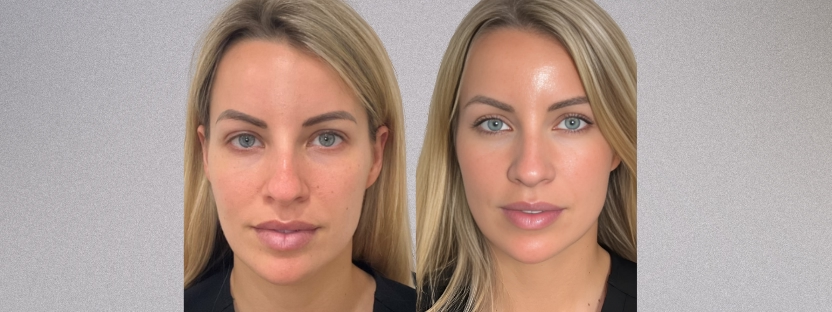
My sister, 42: As a trial attorney, she needed steady professional confidence. Sculptra gave her the natural refresh she wanted without affecting her credibility.
My friends: Different profiles, but all with realistic expectations and the ability to follow the protocol correctly.
The outcome in every case confirmed my professional judgment: when candidates are well selected, Sculptra delivers exceptional satisfaction that fully justifies the investment.
The ultimate question: is it worth it for you?
After all this analysis, one crucial question remains: Is Sculptra worth it for your specific situation?
Your answer depends on an honest look at these factors:
Can you invest without compromising essential priorities? Are your goals aligned with gradual, natural-looking results? Do you have the patience for a 3–6-month process? Do you value durability over instant gratification?
If you answered yes, Sculptra is likely worth it for you.
If you answered no to any of these, consider alternatives such as non-invasive body contouring or non-surgical facial treatments that offer faster gratification.
Before deciding, it also helps to read real experiences with a date and a treatment. Waseem K had Sculptra and Botox with Dr. Tatiana Leal and described it this way on Google:
“I recently had Sculptra and Botox done with Dr. Tatiana Leal, and the entire experience exceeded my expectations. Dr. Tatiana is incredibly knowledgeable, gentle, and takes her time explaining every detail. The procedure was comfortable, and I already feel confident about the results. Her team is also very welcoming and attentive!”
Dr. Tatiana Leal has a 4.8 ★ rating across 145 Google reviews.
My final medical recommendation
Having lived Sculptra from both sides—the clinic and the chair—my recommendation is clear: Sculptra is worth it when the right conditions are present, and it isn’t when they’re not.
The key is an honest, comprehensive evaluation of your unique situation. Don’t let marketing push you if you’re not a good candidate—yet don’t dismiss Sculptra due to fear or misconceptions.
Your Sculptra decision should rest on specific medical, financial, and personal criteria. When these align, the investment is fully justified and delivers lasting satisfaction.
When they don’t, medical integrity requires we explore alternatives better suited to your circumstances.
The question isn’t whether Sculptra is a good treatment. The question is whether it’s the right treatment for you right now.
Want to learn more about this treatment?
Schedule your consultation with our doctors and discover the ideal treatment for you
Book your appointment In-person consultation in Bogotá, Colombia (Av. Suba #114-59). Live in another city or abroad? Travel to your appointment or book a virtual assessment, same price.Add Dr. Tatiana Leal as a preferred source on Google

Facial radiofrequency price in Colombia 2026: what nobody tells you
Facial radiofrequency in Bogotá ranges from $40 to $180 USD per session. The difference is not arbitrary — it depends on the equipment, technology, and the professional's profile. Here is what determines the price and how to avoid making the wrong choice.
Read more
Frequently asked questions
How does Sculptra's cost-per-year compare to repeated hyaluronic acid filler sessions?
A complete Sculptra program typically requires 2–3 sessions with results lasting 24–30 months, while hyaluronic acid fillers need replacement every 9–12 months. When divided over the same 24-month period, Sculptra frequently costs 30–50% less in total expenditure while delivering superior collagen-building benefits that fillers cannot replicate.
What is the realistic total investment for a complete Sculptra facial program in Bogotá?
A standard facial program in Bogotá typically involves 2–3 sessions spaced 4–6 weeks apart, each using 2–4 vials depending on the degree of volume loss. Patients should budget for the treatment sessions plus at least one follow-up visit, and factor in that no maintenance is usually needed for 18–24 months after the final session.
At what age does investing in Sculptra tend to offer the best long-term return?
Patients in their early 40s to mid-50s tend to get the greatest return because they still have sufficient residual collagen infrastructure for biostimulation to amplify, and they face 15–25 more years of looking professionally active. Starting before significant volume loss occurs means fewer vials are needed to achieve and maintain results.
Can a Sculptra program realistically delay or replace more invasive surgical procedures?
For patients with mild to moderate facial volume loss and good skin elasticity, a well-planned Sculptra program can delay the need for surgical procedures like facelifts by 5–10 years according to longitudinal clinical observations. It cannot replace surgery for patients with significant skin laxity, but it can meaningfully postpone that decision while maintaining an improved appearance.
What financial pitfalls do patients most commonly encounter when budgeting for Sculptra?
The most common mistake is comparing only the per-session price without accounting for the total number of sessions and the treatment timeline. Patients who choose cheaper, unqualified providers to save money often end up paying for corrective procedures that cost more than the original qualified treatment would have.
What happens if the maintenance program is stopped halfway through a Sculptra treatment plan?
Stopping the program doesn't cause complications or adverse effects; you simply get less than the planned result. The sessions already completed retain their effect for the expected period; however, the collagen density achieved will be lower, and the results may not last as long as they would have with the full protocol completed.
What patient profile best justifies investing in Sculptra over other alternatives?
Sculptra offers the greatest value for patients with diffuse volume loss, moderate sagging, and skin that still responds well to biostimulation. It's not the most efficient choice for those who need targeted correction of deep folds (where hyaluronic acid works faster) or for those seeking immediate results before an important event.