
As a physician with over 18 years of experience in aesthetic medicine, I’ve seen it all: spectacular results and devastating complications. Today I’m going to be brutally honest about the real dangers of thread lifts.
The truth nobody wants to hear
Thread lifts are NOT an innocuous procedure. They are a serious medical procedure that requires deep anatomical knowledge, precise surgical technique, and above all, honesty about their limitations and risks.
“90% of ‘bad results’ you see online aren’t from the threads, but from inexperienced hands or inadequate materials.”
— Dr. Tatiana Leal
Real dangers vs theoretical risks
Real dangers (clinically documented)
1. Persistent lumps and irregularities
This is the most common and frustrating side effect. It occurs when:
- Threads are placed too superficially: The thread becomes visible under the skin
- Too much tension is used: Skin bunches creating ripples
- Inadequate threads for skin type: Too thick materials for thin skin
Warning sign: Lumps that don’t disappear after 4 weeks
2. Iatrogenic asymmetries
When one side ends up higher or tighter than the other:
- Asymmetric insertion point design
- Different tension in each thread
- Patient’s asymmetrical anatomy not considered
Consequence: May require complete removal and reapplication
3. Infections and inflammatory reactions
Although rare in medical offices, they’re possible:
- Contamination during the procedure
- Non-sterile or uncertified materials
- Inadequate aseptic technique
Symptoms: Progressive redness, heat, intense pain, fever
4. Thread migration
Threads shift from their original position:
- More common with smooth threads (no barbs)
- From inadequate insertion technique
- In high mobility areas (around the mouth)
Result: Incorrect position, asymmetry, need for removal
5. Nerve or vascular injuries
Serious but extremely rare complication:
- Accidental puncture of facial nerves
- Blood vessel injury
- Extensive bruising
Requires: immediate medical intervention
Theoretical risks (very rare or unlikely)
- Severe allergic reactions: PDO is biocompatible, allergies < 0.001%
- Complete body rejection: PDO has been used in surgery for decades
- Permanent nerve damage: Extremely rare with correct technique

Real cases: when everything goes wrong
Case #1: “the catastrophe of asymmetric eyebrows”
32-year-old patient, treated by non-medical “esthetician”:
- Problem: Eyebrows at different heights, one visibly higher
- Cause: Asymmetric design, lack of anatomical knowledge
- Solution: Complete thread removal + reapplication by physician
- Additional cost: $1,800,000 to correct the error
Case #2: “permanent lumps on cheeks”
45-year-old patient, low-quality threads:
- Problem: Multiple visible lumps under the skin
- Cause: Very thick threads, superficial placement
- Solution: Difficult surgical removal, minimal sequelae
- Lesson: Material quality matters enormously
Case #3: “post-procedure infection”
28-year-old patient, poor hygiene conditions:
- Problem: Severe infection with fever and pain
- Cause: Non-sterile technique, non-medical office
- Solution: IV antibiotics, thread removal
- Consequence: Scars and permanent fear of procedures
How to identify a risky professional
Red flags
1. Not a medical doctor
- “Esthetician”, “cosmetologist”, “beauty specialist”
- No university medical degree
- Cannot prescribe medications or handle complications
2. Suspiciously low prices
- “Complete thread lifts” for less than $500,000
- “Last-minute offers” or “same-day promotions”
- Doesn’t specify type or number of threads included
3. Lack of transparency
- Doesn’t show real patient cases
- Avoids talking about risks or complications
- Doesn’t have a medical office equipped
4. Pressure to decide immediately
- “The offer only lasts today”
- “If you don’t do it now, you lose the discount”
- Doesn’t allow thinking or getting other opinions
Signs of trustworthy professional
1. Verifiable credentials
- Visible and verifiable medical degree
- Specialization in aesthetic medicine or plastic surgery
- Updated certifications
2. Complete transparency
- Clearly explains risks and benefits
- Shows real cases (not just stock images)
- Answers all your questions without evasiveness
3. Professional quality
- Medical office equipped for emergencies
- Uses certified materials (INVIMA, CE, FDA)
- Offers post-treatment follow-up

Thread lifts vs other facial treatments: Which to choose?
There are many treatments to rejuvenate without surgery. Thread lifts, HIFU, radiofrequency, or fillers? I explain the differences so you can choose correctly.
Read moreQuestions you should ask before agreeing
Safety checklist
About the professional:
- Is he a medical doctor? Can I see his degree?
- What specialization does he have in aesthetic medicine?
- How many years of specific experience does he have with thread lifts?
- How many cases like mine has he treated?
About the materials:
- What specific brand of threads will he use?
- Do they have INVIMA/CE/FDA certification?
- Are they absorbable? How long do they take to dissolve?
- What exactly does the price include?
About the procedure:
- How many threads will my specific case need?
- What type of anesthesia will he use?
- What happens if there are complications?
- Does he offer post-treatment follow-up?
About the results:
- Can I see real patient cases similar to mine?
- What realistic results can I expect?
- What can’t threads correct in my case?
How to protect yourself: practical guide
Before the procedure
1. Thorough research
- Verify the doctor’s credentials
- Look for real reviews (not just testimonials on his website)
- Ask for references from real patients
2. Consult with several professionals
- Don’t settle for the first opinion
- Compare approaches and recommendations
- Confirm that all say similar things
3. Know your limits
- Do you have pre-existing medical conditions?
- Are you taking medications that affect blood clotting?
- Do you have extremely thin skin or a history of scarring problems?
During the procedure
1. Verify the environment
- It must be a medical office
- It must have proper sterilization conditions
- It must have emergency equipment
2. Confirm the materials
- Ask to see the threads’ original packaging
- Verify they are sealed and certified
- Confirm they’re the same threads that were promised
3. Communicate any discomfort
- If you feel intense pain, say so immediately
- If something doesn’t seem right, ask
- Don’t put up with discomfort just to “not bother” the doctor
After the procedure
1. Follow the instructions to the letter
- Don’t skip any postoperative care
- Attend all follow-up appointments
- Report any unusual symptom immediately
2. Monitor your recovery
- Take regular photos to document changes
- Note any new or concerning symptoms
- Don’t minimize warning signs

Thread lift fibrosis: is it a real risk?
Fibrosis after thread lifts is one of the terms that generates the most alarm on social media. It is important to clarify what is real and what is exaggerated.
What is fibrosis in the context of thread lifts?
When a thread is inserted into tissue, the body generates a controlled inflammatory response around the material. This response is precisely what stimulates new collagen production — meaning it is the intended therapeutic mechanism.
In some cases, this inflammatory response can be excessive and produce a localized accumulation of fibrous tissue. This presents as:
- Hardening of the treated area that does not resolve after 4–6 weeks
- Palpable nodules under the skin
- Fibrous cords — visible or palpable — following the thread’s trajectory
- Persistent asymmetry with altered skin texture
How common is fibrosis after thread lifts?
Clinically significant fibrosis is uncommon when the procedure is performed with correct technique and certified materials. Risk factors include:
- Poor insertion technique: Threads placed too superficially or with excessive tension
- Low-quality materials: Uncertified or dubious composition
- Patient scarring tendency: People with a history of keloids or hypertrophic scars have higher risk
- Untreated post-procedure infection: Can lead to reactive fibrosis
- Excessive movement of the treated area: Especially in high-tension body zones
How is thread lift fibrosis treated?
Treatment depends on severity:
- Deep massage: In mild cases, circular massage movements can break adhesions in the first few weeks
- Corticosteroid infiltration: For more established fibrosis, local triamcinolone injections reduce inflammation and fibrous tissue
- Radiofrequency or HIFU: Help remodel tissue and improve texture
- Time: Most mild cases resolve spontaneously between months 3 and 6
The “catastrophic fibrosis” seen in viral videos is almost always the result of procedures performed by people without medical training, with uncertified materials, or in contraindicated areas.
Normal reaction vs. pathological fibrosis
This distinction is critical:
| Normal reaction (months 1–2) | Pathological fibrosis (from month 2–3) |
|---|---|
| Mild hardening of the treated area | Induration that does not resolve |
| Palpable cord-like tightness sensation | Visible, painful fibrous cords |
| Small irregularities that soften over time | Nodules that grow in size |
| Transient asymmetry | Asymmetry that does not improve |
If you have any doubt about whether what you feel is normal or not, the best decision is always to consult with the physician who performed the procedure.
My position as a physician
When I DO recommend thread lifts
- Mild to moderate sagging: Ideal cases with good results
- Realistic patients: Understand limitations and risks
- Good health conditions: No medical contraindications
- Appropriate expectations: Looking for improvement, not perfection
When I DON’T recommend thread lifts
- Severe sagging: Need surgery, not threads
- Extremely thin skin: High visibility risk
- Unrealistic expectations: Think it’s magic
- Don’t accept risks: All medical procedures have risks
If you’d like to learn more about thread lift disadvantages and bad results, I invite you to read that complementary guide.
My commitment to your results
In my office:
- Honest assessment: I’ll tell you if you’re a candidate or not
- Complete transparency: I’ll explain all real risks
- Quality materials: I only use certified threads
- Strict follow-up: I’ll accompany you through entire recovery
- Total responsibility: I’ll assume any complications

Foxy Eyes with thread lifts in Bogotá: Eyebrow lift without surgery
The Foxy Eyes effect —that elongated, lifted gaze toward the temples— can be achieved without surgery using PDO thread lifts. I explain how the technique works, who is the ideal candidate and how much it costs in Bogotá.
Read moreYour safety matters more than the price
Thread lifts can be an excellent treatment or a catastrophe. The difference isn’t in the threads, but in:
- The professional who applies them
- The quality of materials
- Your real candidacy for the treatment
- Your expectations and risk understanding
My final advice: Don’t be swayed by low prices or miracle promises. Your safety and results are worth more than any discount.
“I prefer to lose a patient by telling the truth than to gain them by telling them what they want to hear.”
— Dr. Tatiana Leal
Why do you see “bad results” online?
If you’ve searched for information about thread lifts, you’ve probably seen images of disastrous results. Here’s why they happen:
| Cause | Explanation | How to avoid it |
|---|---|---|
| Poor technique | Professionals without adequate training | Verify medical certification |
| Low-quality materials | Uncertified, cheap threads | Ask about the brand and INVIMA registration |
| Unrealistic expectations | Expecting surgical results from threads | Have an honest consultation about what’s realistically achievable |
| Prices that are too low | “Cheap turns out expensive” | Be wary of prices far below market rate |
| Lack of follow-up | No post-treatment check-ups | Choose professionals who offer follow-up |
90% of the “bad results” you see online are due to poor technique, inadequate materials, or unrealistic expectations. In expert hands, it’s one of the safest procedures in aesthetic medicine. — Dr. Tatiana Leal
Thread lift contraindications
Not everyone is a candidate for this treatment.
Absolute contraindications
- Pregnancy or breastfeeding: There isn’t enough safety data for these stages.
- Active infections in the area to be treated: Severe acne, active cold sores, dental infections.
- Coagulation disorders: Conditions that affect blood clotting ability.
- Active autoimmune diseases: Lupus, rheumatoid arthritis in an active flare.
- Known allergy to thread materials (extremely rare).
Relative contraindications (require evaluation)
- Extremely thin skin: Risk that the threads become visible under the skin.
- Severe sagging: Threads don’t have enough strength to lift excess skin.
- Unrealistic expectations: Expecting surgical facelift results.
- Recent previous treatments: Fillers or other procedures within the last 2-4 weeks.
- Anticoagulants: Medication that increases the risk of bruising.
How to reverse thread lifts if something goes wrong
An important advantage of PDO threads is that they are absorbable and, if necessary, can be removed during the first few weeks.
- Wait: Many minor irregularities resolve on their own within 2-4 weeks.
- Targeted massage: Can help redistribute the tissue.
- Thread removal: A simple procedure under local anesthesia in the office.
- Touch-up: Adding or adjusting threads to correct residual asymmetries.
Thread removal is uncommon: the satisfaction rate with thread lifts exceeds 90% in expert hands.
Are thread lifts dangerous long-term?
The scientific evidence is clear on this point:
What we DO know:
- PDO threads fully reabsorb within 6-8 months
- They leave no permanent residue in the body
- The collagen generated remains, improving skin quality
- There is no evidence of long-term negative effects
What they do NOT cause:
- They do not create “dependency” or worsen sagging afterward
- They do not prevent future treatments or surgeries
- They do not generate permanent “cords” under the skin
Are you considering thread lifts? I invite you to an honest consultation where we’ll evaluate if you’re really a candidate, explain all risks without filters, and decide together if this treatment is right for you. Learn all the details about the PDO thread lift procedure, including real before-and-after cases, prices by facial zone, and answers to frequently asked questions.
Want to learn more about this treatment?
Schedule your consultation with our doctors and discover the ideal treatment for you
Book your appointment * Limited spots this weekDisclaimer: This article has educational purposes and does not substitute personalized medical consultation. Each case is unique and requires individual evaluation by a certified medical professional.
Important note: Results mentioned are based on the author’s clinical experience and may vary according to each patient and professional.
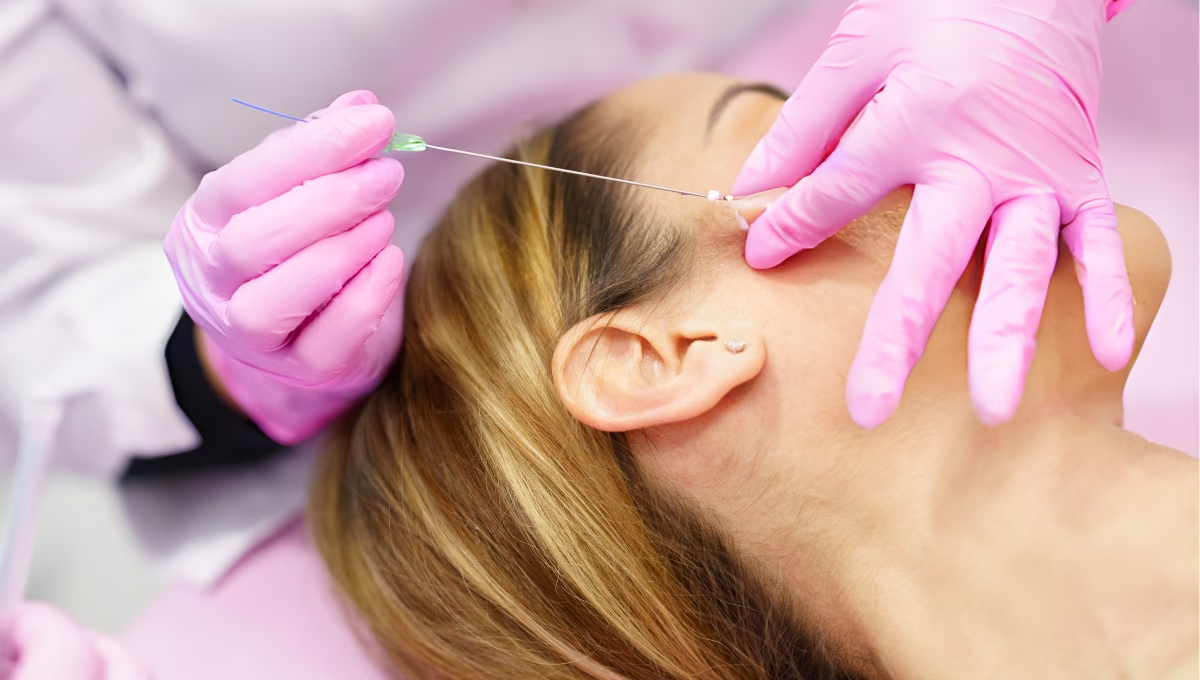
Magic Threads: The Revolution in Non-Surgical Rejuvenation
Magic threads (PDO) have become one of the most revolutionary techniques in aesthetic medicine for their ability to rejuvenate without surgery. Discover everything about this innovation, from how it works to its multiple applications on face and body.
Read more
Frequently asked questions
How dangerous are thread lifts really?
Thread lifts are safe WHEN applied correctly by certified physicians. The real danger isn't in the threads, but in poor technique, inadequate materials, or lack of experience. In expert hands, the serious complication rate is less than 2%.
What are the signs that something went wrong with threads?
Warning signs: persistent lumps after 4 weeks, visible asymmetry, intense pain that doesn't improve, progressive redness, fever, or inability to move the area normally. If you experience these symptoms, immediately consult the physician who applied them.
Can threads cause permanent damage?
Permanent damage is extremely rare with quality PDO threads. Reported cases usually involve non-medical threads, incorrect application, or ignoring warning signs. Most complications resolve with proper treatment or thread removal.
How do I know if a doctor is trustworthy for thread lifts?
Verify: medical degree (not beautician), certified in aesthetic medicine, demonstrable experience with real cases, uses certified materials (INVIMA/CE), has proper consultation, clearly explains risks, and offers post-treatment follow-up.
What questions should I ask before accepting thread lifts?
Key questions: What type of threads will you use (brand/certification)?, How many years of experience do you have?, How many cases like mine have you done?, What happens if there are complications?, Can I see real patient cases?, What does the price include?
Is it true that threads can migrate or come out?
Migration is very rare with quality barbed threads applied correctly. Smooth threads have higher displacement risk but don't 'come out'. Migration usually occurs from inadequate technique or low-quality materials. PDO threads dissolve naturally in 6-8 months.