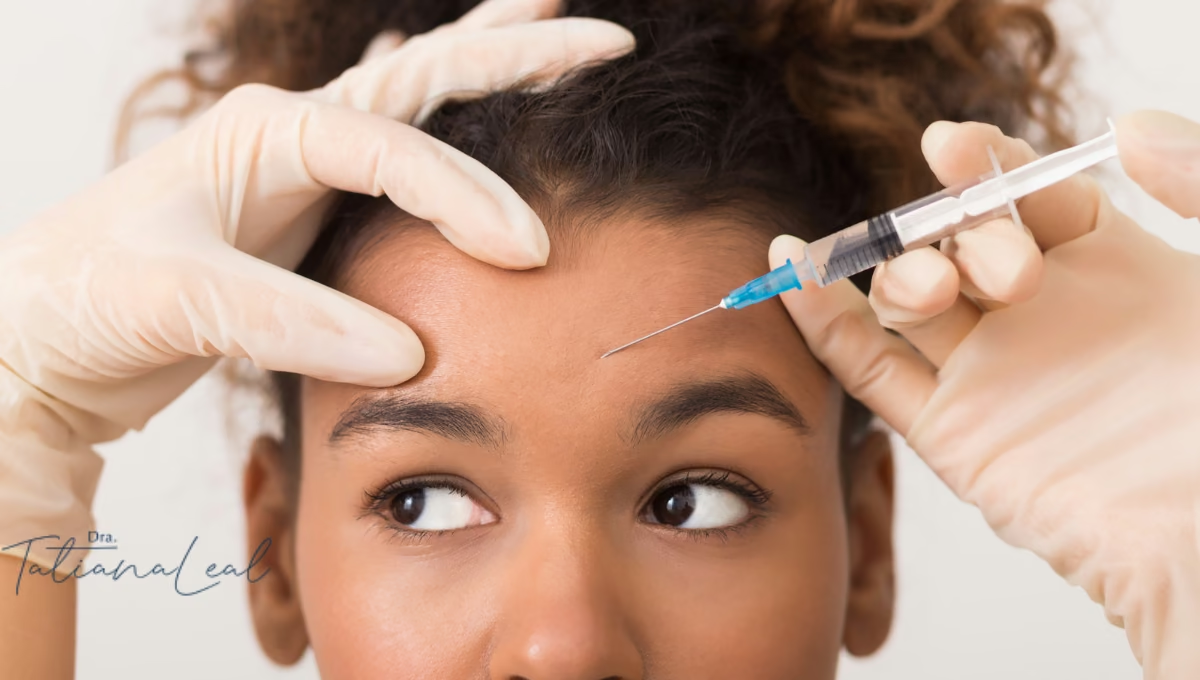
It is one of the most common questions I get from patients who live abroad or come to Bogotá for a few days: “Can I fly home after Botox?” or “Is it a problem to get fillers right before my flight?”. The worry usually comes from something read online about cabin pressure making the product move. Here is what is true, what is a myth, and how I plan injectables when a patient has a flight booked.
Can you fly after Botox?

Yes. Botulinum toxin works locally, in the muscles where it is injected, and flying is generally considered safe after treatment. The prescribing information for Botox does not say how soon you can fly, so there is no official waiting period that applies to everyone.
Is it safe to fly after Botox? Cabin pressure and the “migration” myth
The most widespread myth is that cabin pressure can make Botox “travel” to other areas of the face. There is no evidence of this. What air pressure changes and long hours sitting on a plane can do is make swelling or bruising at the injection points a little more noticeable during the flight. It is a matter of comfort, not of the result changing.
How soon can you fly after Botox?
There is no universal number of hours, and that is exactly why the timing is planned case by case. What we do know for certain is what the first 24 hours require: don’t massage the treated area, don’t lean forward and avoid intense exercise on the first day. If you can spend that first day on the ground, in Bogotá, you follow the aftercare without the restrictions of a long flight.
Keep in mind that the effect is not immediate either: botulinum toxin starts to show between day 2 and day 7 and reaches its peak at 14 days. If you want to see the result before flying home, plan your treatment at the very start of a longer stay. You can read more about it in how long Botox lasts.
Can you fly after fillers?

Yes, you can also fly after hyaluronic acid fillers. As with Botox, the question is not whether flying ruins the result but how your skin will feel in the first days, which is when filler swelling and any bruising show up.
How soon can you fly after fillers?
It depends on the area and on how your skin reacts, and that is why I prefer to leave a margin. With lip fillers, mild swelling usually lasts 24 to 48 hours. With hyaluronic acid fillers in other areas of the face, the final result shows once the mild swelling goes down, typically within 48 to 72 hours, and any bruising resolves within a few days. Planning your flight after that window means traveling more comfortably and arriving home with the result already settled.
Swelling and bruising on the plane
Changes in air pressure, dry cabin air and hours without moving can make swelling feel tighter or bruising look more noticeable during the flight. It is not dangerous for the filler, but it is uncomfortable, especially on long flights. If you fly in the first days after treatment, drink plenty of water, avoid alcohol and don’t press or massage the treated area.
What to avoid in the first 24 hours
These are the general aftercare measures for the first 24 hours, and they apply whether or not you are flying:
- Don’t massage or press the treated area for 24 hours, including tight sleep masks, hats or heavy headphones on the face.
- Don’t lean forward or lie face down during the first hours.
- Avoid intense exercise on the first day.
- Skip alcohol, including the drink at the airport: it can make bruising more likely.
- Apply ice if there is mild swelling.
- Stay hydrated, especially on a plane, where the air is very dry.
Planning injectables on a short trip to Bogotá
If you come to Bogotá for a limited number of days, the key is choosing treatments that fit your stay and organizing them in the right order.
One-visit treatments vs. multi-session treatments
Botulinum toxin (a 10 to 15 minute session with no downtime) and hyaluronic acid fillers are done in a single appointment, and most patients return to their daily activities right away, so they fit well into a short trip. Treatments such as Sculptra, Radiesse, Scizer or tattoo removal require multiple sessions, so we design a visit itinerary that fits your travel window, with clear post-care instructions for when you return home.
Start with a virtual pre-consultation
Before you travel, you can schedule a virtual pre-consultation with Dr. Tatiana Leal to review your case, confirm which treatments are right for you and plan the dates. That way we schedule your injectables early in your stay, leave room for the first days of recovery and fit everything around your flight. If you are considering Botox, here you can see the details and prices of botulinum toxin in Bogotá.
My recommendation
Don’t let the flight decide your treatment, and don’t let the treatment decide your flight: plan both together. Have your injectables early in your stay, follow the first 24 hours of aftercare on the ground, and fly once the first days of swelling have passed. If your trip is short, tell us your dates at the pre-consultation and we’ll organize the order and timing for your case.
Dr. Tatiana Leal is an aesthetic medicine specialist in Bogotá, Colombia.
Add Dr. Tatiana Leal as a preferred source on Google

How long does botulinum toxin last: Factors that affect duration
How long does botulinum toxin really last? Duration factors, brand differences and how to make the most of your results.
Read more
Flying after Botox and fillers: what travelers ask most
Can you fly after Botox and fillers on the same trip?
Yes, many visitors combine them. The planning is what matters: we schedule injectables early in your stay so the first 24 hours of aftercare and any swelling or bruising from the filler happen in Bogotá, not on the plane. At your virtual pre-consultation we build the order and timing around your flight dates.
Why do some clinics tell you not to fly right after fillers?
Because changes in air pressure and long periods of sitting can make swelling or bruising feel worse during the flight. It is a comfort and recovery issue, not a risk of the filler moving. That is why we prefer you to fly once the first days of swelling have passed.
Can you fly after Botox in the forehead?
The same principles apply to every area: the toxin works in the muscles where it is injected, and there is no evidence that cabin pressure moves it. What matters is following the aftercare for the first 24 hours: don't massage the area, don't lean forward and avoid intense exercise.
Can I get Botox the day before my flight home?
The product information does not set a waiting time before flying, but it is better to schedule it earlier when you can. Botulinum toxin starts to show between day 2 and day 7 and peaks at 14 days, so treating early in your stay gives you the first 24 hours of aftercare on the ground and, if you are staying long enough, a chance to see the result before you leave. Dr. Tatiana Leal confirms the timing for your case at your assessment.