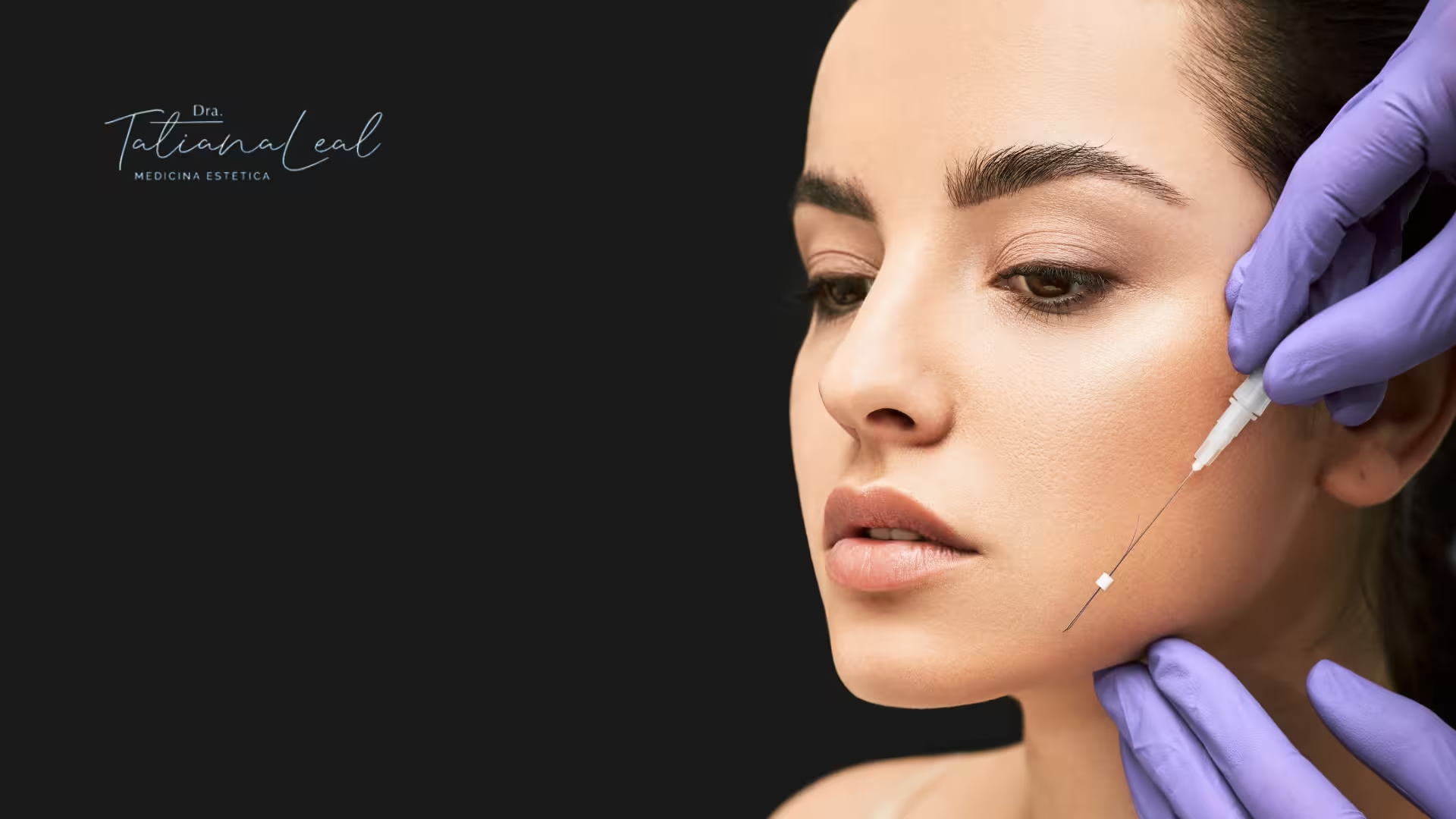
This guide accompanies your physician’s instructions; it does not replace your individual care plan. If you are still considering treatment, review PDO thread lift assessments and prices in Bogotá.
You just left the office with the threads placed. The procedure was quick, the doctor showed you the immediate result and now you’re going home with a question many patients don’t ask in the moment: and now what?
What you do in the coming hours, days and weeks has a direct impact on two things: the comfort of your recovery and the duration of your results. This guide accompanies you step by step, with the same information I give to all my patients before leaving the office.
First 24 hours: the most important period
The first 24 hours are the most critical because the threads haven’t fully integrated into the tissue yet. The anchor of the barbs is fragile at this moment and any pressure or sudden movement can affect the position of the threads.
What you should do
Apply cold intermittently. Wrap ice in a clean cloth (never directly on the skin) and apply for 10 minutes, with 20-minute rests. This reduces inflammation and bruising. Do this during the first 6 to 8 hours.
Sleep on your back with head elevated. Use an extra pillow to keep your head at about 30 degrees. This decreases fluid accumulation in the treated area. Avoid sleeping on your side or stomach for at least one week.
Keep your face clean with gentle products. You can wash your face with lukewarm water and a gentle cleanser, but do it with very delicate movements, without rubbing. Pat dry with a clean towel, never dragging the cloth.
What you should avoid
- Don’t touch or massage the treated area. The urge to palpate the threads is natural, but manipulation in the first hours can move them.
- Don’t apply makeup during the first 24 hours. The entry points are small wounds that need to stay clean.
- Don’t make exaggerated gestures or laugh intensely. Nothing that generates extreme tension in the skin.
- Don’t consume hot beverages or foods requiring extensive chewing. Intense jaw movement can affect the area.
What’s normal at this moment
- Moderate inflammation, especially upon waking
- Small bruises at entry points
- Feeling of tension or “tightness” in the skin
- Mild asymmetry due to differential edema (one side may inflame more than the other)
All this is part of the normal process. If inflammation is very intense or pain doesn’t subside with common analgesics, contact your doctor.
Radiesse vs thread lifts for neck: which is better for your case?
Radiesse or thread lifts for neck tightening? They are two of the most effective treatments, but they work differently. Discover which one is most suitable for your case.
Read moreDays 2 to 4: hematoma management and normalization
During this period inflammation may increase before starting to decrease — this is normal. Bruises also often become more visible on the second or third day because blood pigment migrates toward the skin surface.
How to manage bruises
Bruises after thread lifts are frequent (occur in 30-40% of patients) and completely normal. You can accelerate their resolution with:
- Arnica cream or gel applied gently around the bruise (not over thread entry points).
- Cold compresses during the second day, then warm compresses from the third day to help reabsorption.
- Topical vitamin K in cream can be used from the second day.
If your work or social schedule allows, plan between 5 and 7 days of “social downtime.” Most patients resume normal activities between the third and fifth day, but with coverage makeup to conceal any residual bruising.
Nutrition in this stage
Avoid foods requiring intense chewing, like tough meat or very crunchy foods. Not because threads will move with normal chewing, but because existing inflammation can make you uncomfortable in that area. Prefer soft foods, soups and smoothies during the first 3 days.
Physical activity
You can walk and do low-intensity activities. Moderate exercise improves circulation and can help reduce edema. What you should avoid in this stage is intense cardio, weights or hot yoga: increased temperature and blood pressure are not advisable while threads integrate.
The first week: key restrictions
Starting from day 5, inflammation will have decreased considerably and you’ll feel much better. However, threads are still in the integration process and there are important restrictions to maintain until completing 7 days.
Restrictions until day 7
| Activity | Restriction | Reason |
|---|---|---|
| High-intensity exercise | Prohibited | Increases temperature and tension |
| Facial massages | Prohibited | Can displace threads |
| Direct sun exposure | Prohibited | Increases inflammation |
| Sauna or steam bath | Prohibited | Intense heat can move threads |
| Dental procedures | Avoid if possible | Prolonged mouth opening |
| Alcohol | Avoid | Vasodilator, increases edema |
| Side sleeping | Avoid | Pressure on threads |
What you can already do
- Light makeup from day 2
- Wash hair normally (avoid pressing head against tub)
- Work at computer and office activities
- Drive
Signs recovery is going well
- Inflammation decreases each day
- Bruises change from purple to yellow-greenish (sign of normal reabsorption)
- Initial tension softens and feels more natural
- You can gently touch the area without intense pain

Thread lifts vs Botox: Which is better for you?
Thread lifts and Botox are two of the most popular treatments, but they have very different functions. Discover which is right for your needs.
Read moreThe first month: maximize results
Starting from the second week, collagen bio-stimulation process is underway. This is the stage where the real treatment result consolidates and progressively improves.
Week 2 to week 4 care
Sunscreen every day. Post-procedure skin is more sensitive to UV radiation. SPF 50+ applied each morning protects your investment and prevents post-inflammatory hyperpigmentation.
Active hydration. Use quality moisturizing creams twice a day. Well-hydrated skin favors neocollagenesis and prolongs results.
Resume exercise gradually. Starting from day 8 you can do normal exercise, including moderate cardio. High-intensity or contact exercise (soccer, martial arts) wait until day 14.
Avoid facial massages during the entire first month. Professional facial massages, jade roller and Gua Sha are prohibited during the first 4 weeks. They’re exactly the type of pressure and sliding that can move a thread before it’s fully integrated.
Avoid direct sun on face. Especially between 10 a.m. and 4 p.m. If you must expose yourself, use hat and SPF 50+.
When can I resume aesthetic treatments?
- Botox and mesotherapy: wait minimum 2 weeks
- Hyaluronic acid fillers: wait minimum 4 weeks
- Radiofrequency or HIFU: wait minimum 6 weeks
- Deep facial cleansing: wait minimum 3 weeks
- Chemical peels: wait minimum 4 weeks
Warning signs — when to call the clinic
Most thread lift complications are mild and resolve on their own. But there are signs requiring prompt medical attention. Contact your doctor immediately if you present:
- Fever above 38°C at any time after the procedure
- Redness that increases instead of decreasing after the third day, with local heat
- Pain that worsens progressively after the second day (normal pain improves, doesn’t worsen)
- A visible cord under the skin that doesn’t disappear with passing days
- Very marked asymmetry where one side is notably higher than the other
- Firm, painful lump that doesn’t resolve in 3-4 weeks
None of these signs is common, but when they appear they require rapid evaluation. In my practice, all my patients have my direct contact for exactly these cases.
Frequently asked post-procedure questions
Can I take pain relievers?
Use only medication recommended for you by your physician. Do not stop prescribed aspirin, anticoagulants or other medication on your own; speak with the prescribing clinician.
Can I sunbathe at the beach or pool?
Wait at least 4 weeks for intense sun exposure. Pool (chlorine) can irritate entry points if they’re not fully closed; wait at least one week.
What if I accidentally sleep on my side?
It’s not catastrophic. Threads won’t break from sleeping on your side one night. However, reducing lateral pressure during the first week helps threads integrate in the correct position.
Is the result you see the next day the final result?
No. The immediate result includes edema that can make the effect look exaggerated or, paradoxically, smaller due to swelling. The real result is evaluated between 4 and 6 weeks.
Taking good care of thread lifts isn’t complicated, but it does require attention and discipline during the first month. The good news is that most restrictions concentrate in the first week, and from day 8 life practically returns to normal.
If you’re considering getting thread lifts in Bogotá, in my consultation you’ll receive these personalized instructions before, during and after the procedure.
Want to learn more about this treatment?
Schedule your consultation with our doctors and discover the ideal treatment for you
Book your appointment Office in Bogotá, Colombia · Reply on WhatsAppEditorial update: September 2026
This article is for informational purposes only and does not substitute consultation with a medical professional. Each patient is different and indications may vary.
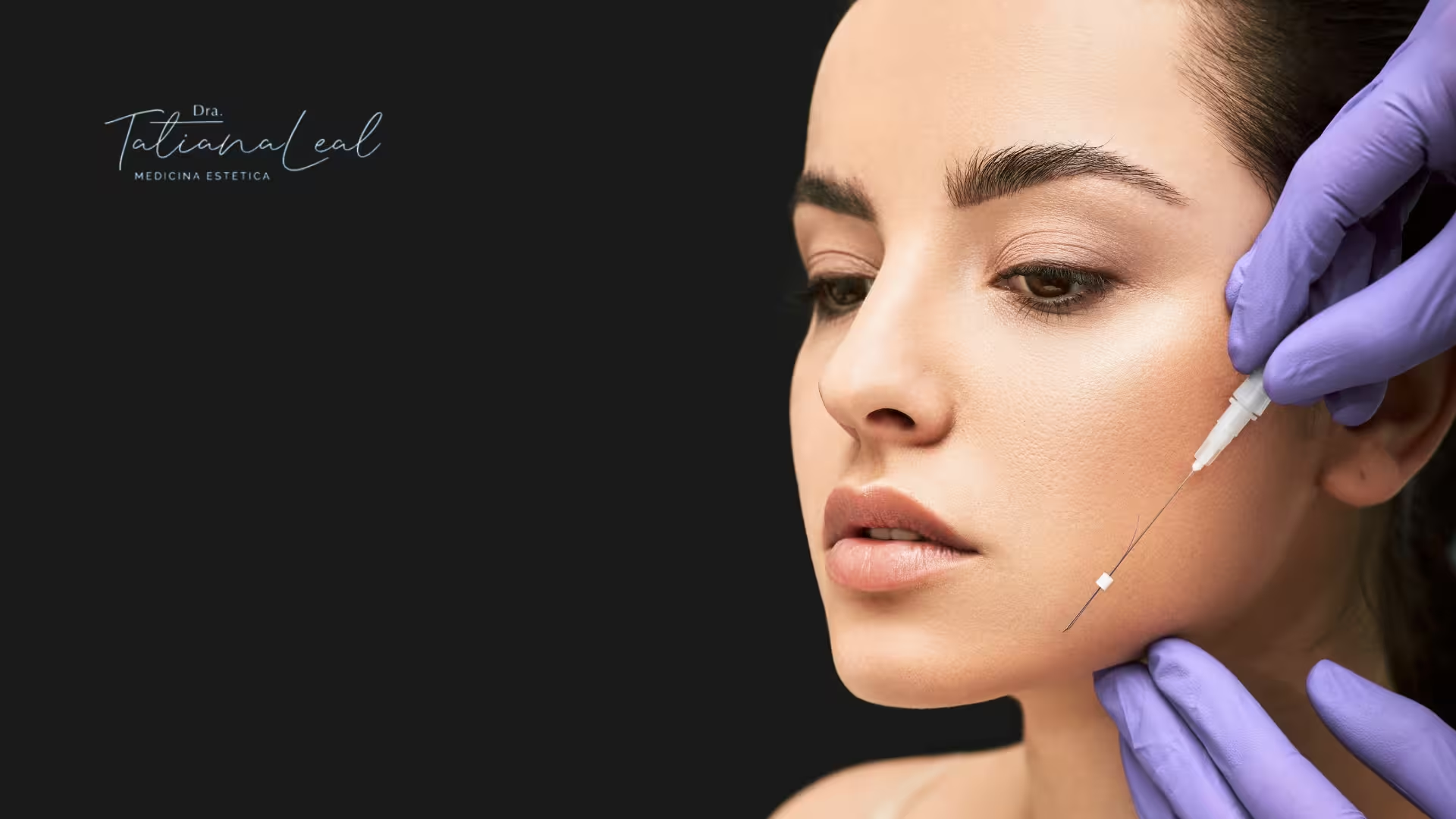
Thread lifting: is it the right time to consider this treatment?
Have you noticed the first signs of sagging in your face but feel surgery is too much? Discover why PDO thread lifting might be exactly what you're looking for.
Read more
Frequently asked questions
How long does swelling last after thread lifts?
Normal swelling peaks between 24 and 48 hours post-procedure and gradually decreases. In most patients, it almost completely disappears between the third and fifth day. A mild degree of swelling can persist up to two weeks, especially in areas like jawline or cheeks where more threads were placed.
When can I use makeup after thread lifts?
It's recommended to wait at least 24 hours before applying any product to the treated area. After the first 24 hours you can use light makeup with care not to press the skin. During the first week avoid heavy coverage foundations that require rubbing or massage to distribute.
Can I exercise after the thread lift procedure?
You should avoid high-intensity exercise (cardio, weights, hot yoga) during the first 7 days. Moderate exercise like walking can be resumed starting from the second day. Intense exercise increases body temperature and blood pressure, which can displace threads before they properly anchor to the tissue.
Is it normal to feel threads under the skin in the first days?
Yes, it's completely normal to feel slight tension or notice the threads to the touch during the first 7 to 14 days. This sensation decreases as the tissue integrates around the thread. If the sensation is sharp pain, intense pressure, or if the thread feels like a visible cord, contact your doctor.
When do final results of thread lifts appear?
Final results appear between 4 and 6 weeks after the procedure. The first days may have edema and minor irregularities that make it difficult to evaluate the real result. Between week 2 and week 6 collagen starts to generate and the lifting effect consolidates. Optimal result is observed between the second and third month.
What warning signs should I watch for after thread lifts?
Seek immediate consultation if you present: fever above 38°C, progressive redness with heat in the treated area (not just inflammation), pain that increases instead of decreasing after the third day, very marked asymmetry with one side higher than the other, or a visible cord under the skin that doesn't disappear. These signs are rare but require prompt medical attention.